September 13, 2019

Making Memories at the Detroit Zoo


If you’ve been around here long enough you know that I’m a big (ok, maybe a HUGE) animal lover. So, when visiting a city (new or old) and the opportunity to check out the local zoo or aquarium comes up, I’m all in. 

Zoos and aquariums are a fantastic way to learn about the variety of animals that call our planet home, and to build a connection with wildlife we may not ever have the chance to experience in the wild. Not to mention, they're also a fun way to spend the day with your family.

child watching penguins swim at polk penguin conservation centre Detroit zoo Michigan

I grew up approximately an hour from Detroit, Michigan, on the Canadian side. The times I’ve visited the city to go shopping, play soccer or even to visit my (then) boyfriend while he played junior hockey, are so many that I couldn't even take a guess. BUT, the number of times I’ve visited to go the Detroit Zoo? Sadly, I can count that on only a few fingers.

On a recent extended visit to my parents’, my dad suggested we take a day trip to the Zoo. When you throw out the words “Do you want to go to the zoo?” in front of a few animal lovers (including a 3 year old and her mama), the answer is YES. Always YES.

So, we packed in the car – my dad, my sister, the two little gals and I – and drove off over the border and down I95 to the Detroit Zoo.

family at Detroit Zoo in Michigan

Situated on 125 acres, the Detroit Zoo (run by the non-profit Detroit Zoological Society) is home to more than 2,000 different animals representing 230 species of amphibians, mammals, birds and reptiles.

The Zoo features many award-winning attractions including the National Amphibian Conservation Center, Great Apes of Harambee, Arctic Ring of Life, and my personal favourite, Polk Penguin Conservation Center.

I know, I was just as surprised as you that I favourited the penguin habitat over the polar bears. (Background story: For those of you that don’t know, I’ve had a thing AGAINST penguins, dating back to 2010. Living and working at azoo in Alaska that had polar bears, it was not uncommon for people to think polar bears and penguins were friends. The media portrayal didn’t help. But in fact, they live on opposite ends of the earth – polar bears in the Arctic, penguins in the Antarctic. So, hearing that on a regular basis became a bit of a pet peeve. But, I digress…)


Opening in 2016, Polk Penguin Conservation Center is the Zoo’s newest award-winning attraction. At 33,000 square feet - housing 75 king, rockhopper, macaroni and gentoo penguins - it is the largest penguin facility in the world. Its signature feature is a 326,000 gallon (1.2 million liter) 25 foot deep aquatic area where visitors can watch the birds swim and dive from two acrylic underwater tunnels. The $32 million facility received the 2017 Exhibit Aware from the Association of Zoos & Aquariums for excellence in exhibit design. An award very much deserved. We could have spent hours watching the penguins fly through the water all around us. The facility is also filled with a variety of interactive educational exhibits to help better connect visitors to the Antarctic and the tuxedo-wearing birds.

*Please note: The Detroit Zoological Society will be temporarily closing the Polk Penguin Conservation Center between September 9, 2019 and mid-June 2020 to make repairs due to faulty waterproofing. The penguins will live in the former Penguinarium while their home is being repaired, but that facility will not be open to visitors.


And while the penguins may have been my favourite of the day, I cannot share about the zoo without mentioning my other favourite habitat, the Arctic Ring of Life – home to polar bears, seals and Arctic fox. This state-of-the-art interactive facility is one of North America’s largest polar bear habitats and encompasses more than 4 acres of outdoor and indoor spaces. My favourite feature? The spectacular 70 foot long Polar Passage, a clear tunnel that winds through a vast underwater marine environment. It reminded me very much of the Assiniboine Park Zoo in Winnipeg, Manitoba. Sadly, the polar bears were nowhere to be seen that warm August day (can you blame them?!), but it was still fun to watch their nextdoor neighbours, the seals, swim through the water.

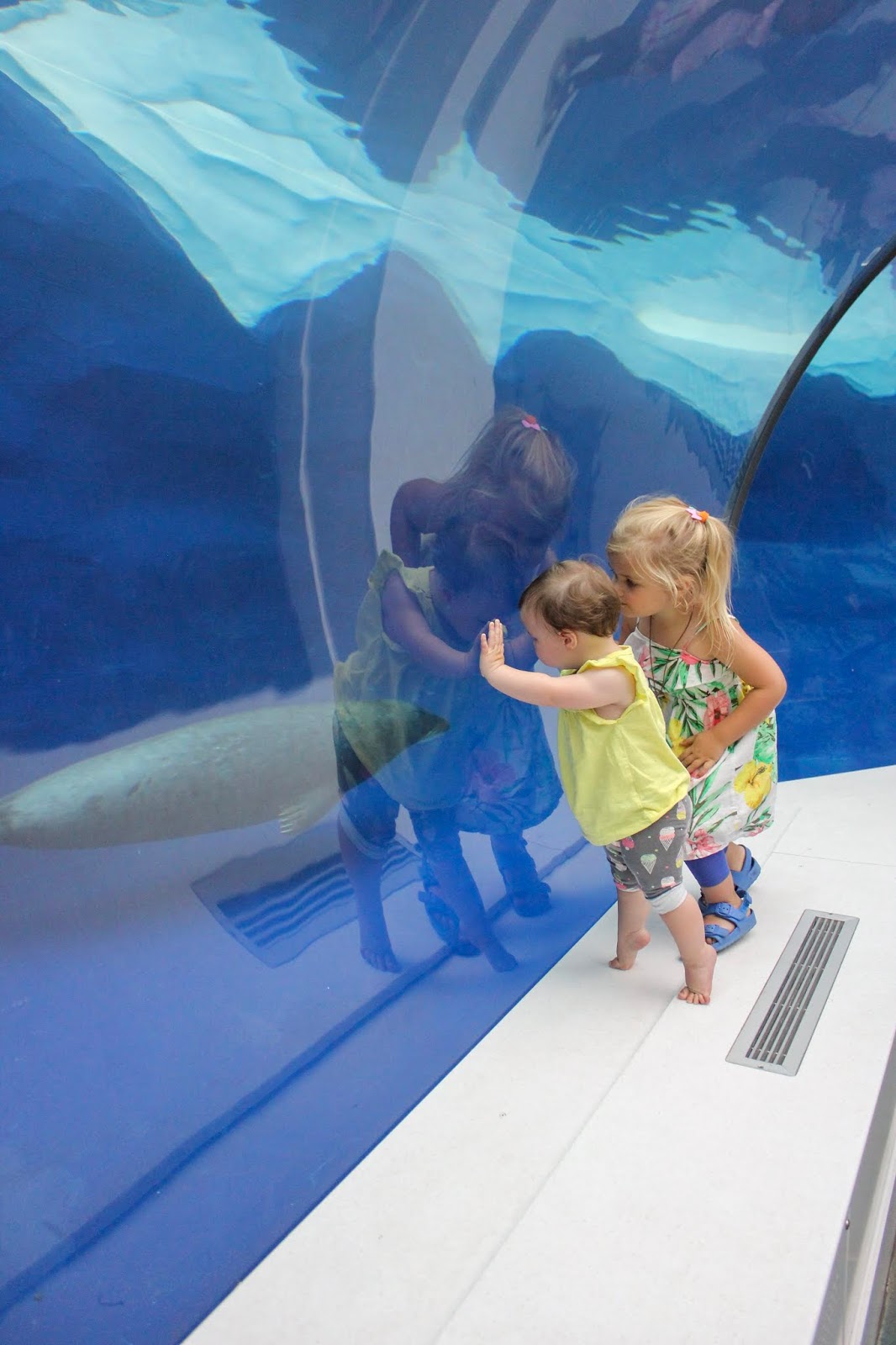
Arctic Ring of Life Detroit Zoo

For a Zoo that first opened their doors almost 100 years ago in 1928 (and saw 1.5 million visits in just their first 4 months of operation), I was extremely impressed with the many naturalistic habitats and modern-day zoo updates. The layout is extremely family- and stroller-friendly, and easy to navigate with the use of either a paper map or the interactive mobile map system called Detroit Zoo Treks. There are a few indoor exhibits where strollers are not permitted (including the Polk Penguin Conservation Center), however, there is ample stroller parking to accommodate.

Beside the penguins and Arctic animals, we especially loved checking out the rhinos, zebras, giraffes and camels. The pop-up windows in the prairie dog exhibit were not only a great photo opportunity, but also a good way to see their cute faces up close. The new red panda habitat, located in the Asian Forest, had us cross a rope bridge, through the actual habitat! It made us feel that much closer to the red pandas sleeping in the trees above our head. The brand new Devereauf Tiger Forest opens on September 13, and will be home to three Amur tigers. 
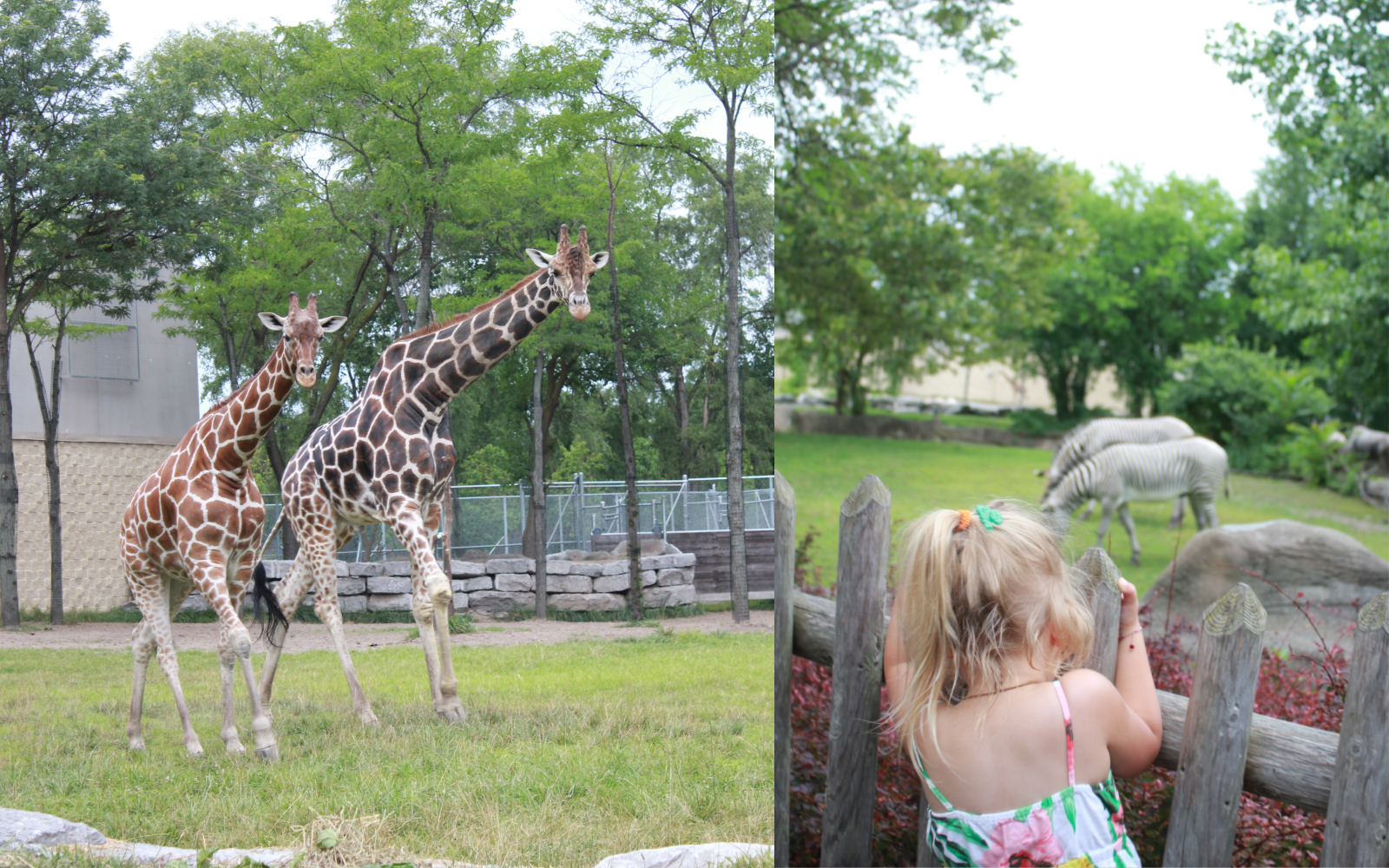

family friendly activities at the detroit zoo

Besides viewing the animals, the littlest zoo visitors can ride the animal-themed carousel, take a trip on the Tauber Family railroad, visit the Korman Tadpole or Rissman PlayVenture playgrounds and more. And for the adults (whether kiddos in tow or not), there is also a 4D theatre and simulator ride to check out.

family friendly activities at the detroit zoo

If you find yourself in the Detroit area with your family, I definitely recommend spending a few hours visiting the animals of the Detroit Zoo. But, before you do, be sure to scroll down to read my tips for visiting the Detroit Zoo with your family.


family friendly activities at the detroit zoo

Important tips for visiting with your family:
  • There are a few indoor spaces that do not allow strollers, including the Polk Penguin Conservation Center. If you have a little one that cannot yet walk, I recommend bringing a carrier to use when the stroller is not available.
  • Guests are welcome to bring their own food and beverages into the Zoo. Several picnic areas are available throughout the Zoo. 
  • Bring your own reusable water bottle to refill at one of the 21 filtered-water stations throughout the grounds. Bottled water is not sold on site, something the Detroit Zoological Society had worked hard to achieve.
  • There are several concession stands throughout the zoo, some seasonally available. Items are reasonably priced for an attraction, and include burgers, hot dogs, fries, pizza, chips, soft drinks, frozen beverages, ice cream, coffee, etc. There is also a location with an all-vegan menu. 
  •  Zookeeper talks are held daily at various animal habitats, giving guests the opportunity to interact with animal care staff while learning about the individuals living at the Zoo. 
  • To save a bit of time during the busy months and money, pre-purchase your tickets and parking pass online in advance.
  • Hours vary depending on time of year - check the website prior to your arrival. I recommend at least 4 hours to check out everything the zoo has to offer. Our visit lasted from approximately 10:00am to 3:00pm. 

The Detroit Zoo can be found at 8450 W 10 Miles Road Royal Oak, MI 48067.

If you liked this post, you may also like:
Toronto Zoo 1, 2, 3 - Toronto, ON
Alaska Zoo - Anchorage, AK
Assiniboine Park Zoo - Winnipeg, MB
Riverbanks Zoo - Columbia SC

Did you visit a zoo or aquarium this summer? I'd love to hear which one AND your favourite animal!


PIN IT:

family-friendly fun at the Detroit Zoo, Michigan

SHARE:

December 21, 2018

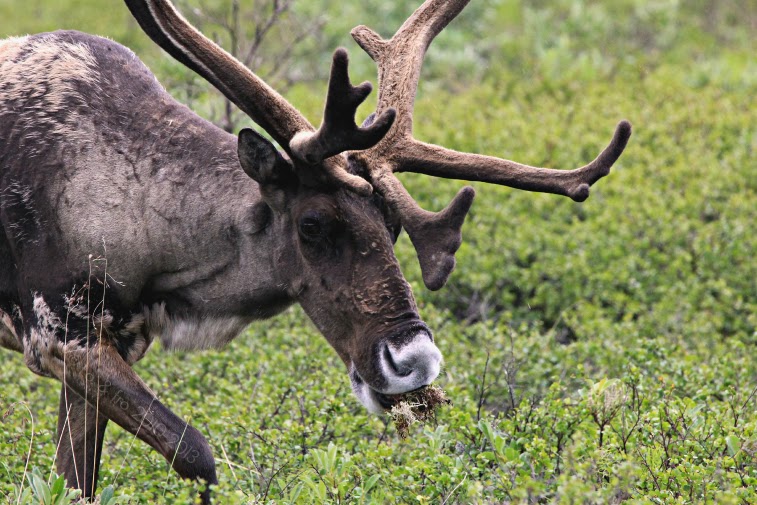
Did You Know? Fun Facts about Reindeer


When people think of reindeer, they often visualize Rudolph and his team of friends flying through the midnight sky pulling the big man's sleigh. But, there is so much more to these fascinating Arctic creatures than stories have told. 

How much do you really know about this northernmost deer species? 

Here are 10 Fun Facts About Reindeer to impress your family and friends this holiday season.


In North America, reindeer found in the wild are actually called caribou. The word reindeer is only used to describe those that have become domesticated, or live close to people (such as Santa). However, in Europe they are all reindeer regardless of living in the wild or captivity.

Caribou are the northernmost deer species, found in the Arctic tundra and northern forests of North America, Europe, Asia and Russia.


Male caribou are called bulls, and as an adult average 350-400 pounds. Mature females, called cows, are smaller and average 175-225 pounds.

Caribou have the longest documented migration of any terrestrial animal. Like most herd animals, they must move to find adequate food, often traveling up to 3,000 miles or 5,000 km between summer and winter ranges in a single year. 

Caribou are a members of the deer family (which also contains elk, deer and moose). However, unlike other members of the deer family, both male and female caribou grow antlers. Antlers are made of bone, and when they are growing have a fuzzy covering, called velvet, which contains blood vessels carrying oxygen and nutrients for bone growth. When the velvet dies, the blood supply to the bone is cut off, causing the antlers to shed. This happens yearly. (As opposed to animals with horns, which grow with the animal throughout their entire life.) 


Caribou shed their antlers at different points in the year based on their sex and age. Adult bulls generally shed their antlers in late fall, early winter, after they have mated. Adult females and younger caribou carry their antlers much longer, often throughout the winter. Females' antlers don't fall off until after Christmas, which means Santa's reindeer are most likely all female. 


Caribou are built for the cold. They have a short, stocky body that helps conserve heat, and long legs to help move through the deep snow. Their winter coat contains hollow hair which traps air and provides insulation from the cold. 

Caribou are ungulates, which mean they are cloven-hoofed and chew cud. Their feet are built for walking in deep snow, as they have large, concave hooves that spread widely to help support them in snow and soft tundra. Their feet also function as paddles when they swim and as a scoop when looking for other lichens and plants in the snow.


Their scientific name is Rangifer tarandus, which comes from the Old French rangier, meaning “reindeer” and ferus ¸which is Latin for “wild and untamed”. The name "caribou" is French, and comes from the words "Mi'kmaq qualipu" meaning “snow shoveler,” referring to its habit of pawing through the snow for food.

Caribou are traditionally vital to indigenous northern people throughout much of their range. They are often hunted for subsistence and provide a rich source of red meat, a high protein food supply, and materials for the manufacture of handicrafts and artwork. Their hides are also uses for warmth, and often made into blankets and various articles of clothing.

Did you learn something new about reindeer? I'd love to hear your favourite fact!

*All photos property of To & Fro.
 
SHARE:

February 26, 2018

Connecting with Animals at the Toronto Zoo


“What's that great connection quote?”, Steve asked as we wandered past the female orang-utan on our most recent visit to the Toronto Zoo. 

“In order to protect something, you must love it. But in order to love something, you must first have a connection with it,” I respond. It really is my favourite quote, and one I fully stand behind.

Toddler looking at panda at the Toronto Zoo

As we passed the ring-tailed lemurs, we started talking about our favourite non-North American animals. “Its a tough one," I said, "But the ring-tailed lemur and red panda are up there for me,” I've always been a fan of the smaller, lesser understood things in life. Plus they’re just so darn cute. “Really?” he asks, surprised at my selection. “Mine would be the lions. Or the giraffes. Definitely elephants." 

He elaborates on his last answer by telling me a story from when he was younger, when elephants still called the Toronto Zoo home and he got to go behind the scenes with to help feed them.

He pauses, as if he took a trip back in time in his mind, remembering the moment and how much fun he had. Remembering the connection he built with the elephants that day.

I interrupted the memory by saying, “See, there’s your connection. That's why you love them, and that's why you care about them."

And that my friends, is why it is one of my all-time favourite quotes.

Coral reef tank at the Toronto Zoo

As animals lovers, building a connection with Morley is extremely important to us. We know she loves dogs, she has her grandparents’ pups “Tity” and “Lolalita” to thank for that. But we want her to appreciate all animals, from big to small and cute to, well, not so cute.

There are many ways to connect kids with animals, which I share in this post here. In Toronto alone, our opportunities are nearly endless - you can visit a conservation area to see native animals in action, the Royal Ontario Museum to see animals from the past, Ripley’s Aquarium of Canada if fish are your thing or you can take a trip to the Toronto Zoo if mammals, birds and reptiles are more your style. 

The Toronto Zoo is the perfect place to build that animal connection, and where we spent the recent Family Day.

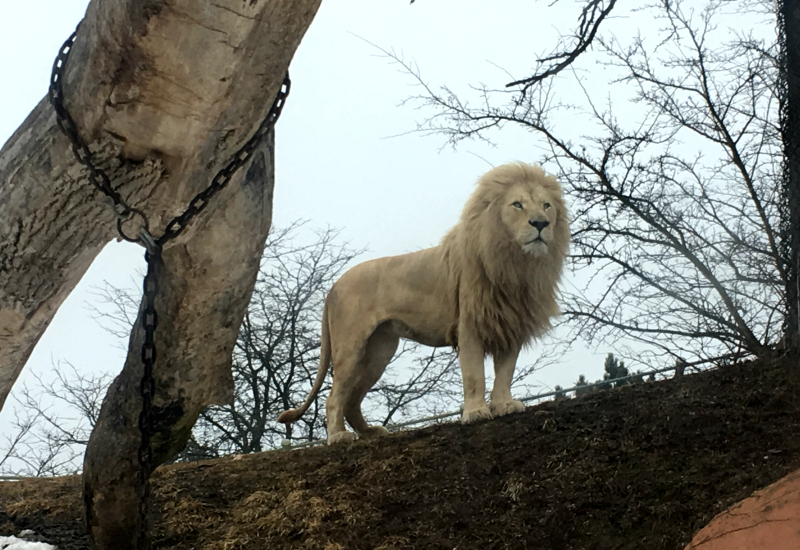
Lion at the Toronto Zoo

Set in the beautiful Rouge Valley in the east end of the city, the Toronto Zoo first opened its doors in August 1974. The Zoo is made up of 710 acres of land, which is divided into seven zoogeographic regions - Indo-Malaya, Africa, Americas (North & South America), Eurasia Wilds, the Tundra Trek, Australasia and Canadian Domain - and home to over 5,000 animals representing 450 species. Since opening its gates, it has been a leader in saving and protecting species and their habitats, both locally and globally. 

Exactly as we predicted, this trip to the Zoo was much different than our first visit at six months and even our second at 13 months old. At just shy of two years, Morley is now at the age that she notices even the smallest things in front of her and can tell us exactly what animal she's seeing and even what she wants to see next.

Giraffe at the Toronto Zoo

While some of the animals were tucked indoors for the winter, we still had the chance to see the pandas, polar bears, wolves, tigers, lions, cheetahs and more. While we knew we were taking our chances on the weather before we walked through the front gates, it only started raining about half way through our journey. Luckily, we could escape the drizzle by popping in to one of the many animal pavilions to warm up. Indoors, we saw the giraffes, rhino, gorillas, orang-utans and more, which was more like a quick trip to the tropics. 

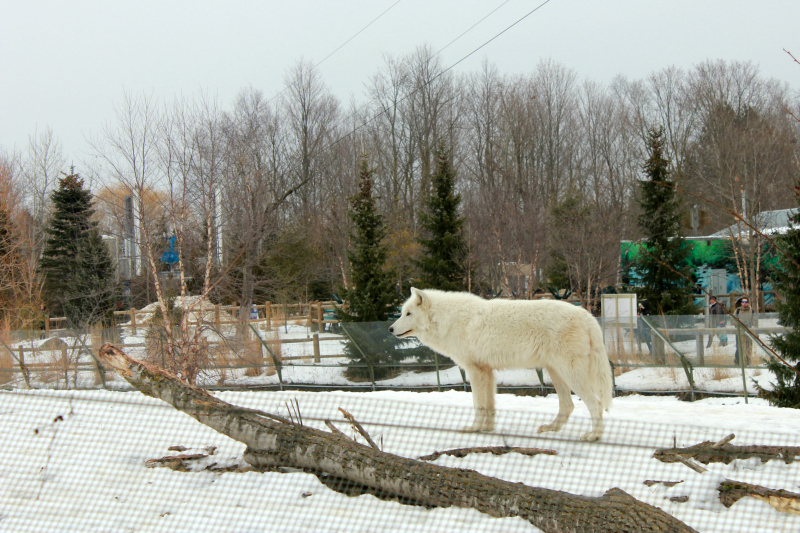
Naturally, my favourite part of the Zoo is Tundra Trek, home to the wolves, reindeer, snowy owl and polar bears. We stopped by the polar bears just as a Keeper Talk was getting started, so we found a spot amongst the crowd where Morley could watch them stand up on there hind legs, say "oh, big guy" and see them eat the fishy snack they were being tossed. Later she told me she also likes to eat fish like the polar bear, as she shoved a handful of goldfish crackers into her mouth. (I don’t want to be a polar bear pusher, but I think that may be her connection right there.)

Polar bears at the Toronto Zoo
Wolf at the Toronto Zoo

Seeing as it was a long weekend, we also got to take a tour of the new, state-of-the-art Wildlife Animal Health Centre. The volunteer-led tours (12:30pm on Saturday and Sundays, leaving from the Tundra Trek Zoomobile Station) allow you to catch a glimpse into the work the Zoo does behind-the-scenes, having access to a viewing gallery featuring the diagnostic imaging, treatment and surgery room and the clinical and endocrinology labs.

Morley loved taking advantage of the activities for kids, including testing her surgery skills in an Operation-style game.

Toronto Zoo Wildlife Health Centre
Inside the Toronto Zoo Wildlife Health Centre
Toronto Zoo Wildlife Health Centre children activities

If you ask Morley what she saw at the Toronto Zoo, she will tell you "pole-ah bear, tigers (with a scrunchy face grrrrr), snakes, dragons, a yellow duck and people". I think I may have missed the yellow duck along our travels, but its obvious to tell which animals are quickly becoming her favourites. (She's clearly also a people person.)

Despite the bit of rain, it was the perfect winter day at the Toronto Zoo, and we can't wait to go back!

Oh, and in case you're wondering - our favourite North American animals? For me, it’s the polar bear and for him, it’s the grey wolf. Seeing polar bears in the wild and hanging out with wolf cub pups are the connections to thank for those loves.

What is your favourite animal story? Have you visited a zoo lately? I’d love to hear!


Where to Find the Toronto Zoo:
361A Old Finch Avenue 
Toronto, ON M1B 5K7
Phone: 416-392-5929

Hours: Open 364 days a year (closed Christmas Day), but hours vary depending on the season. Give yourself at minimum 2-3 hours to visit. Last admission is one hour before close. 

Admission: Cost of admission varies by season and age.

Social: @thetorontozoo on Twitter, Facebook and Instagram

Getting There:
The Toronto Zoo is located in the Rouge Valley on Meadowvale Road in Toronto north of Highway 401 and can be accessed by both car and public transit.  The TTC has bus routes that stop at the Zoo’s main gates.

The cost for onsite parking is $12.00 per car. Be sure to purchase a parking pass with your admission.

SHARE:

June 20, 2017

Creating an Animal Lover


This shop has been compensated by Collective Bias, Inc. and its advertiser. All opinions are mine alone. #PurinaMysteries #CollectiveBias

We live in a world filled with animals. Whether it be in our own home or at the local park, a character in a book or movie or even our favourite stuffed animal from childhood, animals are all around us. 

Children are naturally attracted to animals. They are also sponges for learning - absorbing, retaining and using new information at incredible rates. Teaching our future generation to love and properly care for animals from a young age is extremely important, regardless of whether you have a pet at home or not.  


Ways to Help Foster Your Child's Love for Animals

There is a long list of reasons for why children should love animals, but topping that list is their own personal gain. Studies have shown that loving animals as a young child helps boost confidence and teaches responsibility, empathy, compassion and respect. For young children, animals are the perfect vehicle to allow them to practice building these social and emotional skills they need in order to be successful.

But, before a child can love something, they must first have a connection with it.  

Ways to Help Foster Your Child's Love for Animals

As animal lovers ourselves, having a daughter that also loves animals is something that is extremely important to my husband and I. 

At just 15 months old, we have seen Morley's natural curiosity of my family's two chihuahuas blossom.

Morley loves her woof woofs, Tity and Nonna (also known as Titus and Lola). She can't yet say grandma or grandpa, but she sure can say the names of her two favourite pups.

Ways to Help Foster Your Child's Love for Animals

One of the ways that we help build the connection and foster her love for the woofs woofs is to lead by example. This means being gentle with the dogs, taking them for walks, rewarding good behaviour, knowing when to give them their space and feeding them only the best food and treats.

Once a recent family trip, Morley recently took on the task of "walking" the dogs. Luckily, Titus has the patience of an angel and no matter how slow she was or how much she swung the leash handle as she walked, he calmly walked by her side. 


Ways to Help Foster Your Child's Love for Animals

Another one of her favourite tasks? Giving them a treat. 

The go to? Purina® Beggin’. 

Purina has a wide variety of food, treats, and litter for your cats and dogs which helps take the mystery out of how to care for your pet and give them what they truly want.


Interested in finding Purina Beggin' dog treats for your dog? Hover over the above photo to click through to PetSmart.com and buy them!

No pet at home? No problem. There are many other ways that you can help build the connection between your children and animals. Below are just a few of my favourite. 

10 Ways to Help Foster Your Child's Love for Animals


  1. Visit a local zoo, aquarium or farm.
  2. Read books about animals. [These are a few of our favourites.]
  3. Go for a hike and look for animals.
  4. When out for a walk, pick up trash. Explain how littering can hurt the animals. 
  5. Watch child- and animal-friendly movies.
  6. Visit friends and family that have pets.
  7. Raise money for a local animal shelter.
  8. Hang a bird feeder in the backyard. 
  9. Donate birthday money or allowance to an non-profit organization that helps animals. 
  10. Enroll them in an animal-focused camp. 

Ways to Help Foster Your Child's Love for Animals

A variety of Purina products can be found at your local PetSmart. Check out the dog treat aisle for Purina Beggin', which is the aisle closest to the cash at my local store. 

Don't forget to take advantage of this great offer: During the month of June, PetSmart shoppers can get a $10 Petsmart gift card when they purchase $40 in participating Purina products. For more information, check this out. (Offer available at US stores only.)

Ways to Help Foster Your Child's Love for Animals


Do you have an animal lover in your home? I'd love to hear!


SHARE:

November 7, 2016

Toronto Zoo in the Fall

Growing up three hours west of Toronto, a visit to the Toronto Zoo as a kid was always a special treat. Now that we call the big city home, I can't wait to make visiting with my little family an annual tradition.

Toronto Zoo in the fall - giraffe

During my sister's recent visit back to Ontario, we decided to take an afternoon and visit the Toronto Zoo. Neither my sister, husband or I had been in years, and it was Morley's first visit. We were excited to see what was new, but also to see what baby girl thought of all of the animals. 

Set in the beautiful Rouge Valley in the east end of the city, the Toronto Zoo first opened its doors in August 1974. The Zoo is made up of 710 acres of land, which is divided into seven zoogeographic regions - Indo-Malaya, Africa, Americas (North & South America), Eurasia Wilds, the Tundra Trek, Australasia and Canadian Domain - and home to over 5,000 animals representing 450 species. Since opening its gates, it has been a leader in saving and protecting species and their habitats, both locally and globally. 

The fall really is the best time to visit the Toronto Zoo - the summer crowds are gone, the weather is a comfortable temperature and the fall colours are stunning. And I mean stunning. Against the vibrant yellows, oranges, reds and browns of the leaves, the animals popped. Take a look for yourself.

Toronto Zoo in the Fall

Our visit started at the giant pandas. The pair arrived at the Zoo in spring of 2013 on loan from China as part of a long-term conservation partnership between China and Canada. Due to the fact that they are endangered in the wild, successful breeding in zoos is extremely important in order to keep these animals around for future generations. In October 2015, the pair welcomed two cubs - the first in Canadian history. While we were visiting, the cubs were sleeping peacefully inside with mom, while dad was outside happily munching on his bamboo.

Toronto Zoo in the fall - giant pandas

Did you know? A panda's daily diet consists almost entirely of the leaves, stems and shoots of bamboo. Since is contains very little nutritional value, pandas must eat 26 - 84 lbs every day to meet their energy needs.

Aside from the panda cubs, there were a number of other babies born at the Zoo in the past year -  four rare white lion cubs, a polar bear cub, a rhinoceros calf and Bactrian (two-humped) camel calf. While they are no longer baby-sized and growing quick, it was still cute to watch them play, or sleep in the case of the bears, and feel good about the successful work zoos do breeding animals in captivity, especially those of concern in the wild.


Toronto Zoo in the fall - white lions
Toronto Zoo in the fall - rhinoceros calf

Naturally, my favourite part of the Zoo is Tundra Trek, home to the wolves, reindeer, snowy owl and polar bears. I could have spent all day watching the big white bears, even though they were sleeping. However, time is of the essence when you have a 7 month old, so we had to move on.


Toronto Zoo in the fall - polar bear
Toronto Zoo in the fall - Tundra Trek

Did you know? You can tell a male snowy owl from a female by the colouring of their feathers. The above picture is a male because his feathers are all white, whereas females would have black markings on their feathers. So, for all of you Harry Potter fans out there, think back to the movies - was Hedwig a male, or female?

While we knew we were taking our chances on the weather before we walked through the front gates, it only started raining about half way through our journey. Luckily, we could escape the drizzle by popping in to one of the many animal pavilions to warm up. Visiting the gorillas, lemurs, orangutans and more was like a trip to the tropics.


Toronto Zoo in the fall - orangutan
Toronto Zoo in the fall - ring-tailed lemur
Toronto Zoo in the fall  - cichlids
Toronto Zoo in the fall - green python

I pity those that visit any zoo or aquarium with me. Without fail, it will always be filled with random (and I mean really random) animal facts and the phrase "Oh, these are my favourite" said to about every animal we come across. This visit was no exception. Luckily, my husband and sister know what they've signed up for well in advance - they patiently listen to everything that spews out of my mouth, or they've just gotten really good at tuning me out. Poor Morley, on the other hand, is really in for one when she gets older. 


Toronto Zoo in the fall
Toronto Zoo in the fall - grizzly bear
Toronto Zoo in the fall
Toronto Zoo in the fall - Sumatran tiger

Despite the bit of rain, it was the perfect fall day at the Toronto Zoo, and we can't wait to go back!


Things to know if you visit the Toronto Zoo in the fall:

  • Location: 361A Old Finch Avenue Toronto, ON
  • Hours: The Zoo is open 364 days a year (closed Christmas Day), but hours vary depending on the season. Give yourself at minimum 2-3 hours to visit. Last admission is one hour before close.  Check the website before you go.
  • Admission & parking: Cost of admission varies by season. Check the website in advance. There is also a fee for parking.
  • Several portions of the Zoo are closed during the winter season, including Splash Island, Kids Zoo and several gift shop and food kiosks. 
  • Plan your route in advance by taking a look at the map and daily animal keeper schedule. 


Have you visited a Zoo lately? What is your favourite animal? I'd love to hear about it!


SHARE:
Blog Design Created by pipdig