September 14, 2017

Tips for Traveling While Pregnant


As summer comes to an end, the travel planning wheels in my head have already started turning with new ideas and destinations for the year that lies ahead. 

We have Alaska coming up in the fall, with thoughts of a joint Iceland/Scotland venture in the near distant future. I'm also currently dreaming of these luxury homes in Italy. Oh, Italy. How I would love to go back.

Traveling to Europe While Pregnant

Our family trip to Italy two summers ago was one for the memory books, and one that will be hard to top. For many reasons.

We ate, we drank, we laughed, we relaxed, we took in the sights. And, I did it all pregnant. (Ok, minus the drinking part.)

You may not know it by looking at my vacation photos, but I was hot, I was uncomfortable, I was irritable, I will slightly nauseous, and man, oh man, was I tired. A “total trooper”, as my mom called it.
Traveling to Europe While Pregnant

Despite being in my first trimester on my family’s vacation to Rome, Napoli and the Amalfi Coast, and despite not being able to drink all the wine, enjoy all of the cappuccino and devour all of the meat and cheese, being pregnant did not affect my experience or the amazing memories made.

Tips for Traveling to Europe While Pregnant

Just because you're pregnant doesn't mean you need to pause your travels. Here are some things to consider when traveling while pregnant.

Before You Go:

Talk to your doctor.

First and foremost, be sure to talk to your doctor before booking your vacation. Zikka, malaria and other viruses with fancy names are all things to consider. Your doctor will know if you require vaccinations based on the country you're visiting, what medications you can and cannot take while pregnant, what foods to avoid and what to do in case you run into issues.

Check your health insurance.

Ensure your health insurance plan covers out of country medical, in case you need take a trip to the clinic. If not, purchase an additional package so that you are covered. 

Select your seat.

Flights to Europe are long, and plane seats are uncomfortable. If the budget allows, upgrade your seats to one with more leg room, or opt for an aisle seat which will make it easy for you to get up and down to the bathroom and to stretch throughout the flight.

Pack light.

You’re already going to be tired, so the last thing you want is to lugging a heavy carryon and suitcase around the airport and to and from your destination. Make a packing list and check it twice. Chances are you won’t need all of that stuff anyways. It’s always helpful to lean on your travel buddy to assist when needed. 

Get some rest.

When flying from North America to Europe, flights are typically overnight. And if you’re anything like me, that doesn’t mean I’m able to sleep. Despite the pregnancy fatigue. Make sure you get plenty of rest in the days leading up to your trip. 
Traveling to Europe While Pregnant

Travel Day:

Drink lots of water.

Not consuming enough water while flying often leads to nasty side effects such as cramping, swelling, fatigue and jet lag. Prepare ahead by consuming plenty of water before you board (with a pit stop at the washrooms). Bring your own reusable water bottle and fill it before you board the flight. That way, you don’t need to rely on the flight attendants for a small glass of water whenever you need a drink.

Bring snacks.

Being hungry on a plane is the last thing a pregnant woman needs, so load up on snacks before going to the airport. Protein bars and dried fruits and nuts are good options. Also prepare for nausea. Since I could not take my old reliable Gravol or Dramamine, candied ginger was helpful for me. 

Give yourself lots of time.

Some cities (such as those we experienced along the Amalfi Coast) have many, many stairs. Take your time. You don't need to set a personal best. Everyone in your party will understand if you're a bit slower, or need to stop more often. Giving yourself time also includes sneaking in a few extra bathroom breaks. 

Request a pat down.

The TSA says that body scanners, which use imaging technology with low levels of radiation are safe for pregnant women. However, if you are hesitant, instead ask for a pat down from a female guard when going through security. 

Remember to stretch your legs.

Flights to Europe are long ones and plane seats are not comfortable. So, don’t forget to get up every once in a while to stretch your legs, whether a trip to the bathroom or just a quick stretch in the aisle.

Traveling to Europe While Pregnant

During the Trip:

Wear comfortable shoes, and clothes.

The best way to see Europe is via your own two feet. Which means you need good walking shoes. 

Don’t over schedule yourself. 

Wake up when you want and go to bed early. Limit yourself to one activity per day to minimize the amount of stress on your body. Don’t be a hero. If you can’t fit everything on you ‘must see list’ into your trip, Europe will always be there. Planning in activities in advance of your trip will help with this. Your body will thank you. 

Stick to bottled water.

You may think it is silly avoid tap water in certain countries. But these counties may also have different standards and regulations when it comes to drinking water than we do in North America. Bottled still and sparkling water are the safer bet.

Avoid certain foods. 

When you spoke with your doctor about your travel plans, they should have alerted you to what you can and cannot eat. Alcohol, unpasteurized cheese and cured meats may be tempting, but are best to avoid (especially alcohol). When eating out, ensure you know how to communicate your pregnancy with the wait staff.

Listen to your body. 

The most important thing to do while traveling pregnant is to listen to your body. You know it best. Rest when you need to rest, eat when you need to eat and drink water when you are thirsty. Go with your gut. If something doesn’t feel right, take a break or visit a local clinic. 

Have fun!

Did I miss anything? Do you have any tips for traveling while pregnant? I'd love to hear!


*To & Fro was provided compensation in exchange for this post. All opinions are 100% my own. Thank you for your continued support!
SHARE:

September 18, 2015

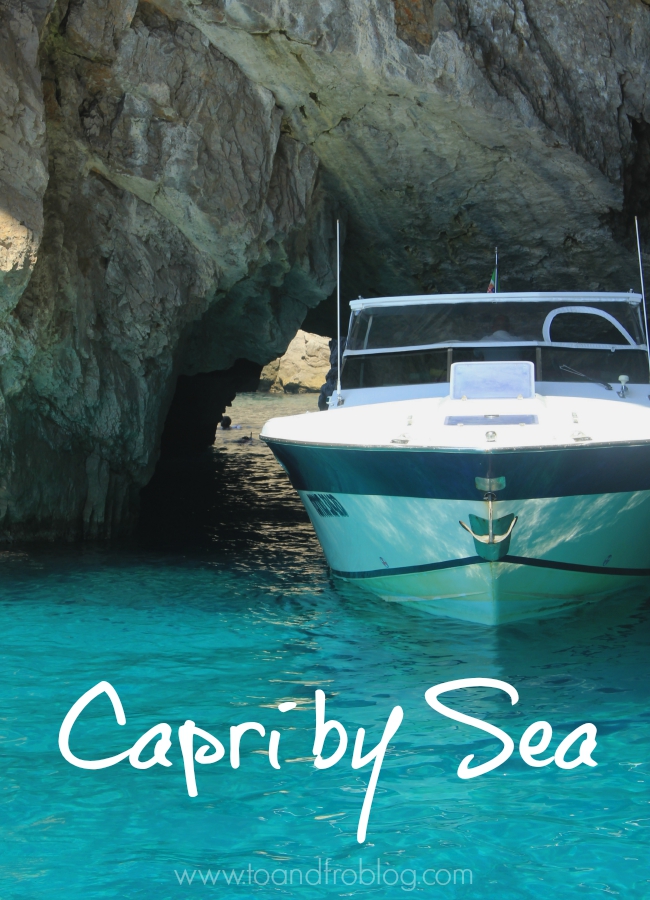
Capri By Sea

Located in the Tyrrhenian Sea, off the Sorrentine Peninsula, lies the infamous island of Capri. The 11 square km island's first tourists were the Romans, who were attracted by its ravishing scenery. Today, that same scenery attracts thousands of tourists a year and is home to a healthy population of movie stars, fashion designers and other high rollers.

boat in blue lagoon, Capri, Italy

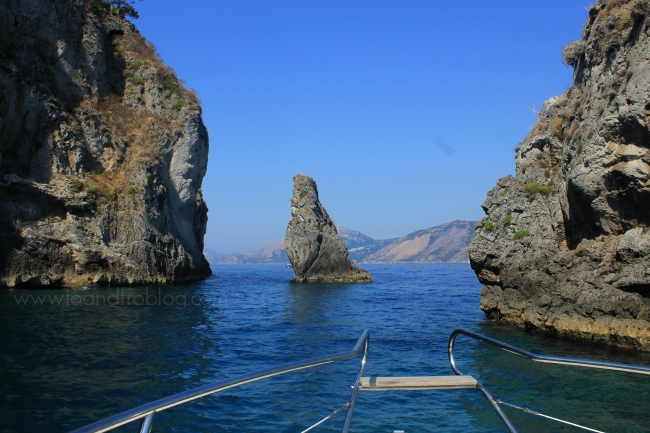
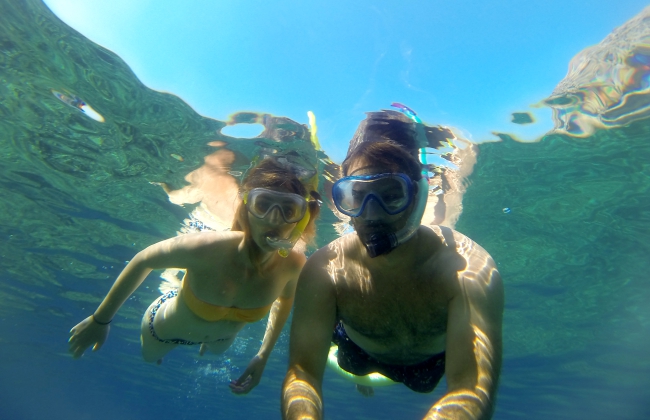
Our last day along the Amalfi Coast was spent in style, aboard a private speed boat, exploring Capri by sea. Limited on time, a boat tour was definitely the way to go. Our adventures led us through the crystal-coloured waters of the Sea, where we snorkelled, ate local seafood and took in the all of the sights of the colourful island. 

speed boat ride to Capri, Italy
snorkelling in the Tyrrhenian Sea, Capri, Italy

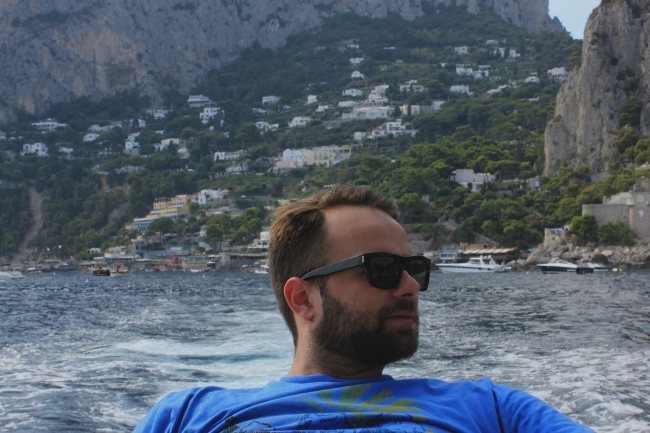
We docked at Marina Piccola (the 'little harbour'), on the south side of Capri. Until the late 19th century, Marina Piccola consisted of a small group of fishermen's houses overlooking two small pebble beaches close to an ancient landing place of Roman origin. Today it boasts many sea-side restaurants specializing in the catch of the day and colourful umbrellas for lounging.

Marina Piccola, Capri, Italy

Despite the quietness of the marina, compared to its counterpart on the north side of the island, the water was studded many day trippers like us and biollionaire-owned super yachts, which we later learned cost around €250,000 per week (that's almost $375,000 Canadian). We couldn't help by stare, and play the "If you were rich..." game. We were all a bunch of dreamers. But, also on our own private boat, exploring one of the most beautiful places we had ever been, so we couldn't really complain. 

boats in Marina Piccola, Capri, Italy

We enjoyed a fresh seafood lunch on the terrace at Torre Saracena, while taking in the fabulous views of the sea and the Faraglioni of Capri. I had the spaghetti with clams, my go-to all week, and it was so good that it was gone before I could document it. 

The Faraglioni of Capri

The Faraglioni of Capri (pictured above) are three impressive stacks situated in the sea just opposite the bay of Marina Piccola. Each massive stack with its own name, the Faraglioni are the product of centuries of coastal and atmospheric erosion of the predominantly limestone rock, and a definite sight to see. 

town of capri, capri island, italy

After a quick stop to the city centre (it was so hot, so busy and so expensive) and one last dip in the Tyrrhenian Sea, it was back to the boat.  As we cruised away from Capri, a feeling of nostalgia came over us - we had been on an absolute high since finding out we were headed to Italy. Spending the day with my family, on the water, in this beautiful country, made me feel like the luckiest girl in the world.

marina piccola, capri


Have you been to Capri? What would you recommend to 'sea' or do?


 Read more about our trip to Italy here:


SHARE:

September 11, 2015

Along the Amalfi Coast

The majority of our mystery family vacation to Italy was spent exploring the Amalfi Coast. Deemed a UNESCO World Heritage Site in 1997, the Amalfi Coast is a gem of Italy - magically suspended between the blue sky and the crystal-coloured sea. 


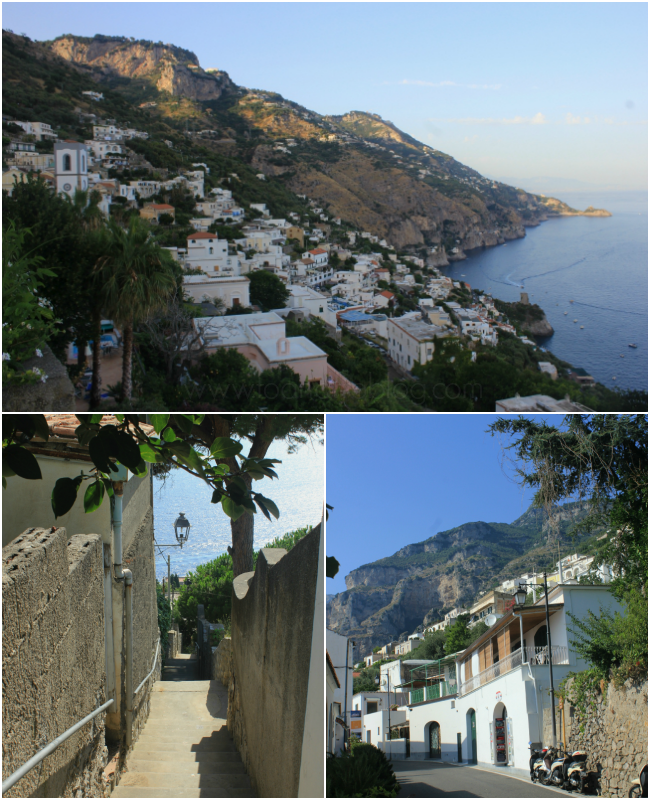
We stayed in the small town of Praiano, located between Positano and Amalfi. Praiano is an ideal village if you enjoy a simple, much quieter vacation, far away from the mass tourism that can be found along the Coast. The town is characterized by a labyrinth of stairways and narrow streets making their way through the terraced gardens, connecting the mountains directly to the sea.
town of praiano, italy

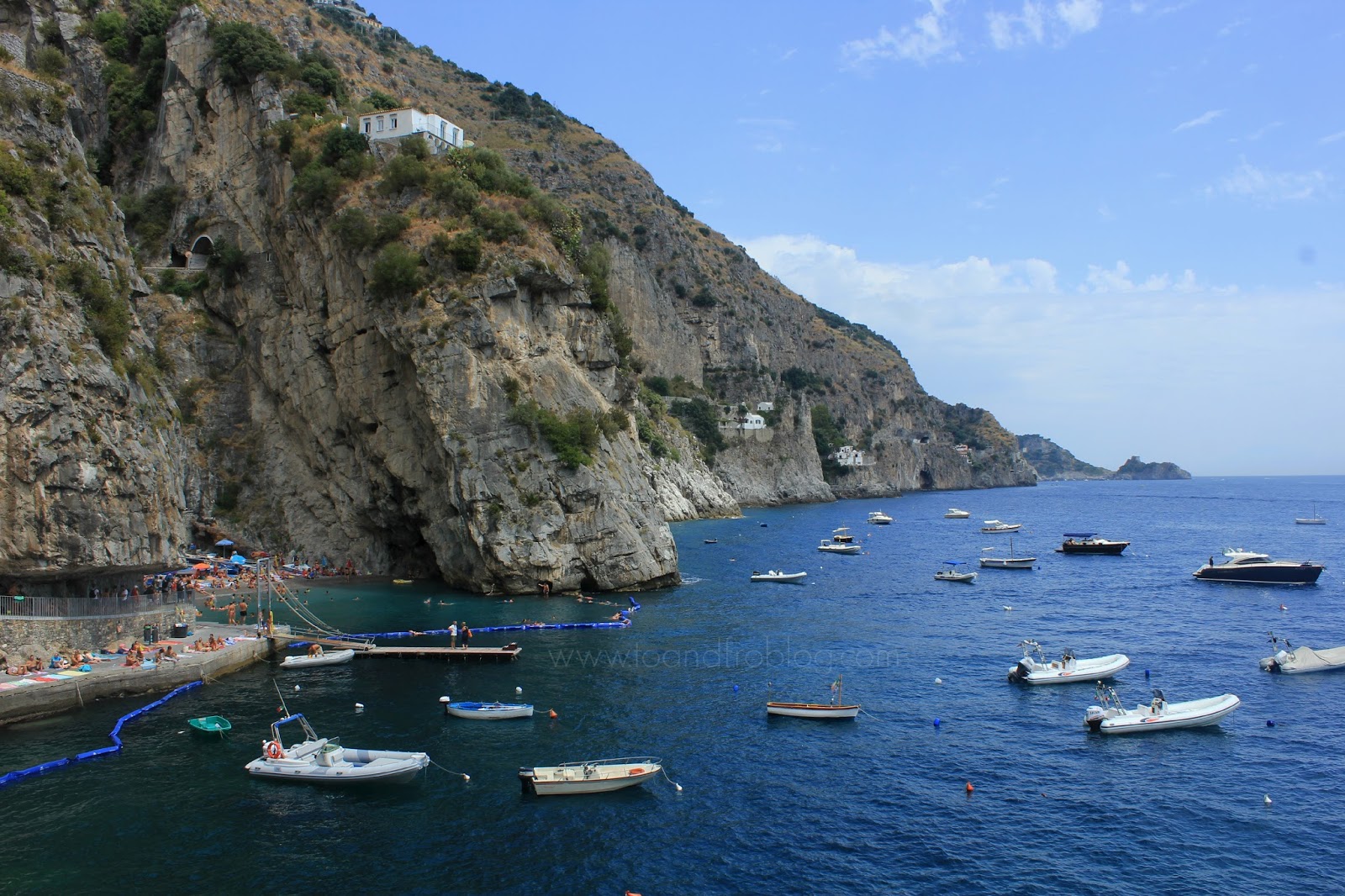
Derived from the word praia, or beach, Praiano has a few small pebble beaches, reachable by foot (and lots of stairs) or boat. One of my favourite of the trip was inviting waters of the cleverly named Marina di Praia. 

marina di praia, praiano, italy

If you like a little more action in your beach day, then One Fire is the place to be. While the atmosphere is great, this isn’t like your typical North American beach - no sand here. Bright orange chairs and umbrellas (available for rent), are strategically positioned on what can be described as a large 'patio'. Getting to and from One Fire requires descending and climbing over 400 stairs. Luckily, cold beer and wine awaits when you make it down the stairs, and on your way back up, there is a little family run bar conveniently position half way for a much needed beverage.

one fire beach club, praiano, italy

We decided to take a break from all of the stairs with a beach day at the Grand Tritone Hotel, also know as the hotel with a 'lift', or three elevators, to the beach. 

view from grand tritone hotel, praiano, italy

Mid-week, we took a driving tour along the scenic Coast, stopping in the infamous town of Amalfi to wander the shop-lined streets. Lunch, which consisted of octopus salad, pizza, mussels and clams, was in Atrani, a small town to the immediate south of Amalfi. Given the proximity to the sea, there was no shortage of fresh seafood to try. 

beaches of amalfi and atrani, italy

On our way back to Praiano, we made a stop in Ravello where we sampled local wine and limoncello. Ravello is set right in the middle of the Amalfi Coast, overlooking the whole Gulf of Salerno, and is known for its music scene.

town of ravello, amalfi coast, italy

Eating good food and drinking good beer and wine was a common theme on the trip. On one of the evenings, we took a boat ride to the nearby town of Maiori, where we enjoyed dinner at Torre Normanna, a restaurant located in an old coastal watchtower. There are about 30 watchtowers strategically built along the Coast. When unwanted visitors, such as pirates, were spotted, fires were lit, warning the inhabitants of imminent dangers and allowing them to seek shelter into the woods, grottoes or fortifications. In the early 1800s, most of the towers were unarmed and used for other purposes, such as restaurants or housing. 

boat ride along amalfi coast and torre nor manna restaurant

Our last dinner along the Amalfi Coast was spent at Kasai, one of the cutest little restaurants in Praiano. Despite being forced inside because of the rain, my 'spaghetti with local squids' was one of the best meals I had all trip. 

kasai restaurant, praiano, italy

Know before you go:
  • Praiano is on the SITA Sorrento-Salerno bus line, which will allow you to travel to all of the towns along the Amalfi Coast. 
  • If you prefer to drive, all towns on the Amalfi Coast are connected by the scenic SS163 road. Following the natural course of the coastline, the route is full of curves, nestled between the rock and the sea cliffs, and can be a bit intimidating to the novice European driver.
  • July to August is considered “tourist season”, and is extremely hot, reaching an average high of 29C plus humidity. However, most of the events, festivals, etc. take place during this time. 
  • The best time to visit is said to be April to June, when the blossoms are in bloom, the weather is just right and the Sea is warm enough to go for a swim.

Have you been to the Amalfi Coast? What was your favourite part? What would you recommend to 'sea' and do?

Read more about our trip to Italy here:
SHARE:

September 7, 2015

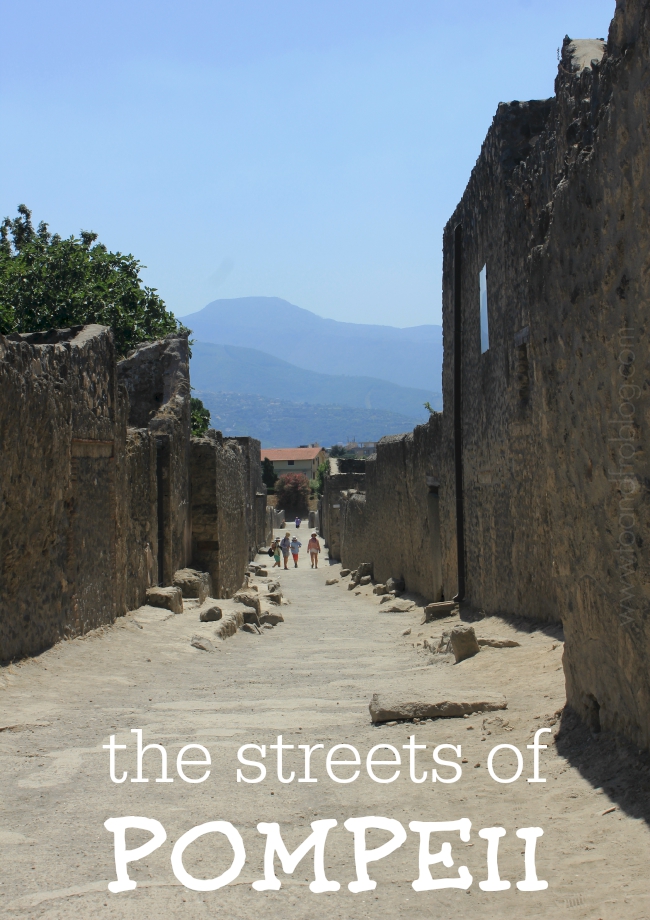
The Streets of Pompeii

Located 5 miles from the city of Napoli, Italy, Mount Vesuvius is one of the most famous active volcanoes in the world. Its most famous eruption took place in the year 79 A.D., when life came to a permanent standstill in one of the most active and splendid Roman centres, Pompeii.

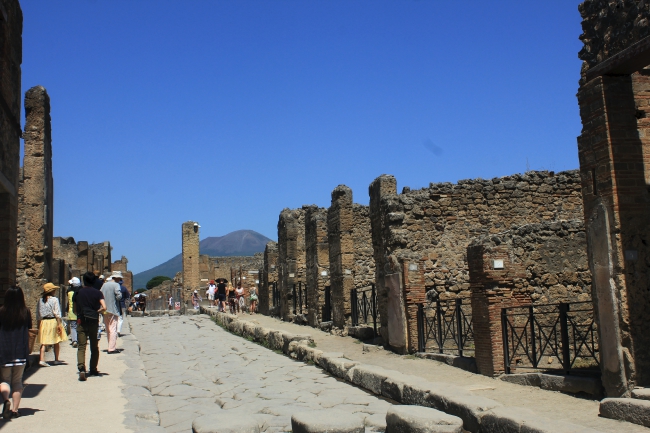
One of the first things we did when we got to the city of Napoli, Italy was visit Pompeii. Despite the heat and humidity, while wandering the streets of Pompeii, past the former shops, baths, gardens, apartments and theatres, it was easy to get a sense of everyday life in the ancient city.

pompeii, italy

Mount Vesuvius erupted with tremendous force and little warning. Most Pompeiians had plenty of time to flee. For those who stayed behind, however, conditions soon grew worse. As more and more ash fell, it clogged the air, making it difficult to breathe. Within 24 hours, the city of Pompeii was completely buried under metres of volcanic debris.

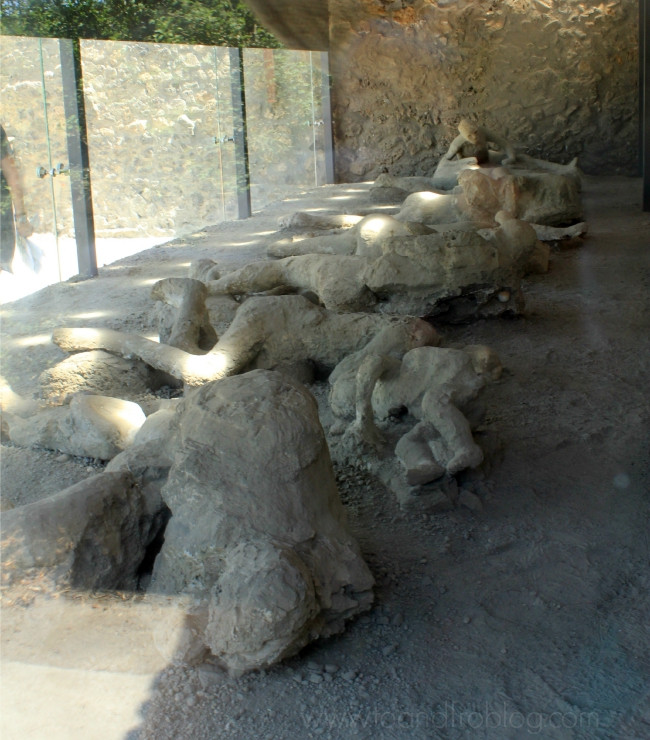
Two thousand people died, and the city was abandoned for almost as many years. The city remained mostly untouched until 1748, when a group of explorers looking for ancient artifacts arrived in area and began to dig. They were surprised to find that the ashes and debris from the eruption acted as the perfect preservative - underneath, Pompeii was almost exactly as it had been 2,000 years before. Its buildings were intact, skeletons were frozen right where they’d fallen and everyday objects littered the streets.

preserved bodies; pompeii, italy
pompeii, italy
pompeii, italy
pompeii, italy
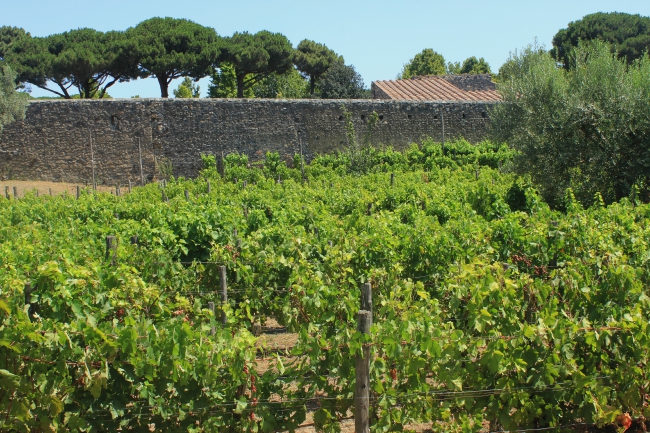
pompeii, italy
pompeii, italy

Pompeii is one of the most significant proofs of Roman civilization and provides outstanding information on the art, customs, trades and everyday life of the past. 

Today, 600,000 people live at the base of Mount Vesuvius, in the region known as the "red zone", or area that would be most directly affected by an eruption. Geologists and volcanologists who study Mount Vesuvius agree that it is overdue for an explosion and therefore continuously monitor its activity.

mount vesuvius; pompeii, italy

Know before you go:
+  Pompeii is about 150 miles south of Rome, an easy day trip.
+  The site is large, plan on spending at least 2 to 3 hours touring the city.
+  The whole site is very exposed with minimal shade, so bring lots of sunscreen, a hat and water. 
+  There are several water fountains throughout the city to refill a water bottle.
+  There is a small area outside, near the parking lot, that sells touristy things, snacks and cold drinks.
+  Maps and guides of Pompeii are available in several languages at the gate.

Admission (Pompeii site only): € 13,00
Peak hours: April 1 to October 31 - 9.00am-7:30pm (last entrance 6:00pm)
Off peak hours: November 1 to March 31 - 8:30am - 5:00pm (last entrance 3:30pm)


Have you ever been to Pompeii?


Read more about our trip to Italy here:

SHARE:

September 4, 2015

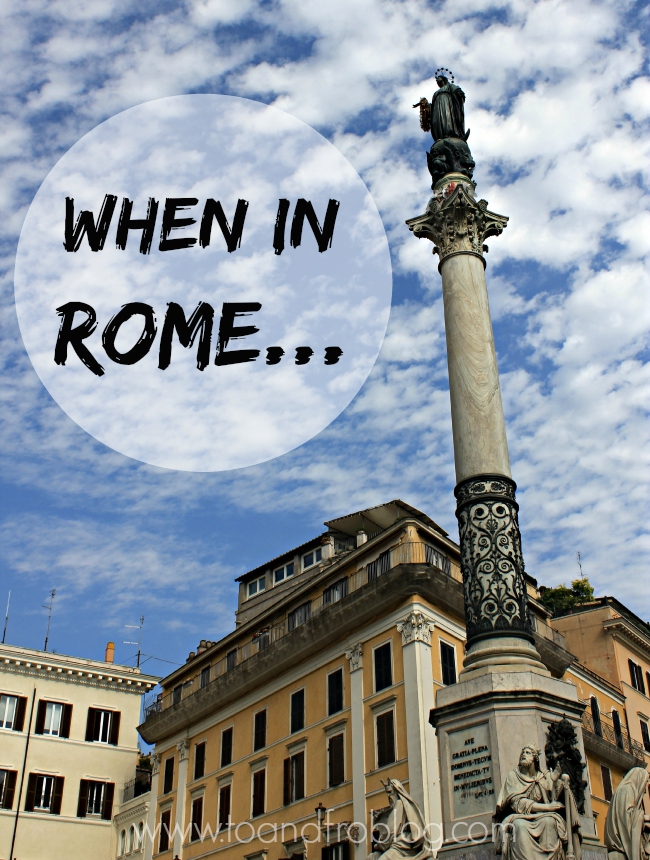
When in Rome...

Visiting the ancient city of Rome was definitely a highlight of our recent trip to Italy. There is so much to see and do in this historic city that I really don't think you can spend enough time there. We crammed lots of walking, sightseeing, eating and drinking into those one and a half days, but didn't even scratch the surface. 

Is visiting Rome on your bucket list? Here are my 5 recommendations for things to do & see 'when in Rome'...

things to do in Rome

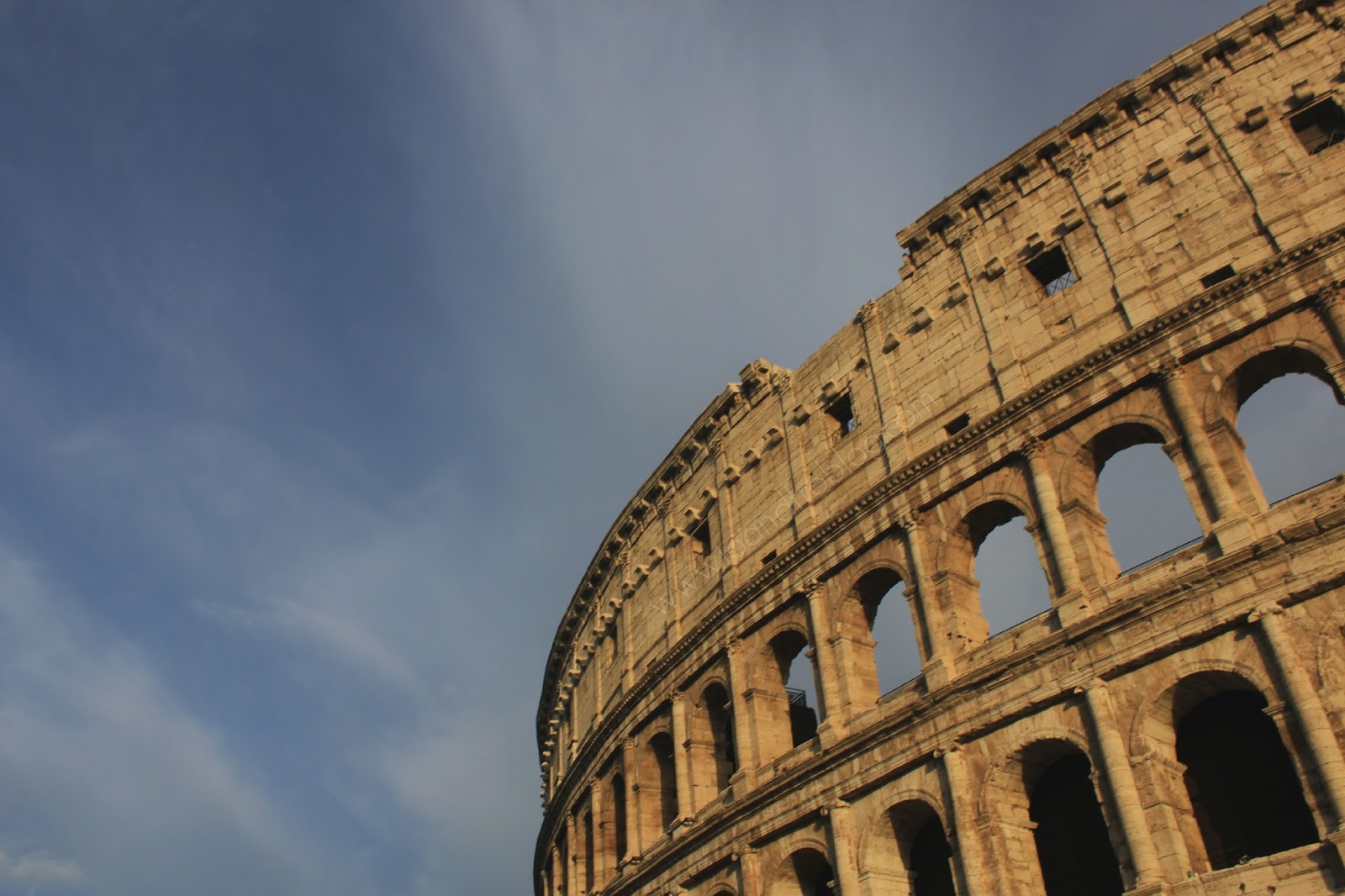
1// Circle the Colosseum, inside and out. Located just east of the Roman Forum, the massive stone amphitheater known as the Colosseum was commissioned around A.D. 70-72 by Emperor Vespasian as a gift to the Roman people. After a decade of construction, Vespasian’s son Titus opened the Colosseum with 100 days of games, including gladiatorial combats and wild animal fights. After four centuries of active use, the arena fell into neglect. Though two-thirds of the original Colosseum have been destroyed over time, the amphitheater is continually being restored and remains a popular tourist destination. 

things to do in Rome; colosseum

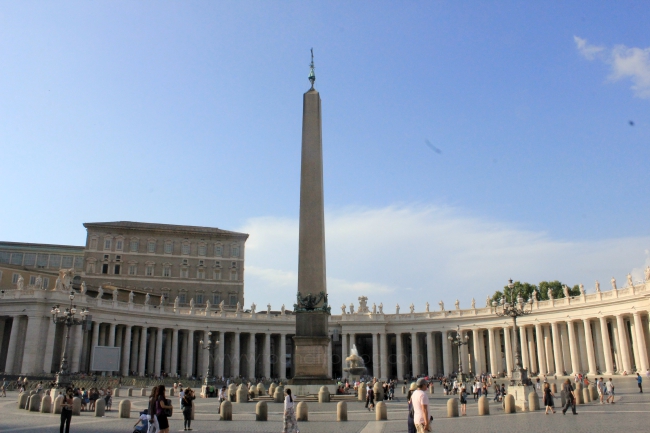
2// Feel small in Vatican City. St. Peter's Square, known locally as Piazza San Pietro, was created in the seventeenth century. The square is an architectural highlight, and absolutely enormous. On special occasions, such as the election of a new pope or Easter, almost 400,000 people fill the expansive square. St Peter's Square creates an entry point to the St. Peter's Basilica, the world's largest basilica. The word basilica used to describe an open, Roman public court building, but today refers to a large and important church that has been given special ceremonial rights by the Pope. 

things to do in Rome; St Peter's Square

3// Let your feet do the work. Take a walking tour of Rome and visit one, two, three or more of the  many famous attractions, including the Pantheon, Trevi Fountain and Spanish Steps, to name just a few.

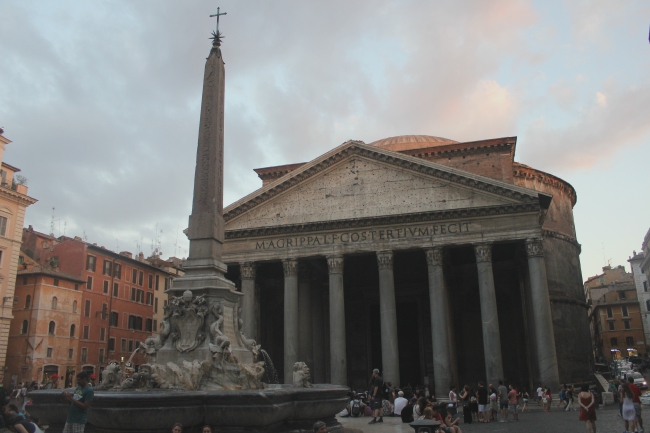
The Pantheon is one of the best-preserved of all Ancient Roman buildings. It has been in continuous use throughout its history, and since the 7th century has been used as a church.

things to do in Rome; pantheon

Trevi Fountain, which sadly was under construction when we visited, is the largest Baroque fountain in the city and one of the most famous fountains in the world.

things to do in Rome; trevi fountain

Built in the early 1700s, the bustling 135 steps comprising the monumental Spanish Steps connect the Piazza di Spagna and the Piazza Trinità dei Monti church, which was also being restored during our visit. 

things to do in Rome; spanish steps

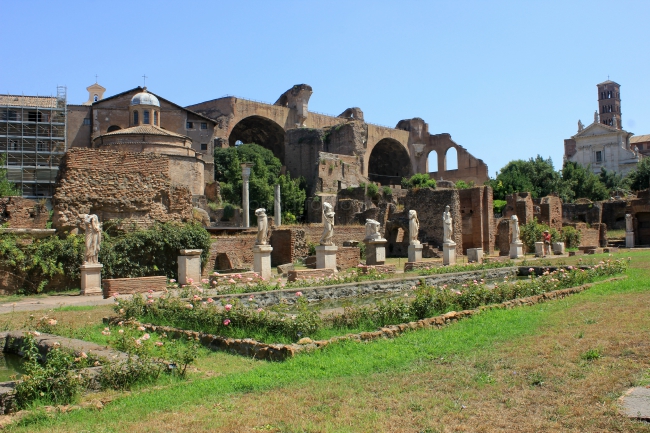
4// Take a walk through history at the Roman Forum. Located next door to the Colosseum, the Roman Forum was the center of Roman pubic life for centuries. It acted as the site of processions, elections, public speeches, criminal trials and even gladiator matches. Statues and monuments scattered throughout the Forum commemorate the city’s great men, including the infamous Caesar. Today, the Forum is a sprawling ruin of architectural fragments and archaeological excavations remembering what the city of Rome once was.

things to do in Rome; Roman forum

5// Fill your belly.  In Rome, simple, yet traditional, cuisine reigns supreme. No matter which little back alley you wander down in your travels through Rome, you will find it littered with tables, chairs, umbrellas, friendly waiters and the aroma of Italian food. As an added bonus, in most places the beer and wine is cheaper than a bottle of still or sparkling water! However, be warned, most, if not all, restaurants in Italy also have a 'cover charge', which ranges from 2.50 Euro plus. One thing that I love about dinner time in Rome is that no one is in a rush, to eat or get you out of their restaurant. You start late, go slow, eat plenty and drink lots, rolling or stumbling out of the restaurant way after bed time. 

things to do in Rome; food of Italy


Have you been to Rome? What is your on 'must do' list?

Read more about our trip to Italy here:
THE GOOD LIFE BLOG5 on Friday


SHARE:
Blog Design Created by pipdig