October 22, 2011

PART 5: Back to Reality

Friday, October 14, 2011

After waking early this morning and completing our cleanup duties, we finally left the Tundra Buggy Lodge behind and headed back into Churchill.  We were fortunate enough to see one last bear as we headed into town, one last reminder to why we all came together for this special week.  I got to meet many great people, which was not just a great networking experience, but also inspiring.  The teenagers had some truly inspiring ideas and were genuinely excited about what they were doing.  It makes me think back to when I was their age – I think I was probably more interested in boys and soccer than being a steward for our environment.  I definitely applauded them.

As I leave Churchill and the polar bears behind and head home with my action plan in hand, to an inbox full of emails, or reality, I feel inspired, motivated and excited to take on new challenges and move my community and those around me to make a change and reduce their carbon emissions.  If not for the polar bears, then do it for yourself.


Saturday, October 15, 2011

Just kidding!  We didn’t leave Churchill last night.  Fog had blanketed the town earlier in the day and unfortunately left us grounded and unable to fly.  We were put up in the rustic Northern Lights Inn, and were finally able to shower after completing the week’s No Shower Challenge!  We were woken up at 5am this morning to the sound of gunshots.  Quickly springing out of our beds we realized they were not gunshots, but the scare pistols and screamers that we got to shoot off at the Polar Bear Holding Facility, because there was a polar bear right beside the hotel!  Although it’s unfortunate to see a polar bear wander into town, it was interesting to see all that we learned at the facility put into action for the safety of the Churchill residents, and the polar bear. 

We finally got off to Winnipeg, but upon arrival was welcomed by more bad news.   Since I won’t be able to get out of here until tomorrow morning now, I think I’ll partake in a little retail therapy!

I will leave you with a poem I wrote during my inspiring time on the Tundra Buggy Lodge.  Apparently I’m a poet, and I didn’t even know it! Enjoy! 

Polar Bear, Oh Polar Bear
Polar bear, oh polar bear, will you feel harm?
Will you feel harm when the Arctic continues to warm?

Polar bear, oh polar bear, where will you go?
Where will you go in a world with no snow?

Polar bear, oh polar bear, what will you be?
What will you be when you can’t get to sea?

Polar bear, oh polar bear, will it suffice?
Will it suffice when you can’t hunt on ice?

Polar bear, oh polar bear, will you feel defeat?
Will you feel defeat when you can’t eat?

Polar bear, oh polar bear, how can we assist?
How can we assist so you continue to persist?

Marla, oh Marla, it’s no great debate,
One way you can help is to educate!

Take all that you’ve learned from this opportunity,
And be a leader in your community!

Together as one, we can change our way,
SHARE:

February 27, 2015

Did You Know? Polar Bears

February 27 is International Polar Bear Day. There's no denying I love the big white bear, so in honour, I'm sharing 15 facts about polar bears. I hope you learn something new and are inspired to to protect this iconic species.

International Polar Bear Day - Polar Bear Facts

15 Facts about Polar Bears

  1. Polar bears live in the circumpolar north, in areas where they can hunt seals on the sea ice. They are found in Canada, the U.S. (Alaska), Greenland, Russia and Norway.  
  2. Biologists estimate there are roughly 20,000 to 25,000 polar bears in the world, 60% of which live in Canada.
  3. Contrary to media portrayal, polar bears and penguins live at opposite poles and would never meet. Polar bears are only found in the north, and penguins are only found in the south.
  4. The scientific name for polar bear is Ursus maritimus, which means "sea bear". It is the only bear considered a marine mammal (dependent on the ocean for survival).
  5. Polar bears' fur consists of a dense, insulating undercoat topped by guard hairs of various lengths. It is not actually white—it just looks that way. Each hair shaft is pigment-free and transparent with a hollow core that scatters and reflects visible light, much like what happens with ice and snow.
  6. Polar bears have black skin and a layer of fat (not blubber) that can measure 4.5 inches thick!
  7. A polar bear has very keen senses of smell, vision and hearing. Heightened senses help bears survive in Arctic conditions.
  8. The polar bear's main prey is the ringed seal. They depend on sea ice for access to seals, hunting by waiting for the seals to surface at an openings in the ice or at a breathing hole. 
  9. Polar bears' lives are a cycle of feasting and fasting. In the winter, the bears are out on the sea ice hunting. When the sea ice melts, polar bears are forced onto land. With no access to seals, they are fasting on built up fat reserves. When hunting is good, polar bears can eat 100 pounds of blubber in a single sitting! 
  10. Polar bears can run as fast as 40 kilometers per hour—but only for short distances. 
  11. With the exception of pregnant females, polar bears do not overwinter in dens like brown and black bears. Instead adult male polar bears and non-pregnant females remain active throughout the year. 
  12. Mating takes place on the ice in April or May, but the fertile ova do not implant until the following fall. This is called delayed implantation.
  13. Females usually bear two cubs about two months after they enter the maternity den, usually by early January. These cubs weigh a pound at birth, and quickly grow to over 20 pounds in 3 months by feeding on mom's milk.
  14. In May 2008, the U.S listed the polar bear as a threatened species under the Endangered Species Act, citing sea ice losses in the Arctic from global warming as the single biggest threat to polar bears. 
  15. If we do not reduce our green house gas emissions and the planet continues to warm at the current rate, 2/3 of the world's polar bears will disappear by 2050. 

International Polar Bear Day - Polar Bear Facts


Do you like polar bears? Did you learn something new?


 photo TampF sig_zpsi50j9kbk.jpg


Polar bear facts courtesy of my friends at Polar Bears International. For more information on polar bears or viewing polar bears in the wild, start here.
SHARE:

August 10, 2012

Grolar Bears & Pizzlies

Wow!  I can't believe it's Friday already.  This week has just flown on by! 

It's been a while, so I figured it was time for some polar bear talk... I came across an interesting article  from my friends at Polar Bears International addressing polar bear evolution and what it means for polar bears in a warming climate.  With talk of "pizzlies" and "grolar bears" (grizzly/polar bear hybrid) in the news the past few years, I thought it would be an interesting read to share. Not to mention, more and more out of state visitors are asking about it and I just find it really intriguing. Some food for thought going into the weekend:


The article discusses how in the wild, climate change is erasing the distance between the brown bear and polar bear species. Brown bears are moving north into polar bear territory, and polar bears are being forced off melting ice to spend more time on land, where they're more likely to encounter brown bears. With sea ice melting at an unprecedented rate, and polar bears consequently being driven towards extinction, people are beginning to wonder if this hybridization and their production of viable offspring will be the saving grace for the great white bear.  "Whether this hybrid can produce viable offpsring or not, and regardless of what we learn from continuing studies on the polar bear, it is important to remember that hybridization does not offer salvation for polar bears.  The current rate of global warming is so rapid polar bears will starve and become extinct long before their genes may be swamped by those of brown bears.  And as polar bear lovers and conservationists, it is not whether some polar bear genes "live on" in a hybrid terrestrial animal, like a pizzly, it is whether the great white bear we all know and love, and its unique habits and habitat, can persist."

Just some food for thought.


SHARE:

October 7, 2015

Assiniboine Park Zoo's Journey to Churchill

My first visit to Winnipeg, Manitoba was back in October 2011, when I joined fellow zoo professionals on a journey to the polar bear capital of the world, Churchill, Manitoba, as part of Polar Bears International's Leadership Camp. Now, almost 4 years to the day, I ventured back in Winnipeg. Surrounded by a similar crowd, but for a different reason, polar bears were still a hot topic of conversation.

Today, zoos and aquariums play an important role in polar bear research and conservation, including providing a home for orphaned cubs that would not otherwise survive in the wild and educating the public to take action on climate change and help protect this iconic species for future generations. AS a leader in the Zoo community, and with its proximity to polar bear territory, the Assiniboine Park Zoo in Winnipeg plays a large role in polar bear research, conservation and education in Canada. 

Assiniboine Park Zoo's entrance

The Zoo's new Journey to Churchill exhibit is the most comprehensive northern species exhibit of its kind in the world. Home to polar bears, musk ox, grey wolves and more, the award-winning exhibit allows visitors to discover the magic of the North, while making a connection with these iconic Arctic species. And while visiting last week, I felt right at home.

journey to churchill entrance
musk ox lying down
snowy owl on log
reindeer standing

Currently home to 7 polar bears, the 10 acre section of the Zoo is an educational classroom like no other, inviting visitors to learn about biodiversity, climate change and conservation. It is also home to the International Polar Bear Conservation Centre, an education, research and transition facility that is the first home for orphaned Canadian polar bears before they are transitioned into Journey to Churchill, and even on to another zoo within Canada. 

entrance to Gateway to the Arctic building

When touring Journey to Churchill, the Gateway to the Arctic building is where you really want to be. The impressive Sea Ice Passage gives visitors the rare opportunity to view polar bears and seals swim from below the surface of the water. With the bears playing above us, it's where I stood in awe for almost an hour.  

polar bear in sea ice passage
polar bear selfie
polar bear paws

Polar bears have a special place in my heart.

What's your favourite animal? Have you been to the Assiniboine Park Zoo? 

hudson the polar bear

SHARE:

October 18, 2011

PART 2: Greetings from Churchill!

Monday, October 10, 2011

Greetings from Polar Bears International’s Communicator Leadership Camp in Churchill, MB and Happy Thanksgiving! After an early 21/2 hr flight from Winnipeg, and some Timmy’s coffee, we have finally arrived at our destination, the polar bear capital of the world!  


The day started off with a tour around town.  We met so many interesting people.  First was Karyne Jolicoeur, an interpreter from Parks Canada.  She took us to the Fort of Wales at Cape Merry, where we learned about the history of Churchill, dating back to the fur trade in the 1700s. We even got to see a couple of belugas playing in the estuary where the Churchill River and Hudson Bay meet. 


Next up was Bob Windsor, a conservation officer with Manitoba Conservation, who works at Churchill’s Polar Bear Holding Facility (calling it polar bear jail is highly frowned upon).  The Polar Bear Alert program works to keep problem bears away from the town and to keep both the residents of Churchill, and the bears, safe.  We learned about the scare tactics used, such as their newest technique of paintball guns, and I even got to shoot a pistol with “screamer bullets”, another hazing technique.  Click here to see a video discussing Churchill's Polar Bear Alert System.  If these scare tactics don’t work to scare the bear a safe distance from town, then they bear is captured via live trap or by darting it.  The bear is kept in the holding facility, which unfortunately we didn’t get to go inside of, for 30 days and then taken by helicopter 40 miles north to the coast and released.  It was interesting to learn that when we were there they had 9 bears in the facility, including a mom and her cub that they had been brought in earlier in the morning.  Of the 200 calls they have gotten to their 24-hotline so far this year, they have only had to capture and hold approximately 25, scare tactics worked for all others. 


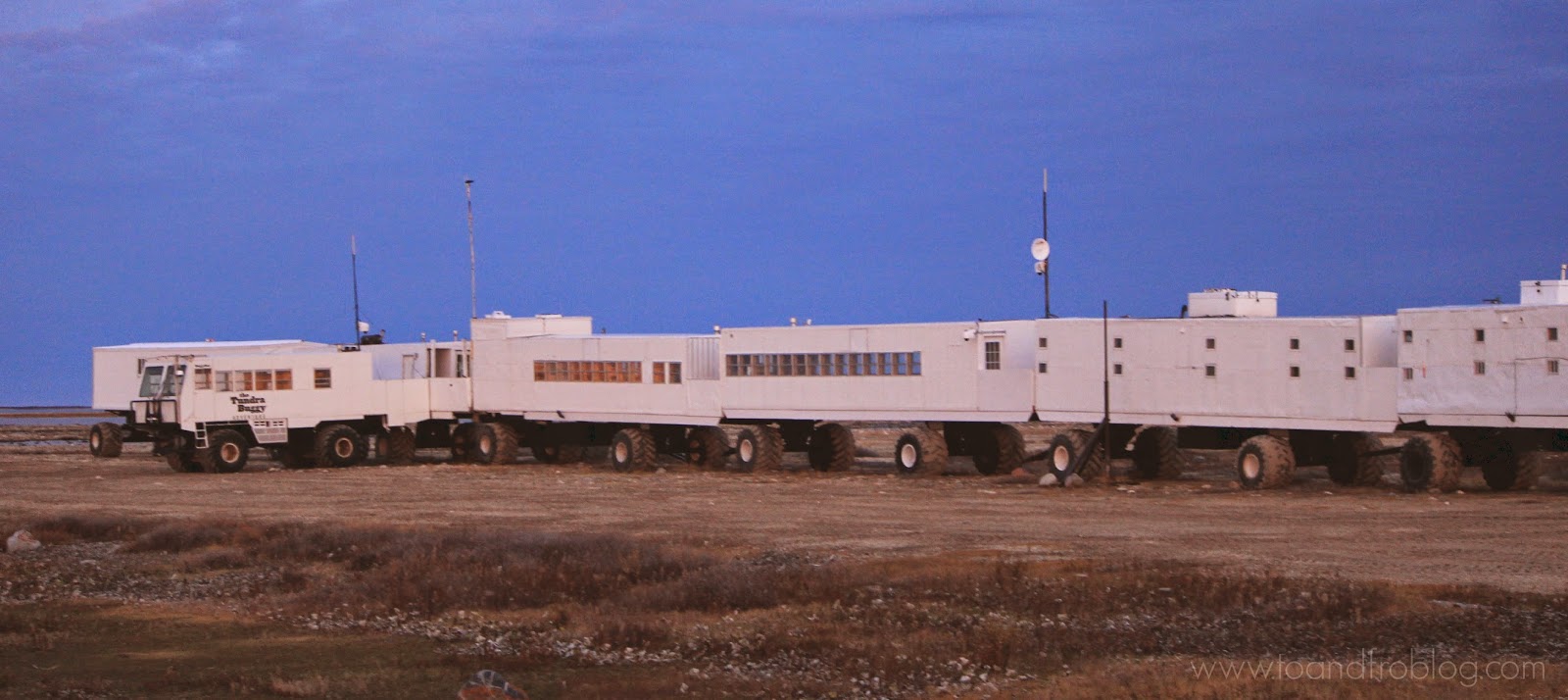
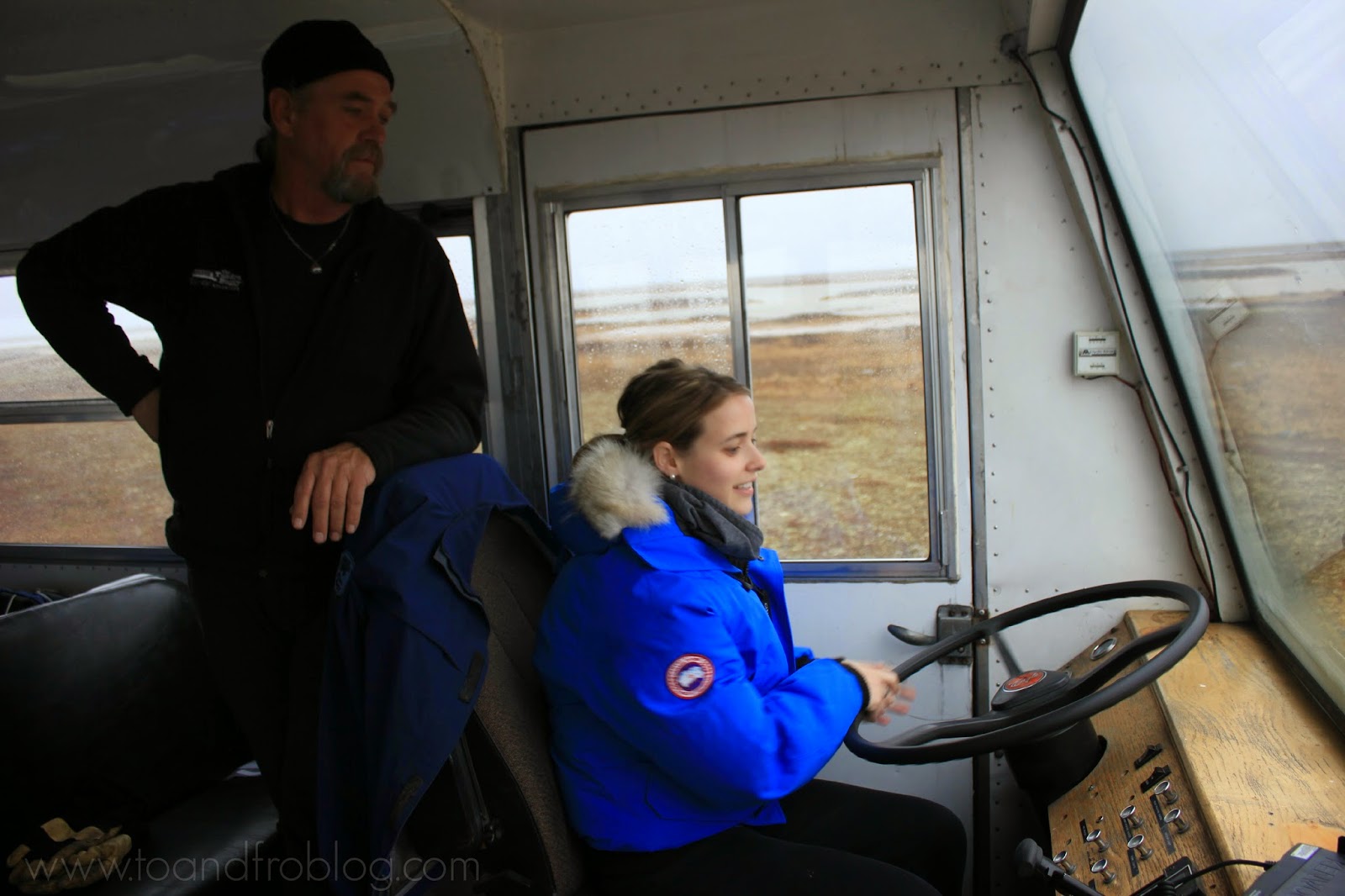
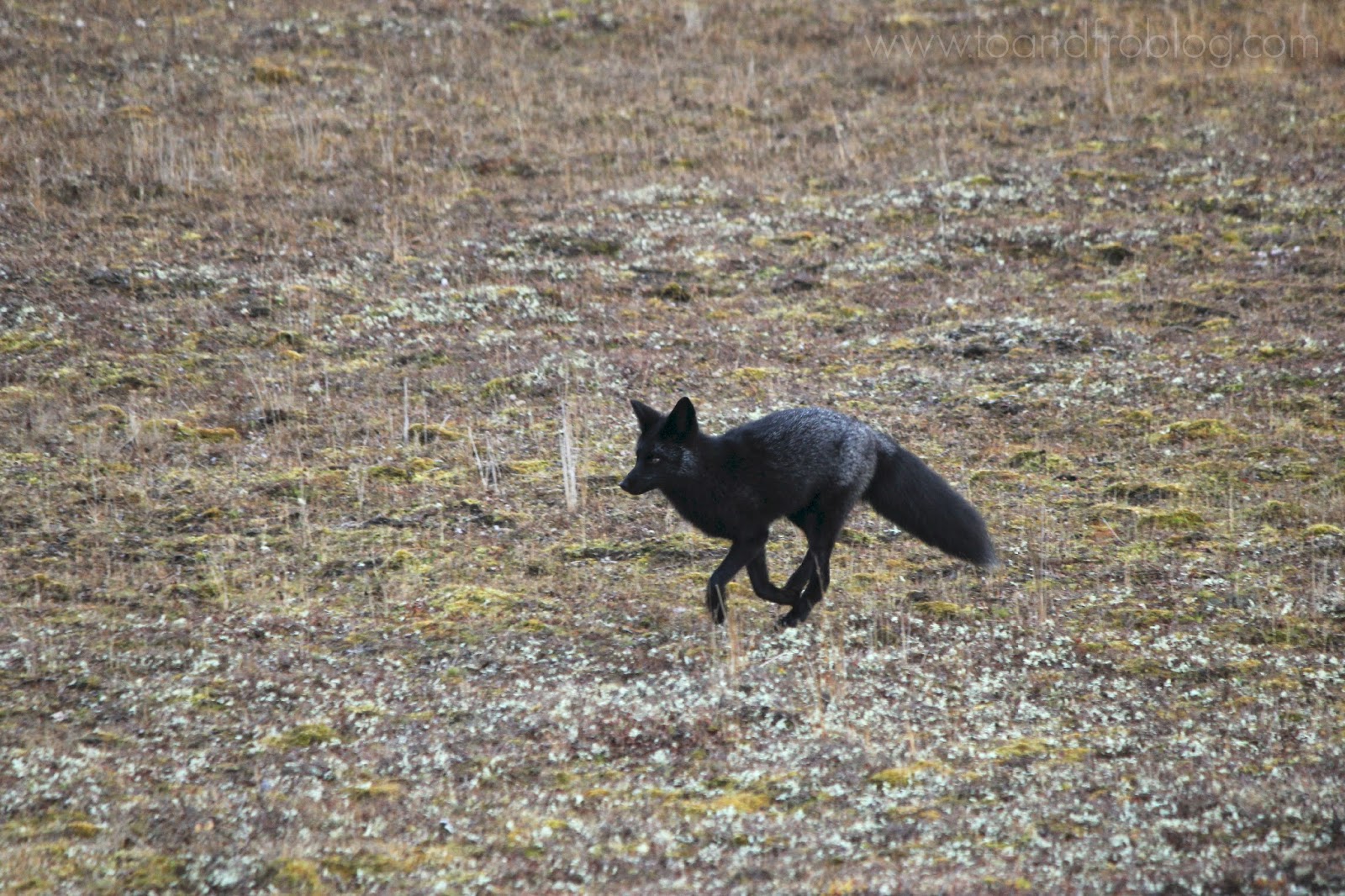
Then it was finally time to load up the Tundra Buggy, complete with a stove for warmth, and head out to Frontiers North Adventures Tundra Buggy Lodge.  What a ride!  The roads we have been driving on were built by the Canadian and American military for their cold-weather training during the Cold War.  We saw a lot of wildlife such as various small birds and waterfowl, tundra swans, ptarmigans and even a silver fox (a color phase of the red fox).  He was very busy digging up a cache and didn’t mind us sneaking up closer to get a good look at how gorgeous he was.  Our driver, Buggy Bob, made sure to stop every time we thought we saw something, including many false alarms that turned out to be only white rocks.  With the Tundra Buggy Lodge in sight, I had just about given up hope that we would see a polar bear today.  It was ok with me though, we had plenty more time and at least I had seen a silver fox!  Do you know how rare this color phase is?  They only make up 5% of the red fox population in Alaska!  If you know me well enough, you know how much I adore red fox!  But just then we saw her sleeping on a bed of kelp along the coast of the bay.  An immediate hush came over the entire group.  She was so beautiful!  Before reaching the lodge we caught a glimpse of two more bears sleeping, one in the kelp and the other in the willows.  It’s pretty cool to think we have two polar bears sleeping outside our windows as I write this.  

Silver fox

Two adult tundra swans and their cygnet flying over the Tundra Buggy Lodge

Our first polar bear sighting of the week

Our second polar bear sighting of the week

What a beautiful sunset!


Before filling our bellies with a nice Thanksgiving meal, we took the opportunity to share how thankful we all were to be a part of this remarkable experience and to be able to share this experience with others to move them enough to make a change for polar bears.

Find more on my journey to Churchill here:

SHARE:

October 14, 2014

Polar Bear Capital of the World

visiting the polar bears in Churchill, Manitoba

Viewing the Polar Bears in Churchill, Manitoba


Three years ago this week I had the privilege to travel to Churchill, Manitoba, polar bear capital of the world. As part of Polar Bears International's Leadership camp, I joined forces with Educators from zoos and aquariums across North America travel to experience these iconic species in the wild, learn about the effects climate change on their habitat and discuss how we, as educators, could use what we learned to educate others and conserve the big white bear for future generations.

When to visit?
October and November are the prime months for polar bear viewing as the Hudson Bay begins to freeze and the bears start moving from their summer habitat inland on the tundra where they have been fasting all season, back to the sea ice to hunt for their favourite food, seals.

How to get there?
Since I was flying from Alaska, it was quite a hike to get to Churchill, Manitoba. In fact, I won the 'award' for the longest travel in our group. 

Regardless of where you are coming from, there aren't any roads into Churchill so you only have two travel options to get there - by air or rail. By plane: Air service is available year round, with two airlines flying into Churchill - Calm Air (who we flew with) and Kivalliq Air. The flight from Winnipeg is approximately 2 hours. By train: Via Rail trains depart Winnipeg for Churchill twice a week, and return to Winnipeg three days a week. The train ride is approximately 48 hours long.

visiting the polar bears in Churchill, Manitoba

Where to stay?

We had the privilege of staying out on the Tundra Buggy lodge, operated by Frontiers North Adventures. Our feet did not touch the ground for 5 days! 

visiting the polar bears in Churchill, Manitoba

While you can stay out on the Lodge if you are not part of a large group like PBI, the opportunities are limited. Luckily, Churchill's popularity has resulted in a number of options for you to stay in town, including hotels, bed and breakfasts and remote lodges. For more information on the town of Churchill, including hotels, restaurants and amenities, click here.

visiting the polar bears in Churchill, Manitoba

How to view the polar bears?
The best way to experience wild polar bears is on an authentic Tundra Buggy. If you are interested in taking a day trip out on the tundra, there are two companies to chose from. Frontiers North Adventures, who operates the "Tundra Buggy" is by far the leading company, and holds the larger number of permits from the Manitoba government. All of their Tundra Buggies are furnished with dual-pane frost-free windows for all of those photography opportunities and contain propane heating systems that closely resemble a cozy fireplace. 

visiting the polar bears in Churchill, Manitoba

Tips for packing?
The weather in Churchill can be unpredictable. The year my colleague was there, it was bright and sunny. The year I was there, grey and windy. The year after I was there, snowy. You definitely need to be prepared for cold and snowy conditions, but layers are also key. Musts include a warm jacket and/or windbreaker, thick gloves, warm harm insulated boots, wool socks and long underwear.

Other must sees?
Polar bears aren't the only thing to see in Churchill. Churchill is also known as a beluga-watching hotspot, birders' paradise and one of the best places to experience the Aurora Borealis. There's a chance to see arctic hare, ptarmigan, red fox and arctic fox. 

visiting the polar bears in Churchill, Manitoba

Additional tips for visitors?
Seeing polar bears in the wild is extremely popular, and space fills up fast. Be sure to book your visit far enough in advance.

If seeing polar bears in the wild is on your bucket list, the time to go is now. Even though 60% of the world's polar bears can be found in Canada (Churchill is called the polar bear capital of the world for a reason), with climate change and the melting sea ice, polar bears are loosing their habitat. If we don't reduce our greenhouse gas emissions, 2/3 of the world's polar bears could be gone in our lifetime, by 2050.

visiting the polar bears in Churchill, Manitoba

I was extremely fortunate to have been given this opportunity and it still remains high on my most memorable experience list. I highly recommend you check out Polar Bears International. As the world's leader in polar bear conservation, they are doing wonderful things for all Arctic species.

Read my other posts about Churchill:
Part 1: The Beginning of an Adventure
Part 2: Greetings from Churchill
Part 3: Looking Into the Eyes of a Big White Bear
Part 4: Tying It All Together
Part 5: Back to Reality
#thankful project: an experience


Have you ever seen polar bears in the wild? Or, is it on your bucket list? I'd love to hear!


SHARE:

October 20, 2011

PART 3: Looking into the Eyes of a Big White Bear

Wednesday, October 12, 2011

This morning we woke up bright early to wind and rain! I don’t know if I’ve ever experienced such strong wind.  The way the wind was pushing around the Tundra Buggy Lodge made it feel like we were on a boat.  It definitely gives me an appreciation for both the animals and plants that call this harsh environment home.  

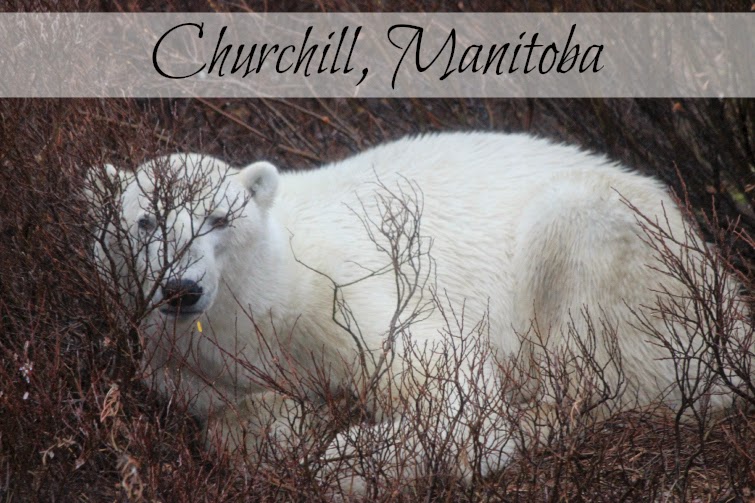
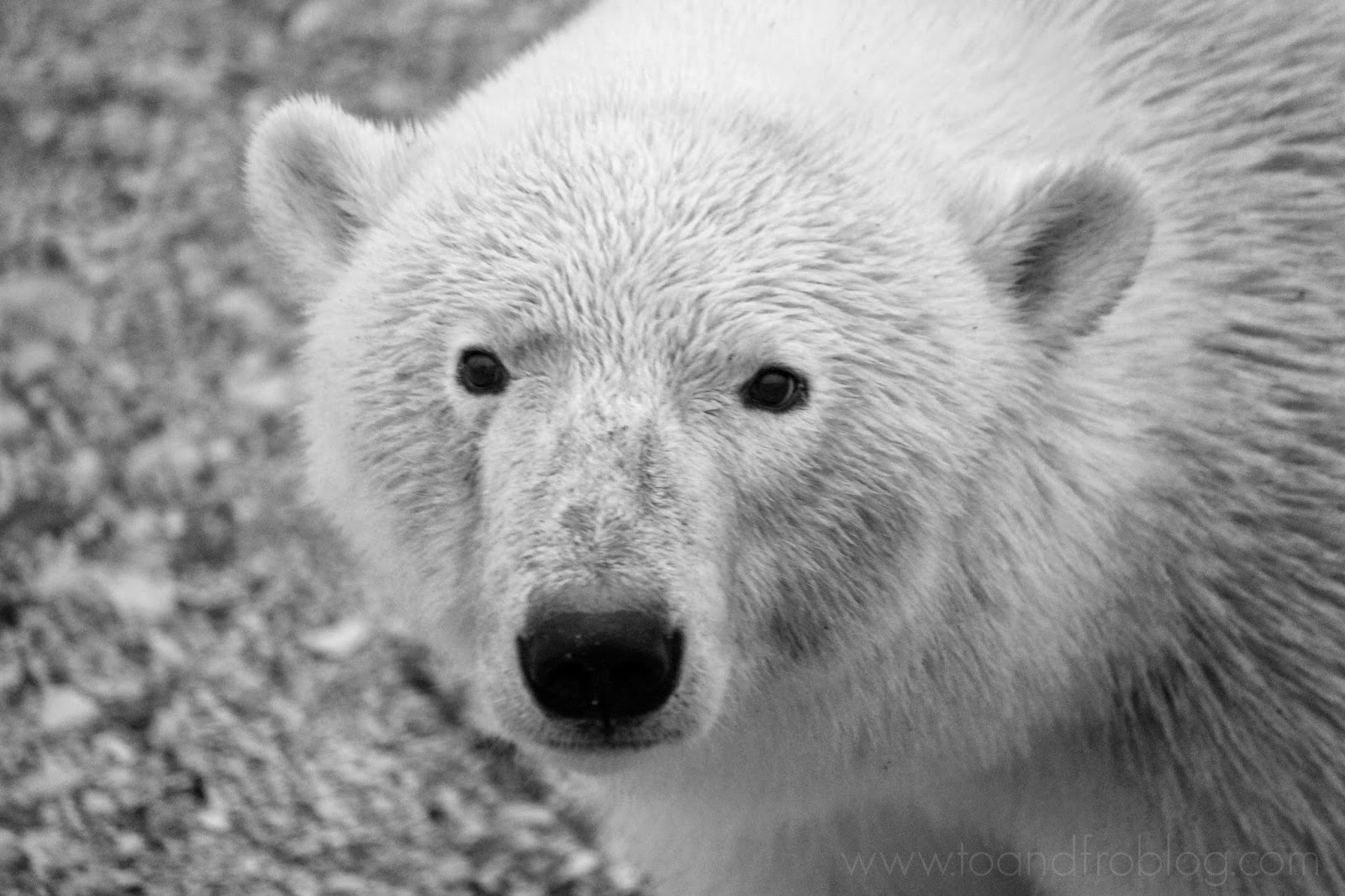
First up in the morning was a Skype session with Dr Steven Amstrup, PBI’s Chief Scientist.  Right at the end of our Skype session, a small female subadult (polar bear that is age 3-5 and has yet to reach sexual maturity) decided to make an appearance and steal Dr Amstrup’s thunder.  We went outside in between buggies to try and get a better picture and noticed she was very skittish.  Seeing a skittish bear around a Tundra Buggy is always a good sign because it means the bear has yet to become accustomed to humans.  Amid trying to get that perfect shot, I put down my camera for a second and just looked into her beautiful eyes and immediately got lost. What a beautiful animal I had standing in front of me! I felt so privileged to be here and see polar bears in a whole new way.  There were no white bars or plexiglas windows between me and this bear, just open tundra (and high winds).  This is their world, we’re just living in it.  After minutes of marveling over her, she eventually hunkered down, in some low-lying shrubs, with her butt to the wind to stay warm.  Since polar bears carry most of their fat in their rear end and belly, we have learned how to judge their condition based on the shape and size of their rear.  We judged this female to be of average condition, what is to be expected of polar bears at this time of year, when they’ve been fasting for 4 months already.  

Skyping with Dr Amstrup

Getting lost in those beautiful dark eyes

Shaking off

We then headed out on the Tundra Buggy, travelling on roads made by the Canadian and American military during the cold war.  I have no idea what idea what direction we were travelling in because I have no mountains to my east for reference like in Anchorage.  After a drive, a Tundra Buggy breakdown (we had to abandon ship and jump on the Teen’s buggy), a couple more polar bear sightings (bringing the total to 7 different individuals so far) and a snowshoe hare trying to stay dry, we headed back to the lodge for yet another Skype session, this time with Dr Andrew Derocher, a Professor of Biology with the University of Alberta.  He has done years of research on the South Beaufort Sea polar bear population in Alaska so it was very especially interesting to hear about his research.  The night ended with a presentation from John Gunter, CEO of Frontiers North Adventures, the company that gratefully donates the lodge and Tundra Buggies to PBI during leadership camp and while polar bear scientists are in town. 

Male sleeping and trying to stay dry in the willows outside the lodge

Arctic hare
SHARE:

November 4, 2013

#thankfulproject | an experience

Today, I'm joining up with Chasing Happy for her November Thankful Project. Each day this month she has come up with a topic, and today's prompt is: an experience. 


Back in October 2011, I was given the incredible opportunity to participate in Polar Bear International's Leadership Camp.  I traveled to Churchill, MB, polar bear capital of the world, to join several other educators from zoos and aquariums across North America and experience polar bears in the wild and learn about the factors threatening their existence.


I am thankful for Ursus maritimus, the stunning iconic Arctic species we call the polar bear. I am thankful that the country I call home proudly supports a large majority of the world's polar bears and that organizations like Polar Bears International and the 5 polar bear nations, including Canada and the US, are committed to protecting the integrity of this species for future generations. Most of all, I am extremely thankful for being given this once-in-a-lifetime opportunity and to have experienced the big white bear in the wild.

If you're interested in reading more about my trip, including photographs I took, look here:

The Thankful Project recap:


Do you have an experience you're thankful for?

 photo marsignature_zpsfb974fa3.jpg
SHARE:
Blog Design Created by pipdig