September 1, 2020

Our First Family RV Trip - Road Trip From Toronto to the Bruce Peninsula and Manitoulin Island


With COVID putting a halt to big travel plans this summer, many have turned to staying local. And what is more local than renting an RV and hitting the open road to explore your own backyard? Check out our first family RV trip, where we explored the Northern Bruce Peninsula, Manitoulin Island and Earl Rowe Provincial Park in southern Ontario. 

First Family RV Trip in Southern Ontario


Earlier this summer, we decided to switch things up and rented an RV. While my parents have had a pull trailer for a number of years, and its become the new norm for our family camping adventures, renting an RV (you know, one that you drive) was a first for my husband, two daughters and I. 


We love tent camping. But travelling in an RV opened up a whole new world to us. We were able to go at our own pace, be on our own schedule, while enjoying the comforts of home that you may not experience tent camping.

Read on to learn where our first family RV adventure took us.

Family RV Trip in Southern Ontario - Toronto to Tobermory


We picked up the RV from Canadream, located in Brampton, ON - one of the only major RV rental centres in the Greater Toronto Area. It may be out of the way for most, but luckily it was right by Highway 410, the highway we would take to get us to the northern Bruce Peninsula.


As renting an RV was a new experience to us, we did learn a lot. BUT, I will keep that for another post.


After we were loaded into our RV, we hit the road, or Highway 410, and drove north. Our first destination was my family’s cottage on the Lake Huron side of northern Bruce Peninsula. We didn’t get a chance to visit last summer - I really couldn’t tell you why - so we were long overdue. With social distancing in effect, we had the entire place to ourselves for two nights. 


This place has a special spot in my heart. My mom’s parents built it in the 70s, and I have been visiting since I was 3 weeks old. That’s almost 35 years. So to be able to share it with our girls, who are the 5th generation to visit, is extremely special. Luckily, they love it just as much as I do.


Family RV Trip in Southern Ontario - Toronto to TobermoryFamily RV Trip in Southern Ontario - Toronto to Tobermory

Some rain and grey weather did not stop the girls from swimming in the lake. Either did the record water level - the highest we’ve seen in many, many years. The lake front at the cottage is not sandy, but rocky. So to access it, many many years ago, my Poppa built stairs into the rock. Sadly, the water level has caused a lot of his hard work to wash away. Water shoes and steady feet are now required to navigate the slippery rocks. 


We had the best couple of days, relaxing, swimming and waking up to the sound of the waves on the shore. But, come Tuesday morning, it was time to pack up early and hit Highway 6, driving 20(ish) more minute north to the end of the road at Tobermory.


Usually a trip to the cottage involves an afternoon in Tobermory - lunch at The Fish & Chips Place, ice cream at The Sweet Shop, beers at Tobermory Brewing Company, checking out the boats. If we’re lucky, maybe we even take the glass bottom boat to Flower Pot Island, or dive the wrecks in Fathom Five National Marine Park. But, not this time. This trip, we were boarding the MS Chi-Cheemaun and heading across Georgian Bay to Manitoulin Island. Something I haven’t done in at least two decades, and a first for Steve and the girls. 


Family RV Trip in Southern Ontario - Toronto to Tobermory


The 1.5 hour ferry ride took us from Tobermory to South Baymouth on Manitoulin Island. The weather was perfect, and we enjoyed sitting out on the top deck, taking in the beauty of Lake Huron and Georgian Bay surrounding us on either side.


I should also mention, despite COVID, we felt extremely safe the entire trip to and from on the ferry. Owen Sound Transportation Company (the company that runs the MS Chi-Cheemaun) has numerous protocols in place for the health and safety of their crew and passengers. Prior to lining your vehicle up to board, they screen everyone in the vehicle with the typical COVID screening questions and ask to see masks for every person. Once you board, you are required to where your mask for the entire trip, something that I thought would be a lot more difficult to enforce during the 1.5 hours with a 2 and 4 year old. Social distancing is in effect inside the ship, from limited seating and directional signage to washroom capacity and no access to the gift shop or cafeteria. There are also a lot of staff on hand, continuously sanitizing the cabin. If you’re planning a trip, I recommend you visit their website to see all COVID safety protocols in place.


Family RV Trip in Southern Ontario - Toronto to Tobermory

From South Baymouth we drove to Gore Bay, on the north west part of the island, to grab some beers from Split Rail Brewing Co and have lunch along the beautiful harbour. This place was something out of a postcard, and we easily could have stayed there for longer. But, out next stop called so it was back in the RV. We had every intention to stop for a swim at the very popular Bridal Veil Falls, but when we got there we discovered the stair access was closed for safety reasons AND, even if we chose to walk in, it was a little too busy for our comfort. So, we kept driving to our destination on the island - Batman’s Cottages and Campground, where we would spend the night. 


Family RV Trip in Southern Ontario - Toronto to Tobermory

I’m normally one for lots of trees and privacy when camping, but for one night, this was the perfect spot. We had a site directly across the street from the beach access, which is where we hung out for the rest of the day. The waters of Georgian Bay were cold, as they always are, but that didn’t stop the girls from going in. Before we tucked in for our first night in the RV, we walked around and explored the rest of the campground, checking out the other sites (it’s fun to see other people’s camping setups), the second beach (which is basically non-existent due to high water levels) and fed the ducks. Marshmallows were roasted around the fire, and we called it a night. It had been a long day.

After a successful night in the RV, we had an early start the next morning, heading back to South Baymouth to catch the return ferry to Tobermory.


Family RV Trip in Southern Ontario - Toronto to Tobermory

Knowing we had to return the RV early on Friday morning, we decided to make the most of the last two nights and book a campsite closer to home. Earl Rowe Provincial Park, located in Alliston, ON, fit the bill. From what we could see, it was an hour from the drop off location and had a beach for the girls. 


Well when we we got there, turns out, the beach was closed because of high bacteria levels. (Cue dramatic sigh.) The big fail on our part was that we were really banking on spending the day at the beach, so we didn’t really have any back up plans. Luckily, we were able to fill the time with walks to explore the park (scavenger hunts and ‘I Spy’ have become recent favourites), playing on the slide and swings, ice cream at the park store and inventing our own games that involved pool noodles, buckets and pinecones. 


When it comes to COVID, we felt pretty safe at Earl Rowe. The park was not busy at all, which gave it a peaceful quiet feeling. Something that is definitely welcomed once you’ve been to places like the Pinery and Algonquin at their peak busiest. Showers were closed, but the play structure was open, making sure to go at times when there weren’t any other kids playing. 


*Side note: I have heard from others that Earl Rowe may have been the exception to a quiet Ontario Park, as others such as Pinery, Algonquin, Awenda, Sandbanks and Bon Echo have been just as busy as they normally are during the summer, with very limited social distancing happening. 

Family RV Trip in Southern Ontario - Toronto to Tobermory
Family RV Trip in Southern Ontario - Toronto to TobermoryFamily RV Trip in Southern Ontario - Toronto to Tobermory

After two successful nights camping at Earl Rowe (seriously, RV or not, there’ just something about sleeping in ‘the wilderness’), it was time to head back to Canadream to drop off the RV, pick up our car and head home.

Drop off was very easy, but again, I’ll save those details for another post. 


In all, it was a very successful 5 days exploring southern Ontario in our RV. I could definitely get used to this way of travel. The only question is, where to next?!


Family RV Trip in Southern Ontario - Toronto to Tobermory

There are so many perks to “living the RV life” on vacation. From planning your own schedule, being able to bring the pets, bringing all of the comforts of home and beyond, I can definitely see why people prefer it.

Long story short, it was an amazing trip and we are already planning another one for next summer. This time, it will be a bit longer and a bit further, hopefully exploring a region of Canada we’ve never seen before.


Have you travelled in an RV before? Share your favourite RV destinations. I’d love to hear!


PIN IT

First Family RV Trip - Road Trip From Toronto to Tobermory


SHARE:

July 26, 2018

A Clean Shoreline, A Healthier You


I’m sure by now you’ve heard the phrases like “plastic pollution”, “micro-plastics” and “marine debris”. And by now, almost everyone and their mother is aware that there is “an island made of garbage” floating in the middle of the Pacific Ocean. This type of talk seems to be everywhere in the media these days. 

But, the question is, do you know why? Or more importantly, why you should care?

“I don’t live by the ocean” you think, “marine debris doesn’t affect me”. 

Well my friend, that couldn’t be further from the truth.

Lake Ontario Shoreline Cleanup with A Greener Future

Whether you live on the coast or thousands of miles inland, trash in our lakes, rivers and oceans DOES affect you. These bodies of water all play an important role in our daily lives, from providing us with the oxygen we breathe to the food we eat, regulating our climate and providing us with hours of relaxation and enjoyment. Protecting these natural resources is essential to our wellbeing.

For example - the above photo was take along Lake Ontario last summer during a shoreline cleanup. Keeping in mind that last summer Toronto experienced record spring rainfall and as a result, record Lake Ontario water levels. Looks beautiful, right? Like a beach and a lake should, right? 

Well, if you look closer, you’ll see the photo below. 

One of those things is not like the other.

Lake Ontario Shoreline Cleanup with A Greener Future

That’s plastic. Tiny pieces of plastic. Plastic that once was large, but over time has broken down (or photo-degraded) into smaller and smaller pieces with no where to go except our lakes, our rivers, our oceans and our beaches. 

That big fancy word “photo-degrade” doesn’t mean bio-degrade like a compostable product may, completely disappearing after a period of time. It means that over time, the rays of the sun break the plastic into smaller and smaller pieces. It never completely disappears. 

So, while folks are so concerned about this “patch the size of Texas” floating in the Pacific Ocean, they don’t realize that the problem is also occurring without our own backyards. In the Great Lakes. Our drinking water.

Yuck.

Lake Ontario Shoreline Cleanup with A Greener Future

But, it doesn’t have to be all doom and gloom. There are ways to help. While completely eliminating single-use plastics from your lifestyle would be the ultimate goal, it is a big ask. Plastic is EVERYWHERE! By making small changes, such as refusing the straw, using a reusable water bottle and coffee mug and even participating in a local shoreline cleanup, those small changes become cumulative and CAN make change.

Each year the environmental non-profit A Greener Future embarks on a cleanup adventure along the shores of Lake Ontario. Starting in Niagara-on-the-Lake, they work east towards Kingston, ON completing 100 litter cleanups along the way. 

So far this year, they’ve picked up over 13,000 pieces of trash on Toronto’s shorelines, with about half of the cleanups still coming. Most of that amount has been made up of completely unnecessary single-use items such as straws, food wrappers, cutlery, cups, etc., while the remainder is coming from uncertain sources such as sewage bypasses, storm debris and even shipping cargo on the lakes. And then there’s the more bizarre items, such as toilet seats (yes, as in multiple) that just can’t be explained. 

The point is, there’s way too much trash in our lakes. The beauty of our natural landscapes and the health of all species on Earth are being threatened by the waste we're leaving behind. But you CAN do something about it. The time to act is now. 

Interesting in joining? Check out A Greener Future’s website to find a cleanup near you.


Have you ever participated in a shoreline cleanup? How are you a good steward for the environment? And, why do you care? I’d love to hear!


Note: This post was sponsored by A Greener Future. All thoughts and opinions are 100% that of To & Fro. 
SHARE:

February 26, 2018

Connecting with Animals at the Toronto Zoo


“What's that great connection quote?”, Steve asked as we wandered past the female orang-utan on our most recent visit to the Toronto Zoo. 

“In order to protect something, you must love it. But in order to love something, you must first have a connection with it,” I respond. It really is my favourite quote, and one I fully stand behind.

Toddler looking at panda at the Toronto Zoo

As we passed the ring-tailed lemurs, we started talking about our favourite non-North American animals. “Its a tough one," I said, "But the ring-tailed lemur and red panda are up there for me,” I've always been a fan of the smaller, lesser understood things in life. Plus they’re just so darn cute. “Really?” he asks, surprised at my selection. “Mine would be the lions. Or the giraffes. Definitely elephants." 

He elaborates on his last answer by telling me a story from when he was younger, when elephants still called the Toronto Zoo home and he got to go behind the scenes with to help feed them.

He pauses, as if he took a trip back in time in his mind, remembering the moment and how much fun he had. Remembering the connection he built with the elephants that day.

I interrupted the memory by saying, “See, there’s your connection. That's why you love them, and that's why you care about them."

And that my friends, is why it is one of my all-time favourite quotes.

Coral reef tank at the Toronto Zoo

As animals lovers, building a connection with Morley is extremely important to us. We know she loves dogs, she has her grandparents’ pups “Tity” and “Lolalita” to thank for that. But we want her to appreciate all animals, from big to small and cute to, well, not so cute.

There are many ways to connect kids with animals, which I share in this post here. In Toronto alone, our opportunities are nearly endless - you can visit a conservation area to see native animals in action, the Royal Ontario Museum to see animals from the past, Ripley’s Aquarium of Canada if fish are your thing or you can take a trip to the Toronto Zoo if mammals, birds and reptiles are more your style. 

The Toronto Zoo is the perfect place to build that animal connection, and where we spent the recent Family Day.

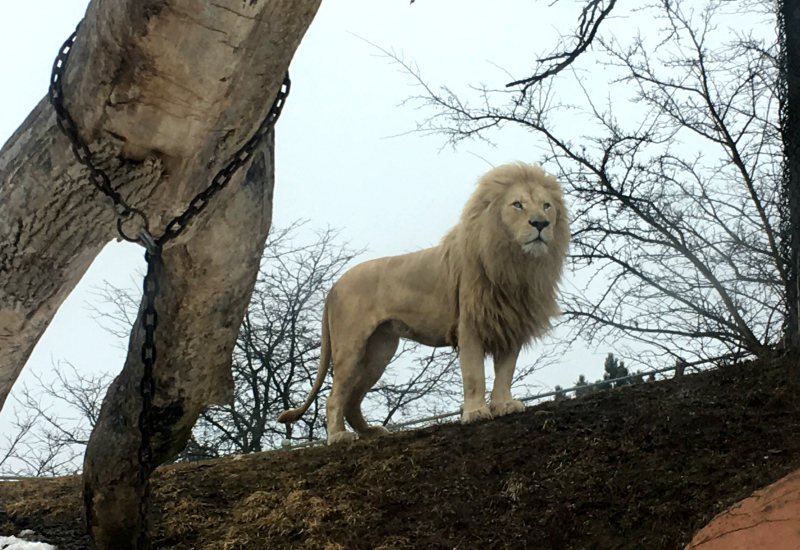
Lion at the Toronto Zoo

Set in the beautiful Rouge Valley in the east end of the city, the Toronto Zoo first opened its doors in August 1974. The Zoo is made up of 710 acres of land, which is divided into seven zoogeographic regions - Indo-Malaya, Africa, Americas (North & South America), Eurasia Wilds, the Tundra Trek, Australasia and Canadian Domain - and home to over 5,000 animals representing 450 species. Since opening its gates, it has been a leader in saving and protecting species and their habitats, both locally and globally. 

Exactly as we predicted, this trip to the Zoo was much different than our first visit at six months and even our second at 13 months old. At just shy of two years, Morley is now at the age that she notices even the smallest things in front of her and can tell us exactly what animal she's seeing and even what she wants to see next.

Giraffe at the Toronto Zoo

While some of the animals were tucked indoors for the winter, we still had the chance to see the pandas, polar bears, wolves, tigers, lions, cheetahs and more. While we knew we were taking our chances on the weather before we walked through the front gates, it only started raining about half way through our journey. Luckily, we could escape the drizzle by popping in to one of the many animal pavilions to warm up. Indoors, we saw the giraffes, rhino, gorillas, orang-utans and more, which was more like a quick trip to the tropics. 

Naturally, my favourite part of the Zoo is Tundra Trek, home to the wolves, reindeer, snowy owl and polar bears. We stopped by the polar bears just as a Keeper Talk was getting started, so we found a spot amongst the crowd where Morley could watch them stand up on there hind legs, say "oh, big guy" and see them eat the fishy snack they were being tossed. Later she told me she also likes to eat fish like the polar bear, as she shoved a handful of goldfish crackers into her mouth. (I don’t want to be a polar bear pusher, but I think that may be her connection right there.)

Polar bears at the Toronto Zoo
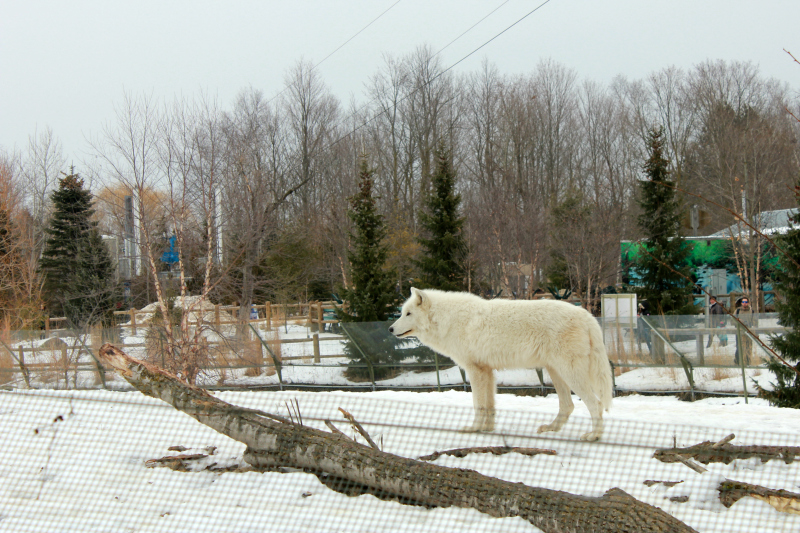
Wolf at the Toronto Zoo

Seeing as it was a long weekend, we also got to take a tour of the new, state-of-the-art Wildlife Animal Health Centre. The volunteer-led tours (12:30pm on Saturday and Sundays, leaving from the Tundra Trek Zoomobile Station) allow you to catch a glimpse into the work the Zoo does behind-the-scenes, having access to a viewing gallery featuring the diagnostic imaging, treatment and surgery room and the clinical and endocrinology labs.

Morley loved taking advantage of the activities for kids, including testing her surgery skills in an Operation-style game.

Toronto Zoo Wildlife Health Centre
Inside the Toronto Zoo Wildlife Health Centre
Toronto Zoo Wildlife Health Centre children activities

If you ask Morley what she saw at the Toronto Zoo, she will tell you "pole-ah bear, tigers (with a scrunchy face grrrrr), snakes, dragons, a yellow duck and people". I think I may have missed the yellow duck along our travels, but its obvious to tell which animals are quickly becoming her favourites. (She's clearly also a people person.)

Despite the bit of rain, it was the perfect winter day at the Toronto Zoo, and we can't wait to go back!

Oh, and in case you're wondering - our favourite North American animals? For me, it’s the polar bear and for him, it’s the grey wolf. Seeing polar bears in the wild and hanging out with wolf cub pups are the connections to thank for those loves.

What is your favourite animal story? Have you visited a zoo lately? I’d love to hear!


Where to Find the Toronto Zoo:
361A Old Finch Avenue 
Toronto, ON M1B 5K7
Phone: 416-392-5929

Hours: Open 364 days a year (closed Christmas Day), but hours vary depending on the season. Give yourself at minimum 2-3 hours to visit. Last admission is one hour before close. 

Admission: Cost of admission varies by season and age.

Social: @thetorontozoo on Twitter, Facebook and Instagram

Getting There:
The Toronto Zoo is located in the Rouge Valley on Meadowvale Road in Toronto north of Highway 401 and can be accessed by both car and public transit.  The TTC has bus routes that stop at the Zoo’s main gates.

The cost for onsite parking is $12.00 per car. Be sure to purchase a parking pass with your admission.

SHARE:

September 12, 2017

Celebrating the End of Summer + Salmon Poke Recipe


This shop has been compensated by Collective Bias, Inc. and its advertiser. All opinions are mine alone. The following content is intended for readers who are 21 or older. #ShareWineandBites #CollectiveBias


It’s hard to believe the first week of September has come and gone. The tourists have all returned home, the kids are back in school and families are settling into their new routines. Fall is on the horizon.

In my neck of the woods, this time of the year is bittersweet. The long, hot and humid days, hanging out at the cottage and even roasting marshmallows around the campfire are now just good memories of summerWe look forward to what lies ahead with the changing leaves, dipping temperatures and shorter days.

One of my favourite ways to celebrate the end of summer is at a place that I love, surrounded by the people that I love - Lake Huron with my family. Toss in some good food and good drinks and I don’t even want to go back to reality at the end of the weekend.

Salmon Poke Recipe & The Dreaming Tree Wine


The environment is very important to me. Being outdoors is very important to me. So, when we're visiting my parents, we spend every second we can outdoors - whether it be eating a meal, playing with the dogs or a walk on to the beach.

Loving Mother Nature also means that I conscious of the my actions, including the food that I eat. 

When choosing sustainable food options, I opt for those that are harvested in a way that has minimal impact on the environment. 

Salmon Poke Recipe & The Dreaming Tree Wine

Seafood, for example. We love to eat fish. But, the fish that we choose to eat without a doubt must be sustainable. This means that it must be caught or farmed in ways that consider the long-term vitality of harvested species and the well-being of the oceans.

Made with fresh, sustainably caught Coho salmon and served with salty kettle chips, this recipe for salmon poke makes the perfect addition to any end of summer celebration. 


Salmon Poke Recipe & The Dreaming Tree Wine

Sustainable Salmon Poke

Serves: 4
Total prep time: 40 minutes


Ingredients:

  • 1 8-ounce boneless, skinless fresh sustainable salmon fillet
  • ¼ cup cucumber, seeded and finely diced
  • tbsp fresh lime juice
  • 1 ½ tsp fresh chives, minced
  • 1 ½ tsp vegetable oil
  • 1 ½ tsp seeded jalapeno, minced
  • 1 ½ tsp shallot, minced
  • ½ tsp fresh ginger, peeled and minced
  • ¼ tsp lime zest
  • ½ tsp sesame oil
  • 1 tsp Black and white sesame seeds
  • Salt and pepper, to taste
  • Kettle chips


Directions:

  1. Place salmon in the freezer until well chilled, about 20 minutes. This will help with slicing the salmon.
  2. Thinly slice the salmon lengthwise into 1/8’’ wide pieces. Cut each piece into 1/8’’ long strips. Cut strips crosswise into 1/8’’ cubes.
  3. Place salmon in a medium bowl. Add cucumber.
  4. In a separate small bowl, combine lime juice, vegetable oil, jalapeno, shallot, ginger, lime zest and sesame oil. Stir to combine.
  5. Add sauce to salmon and cucumber and toss to coat. Season with salt and pepper.
  6. Transfer poke to a serving bowl and sprinkle with sesame seeds.
  7. Serve with salted kettle chips.
Salmon Poke Recipe & The Dreaming Tree Wine

And what's better to pair with sustainably harvested seafood than sustainably crafted wine?

Pairing wine and seafood doesn't have to be a challenge. And in our house, we're not picky. Right now, we're particularly enjoying The Dreaming Tree Crush (tasty red blend) and Chardonnay. 


Salmon Poke Recipe & The Dreaming Tree Wine

The Dreaming Tree makes high quality, delicious California wines at an affordable price point that are meant to be enjoyed in any group occasionAnd while the brand is passionate about winemaking, they also have a social conscience in the commitment to protecting and restoring tree and forestry areas across the country and around the globe. 

You can find The Dreaming Tree wines at your local grocery, drug or supercenter stores. Be sure to check their website before you shop.

Salmon Poke Recipe & The Dreaming Tree Wine

Pairing The Dreaming Tree sustainably crafted wines with sustainably harvest seafood seems like a no-brainer to me, and it is sure to spark a conversation and help foster a connection between the food we eat and drink and the company we keep with the environment. The perfect way to celebrate the end of summer. A beautiful sunset also helps. 


What is your favourite way to celebrate the change in seasons? Are you conscious of where your food comes from? I’d love to hear!


SHARE:

July 11, 2017

Lets Go Outside - Benefits of Outdoor Play


Playing outside is one of the greatest joys of childhood, but it also serves a larger purpose than just being a way to have a good time.


Benefits of Outdoor Play for Toddlers

One thing that I love about Morley’s daycare is that they are always outside. Some days, we will secretly arrive a bit early for pick up so that we can watch her interact with her new friends at the playground. We usually get a few minutes to stand back and watch before we are spotted and play time is over. It really gives us an appreciation for how much she has grown the past five months since she has started there. It also gives us an appreciation for outdoor play.

Benefits of Outdoor Play for Toddlers

When I think back to my own childhood, some of my fondest memories are from time spent outdoors. Whether it was swimming in the lake, camping with family or just playing in the backyard with friends, outdoors was the place the be. As kids, being outdoors just seemed like the natural thing to do. 

As an adult, I have now learned that child’s play is not just all fun and games. The act of play itself is a crucial component in the growth and development of the brain, body and intellect. And what better setting to play than the outdoors? 

Benefits of Outdoor Play for Toddlers

Because of my own childhood experience, my current field of work and my own daughter, I am a huge advocate for outdoor play. (The messier, the better.) These are just some of the many reasons why you should be too. 

Importance of Outdoor Play


Physical Benefits

Playing outside is a good way for your child to get some exercise. Outside play helps children to gain motor skills and increase strength, balance and flexibility. Walking, running, jumping, stomping and rolling also improve physical development so that he gains muscle strength and builds strong bones. Being outdoors also helps strengthen a child’s immune system. 

Mental and Emotional Benefits

Playing outside allows children free time to pursue activities they enjoy, which make them happy and less stressed and increases self-esteem. Taking a break to go and play outside will also help to increase focus in the classroom and reduce potential behavioural problems. 

Being outside leads to a connection with nature. Because the natural world is filled with beautiful sights, sounds, and textures, it's the perfect resource for the development of aesthetics in young children.

Cognitive Benefits

Playing improves a child's memory, thinking skills and ability to learn as they explore the world around them. It introduces them to new sights, sounds, textures, smells and, maybe even, tastes. Bring outdoors allows children to make choices, see how things work and use their imaginations. It also teaches independent learning, as toddlers are just learning the meaning of sharing.

Social Benefits

While outdoor play teachers a child to be independent, when children play outside with others, they learn about relationships and inclusion, and how to behave as a member of a group. Spending time outside as part of a larger group of children allows children to make friends, resolve conflicts and express feelings. They also learn how to follow rules, and gain self-control skills.

So, take the children outside to play. It's a wonderful way to spend the day! 


What is your favourite outdoor activity? I’d love to hear!


SHARE:

March 10, 2017

10 Best Nature Documentaries on Netflix

A sick babe (for yet the second time in a month - thanks again daycare) means plenty of cuddle time on the couch.

And what better way to spend the afternoon on the couch than with a good show to watch?

10 Best Nature Documentaries on Netflix

There's no denying my love of animals and the outdoors. It is our hope that one day this love of Mother Nature that my husband and I share will also be passed down to our daughter.

I strongly believe that in order to protect something, you must love it. But in order to love something, you must first have a connection with it. However, it is not every day that a person can explore a vast rainforest, dive the largest coral reef or even hike the tallest mountain to build that connection. 

So if you can't go to the outdoors, how are you supposed to connect with it? The answer is, to bring the outdoors to you!

For those that love science and nature (like this nature nerd), or just want to sharpen your mind and learn a little more about the planet we call home, check out the 10 best Netflix nature documentaries.

10 Best Nature Documentaries on Netflix
//via//
Planet Earth 
Year released: 2006
Number of episodes: 11
Length: 47-49 minutes

While this list is in no particular order, if it were, BBC Earth's Planet Earth would definitely be on top. This may be the best nature documentary of all time, not just on Netflix. 

Five years in the making, the BBC's Planet Earth was the most expensive nature documentary series ever commissioned by the BBC and also the first to be filmed in high definition. Narrated by the iconic David Attenborough, each episode features a global overview of a different biome or habitat on Earth

Exciting news! In 2016, the BBC announced a six-part sequel had been commissioned, titled Planet Earth II, the first television series produced by the BBC in Ultra-high-definition (4K). David Attenborough has returned as narrator and presenter.

The Blue Planet
Year released: 2001
Number of episodes: 8
Length: 48 minutes

The Blue Planet is yet another amazing nature documentary series created and produced by BBC Earth. It premiered in September 2001 and is again narrated by David Attenborough. Described as "the first ever comprehensive series on the natural history of the world's oceans", each of the eight 50-minute episodes examines a different aspect of marine life. The underwater photography included creatures and behaviour that had previously never been filmed.

10 Best Nature Documentaries on Netflix
//via//
Frozen Planet 
Year released: 2011
Number of episodes: 6
Length: 48 minutes

In BBC Earth's Frozen Planet, David Attenborough travels to the end of the earth, taking viewers on an extraordinary journey across the polar regions of our planet, focusing on life and the environment in both the Arctic and Antarctic. This seven-part series was created as a comprehensive record of the natural history of the polar regions because climate change is affecting landforms such as glaciers, ice shelves, and the extent of sea ice. 

10 Best Nature Documentaries on Netflix
//via//
Nature's Great Events
Year released: 2009
Number of episodes: 6
Length: 49 minutes

This BBC Earth nature documentary series looks at the most dramatic wildlife spectacles on our planet, showing how life responds to natural events which can dramatically transform entire landscapes.

10 Best Nature Documentaries on Netflix
//via//
Human Planet 
Year released: 2011
Number of episodes: 8
Length: 48-49 minutes

In a bit of a different take on a nature document, BBC Earth's Human Planet explores the relationships between humans and their natural surroundings by showing the remarkable ways humans have adapted to life in every environment on Earth.

//via//
Growing Up Wild 
Year released: 2016
Number of episodes: 1
Length: 77 minutes

Disney's Growing Up Wild takes audiences to the wildest corners of the planet to tell the tales of five courageous animals as they tackle the very first challenges of their young lives. Featuring the stunning imagery and iconic storytelling that makes Disneynature's big-screen adventures an inspiring movie-going experience, this nature documentary brings home a special look at how similar and different these young lives can be.

10 Best Nature Documentaries on Netflix
//via//
Tales by Light
Year released: 2015
Number of episodes: 6
Length: 23-24 minutes

Tales by Light is a Netflix Original documentary that follows renowned photographers as they travel the world, capturing extraordinary images that present nature and culture in a new light. View the trailer here

10 Best Nature Documentaries on Netflix
//via//
Into the Drink
Year released: 2013
Number of episodes: 13
Length: 21 minutes

This documentary series follows Aaron Faulls, an American television personality, filmmaker, musician and marine conservationist. Into the Drink is a travel documentary-style series based on Faull's background as an underwater filmmaker and journalist.

10 Best Nature Documentaries on Netflix
//via//
Changing Seas
Year released: 2009
Number of episodes: 4
Length: 26 minutes

Changing Seas is documentary series that takes viewers on an exciting adventure to the heart of our liquid planet. This documentary series lets viewers experience first-hand how oceanographers and other experts study earth’s last frontier, and it sheds light on how human activities are threatening ocean resources.

10 Best Nature Documentaries on Netflix
//via//
Wild Ones
Year released: 2014
Number of episodes: 13
Length: 25-26 minutes

This wildlife series syncs with nature to explore the rhythms and habits of the strongest, fastest, cutest and most dangerous animals on the planet.

10 Best Nature Documentaries on Netflix

And while I would much rather be connecting with nature outdoors with my family, sometimes the indoor calls. So until this nasty bug goes away, you know where you can find us - sitting on the couch, cuddled up in our robes, watching the best of Netflix's nature docs and connecting with Mother Nature.

*Please note, we are watching these documentaries on Netflix Canada. Listings may vary by country.


Do you watch Netflix? What are your favourite shows or documentaries? I'd love to hear!


SHARE:
Blog Design Created by pipdig