February 27, 2015

Did You Know? Polar Bears

February 27 is International Polar Bear Day. There's no denying I love the big white bear, so in honour, I'm sharing 15 facts about polar bears. I hope you learn something new and are inspired to to protect this iconic species.

International Polar Bear Day - Polar Bear Facts

15 Facts about Polar Bears

  1. Polar bears live in the circumpolar north, in areas where they can hunt seals on the sea ice. They are found in Canada, the U.S. (Alaska), Greenland, Russia and Norway.  
  2. Biologists estimate there are roughly 20,000 to 25,000 polar bears in the world, 60% of which live in Canada.
  3. Contrary to media portrayal, polar bears and penguins live at opposite poles and would never meet. Polar bears are only found in the north, and penguins are only found in the south.
  4. The scientific name for polar bear is Ursus maritimus, which means "sea bear". It is the only bear considered a marine mammal (dependent on the ocean for survival).
  5. Polar bears' fur consists of a dense, insulating undercoat topped by guard hairs of various lengths. It is not actually white—it just looks that way. Each hair shaft is pigment-free and transparent with a hollow core that scatters and reflects visible light, much like what happens with ice and snow.
  6. Polar bears have black skin and a layer of fat (not blubber) that can measure 4.5 inches thick!
  7. A polar bear has very keen senses of smell, vision and hearing. Heightened senses help bears survive in Arctic conditions.
  8. The polar bear's main prey is the ringed seal. They depend on sea ice for access to seals, hunting by waiting for the seals to surface at an openings in the ice or at a breathing hole. 
  9. Polar bears' lives are a cycle of feasting and fasting. In the winter, the bears are out on the sea ice hunting. When the sea ice melts, polar bears are forced onto land. With no access to seals, they are fasting on built up fat reserves. When hunting is good, polar bears can eat 100 pounds of blubber in a single sitting! 
  10. Polar bears can run as fast as 40 kilometers per hour—but only for short distances. 
  11. With the exception of pregnant females, polar bears do not overwinter in dens like brown and black bears. Instead adult male polar bears and non-pregnant females remain active throughout the year. 
  12. Mating takes place on the ice in April or May, but the fertile ova do not implant until the following fall. This is called delayed implantation.
  13. Females usually bear two cubs about two months after they enter the maternity den, usually by early January. These cubs weigh a pound at birth, and quickly grow to over 20 pounds in 3 months by feeding on mom's milk.
  14. In May 2008, the U.S listed the polar bear as a threatened species under the Endangered Species Act, citing sea ice losses in the Arctic from global warming as the single biggest threat to polar bears. 
  15. If we do not reduce our green house gas emissions and the planet continues to warm at the current rate, 2/3 of the world's polar bears will disappear by 2050. 

International Polar Bear Day - Polar Bear Facts


Do you like polar bears? Did you learn something new?


 photo TampF sig_zpsi50j9kbk.jpg


Polar bear facts courtesy of my friends at Polar Bears International. For more information on polar bears or viewing polar bears in the wild, start here.
SHARE:

October 14, 2014

Polar Bear Capital of the World

visiting the polar bears in Churchill, Manitoba

Viewing the Polar Bears in Churchill, Manitoba


Three years ago this week I had the privilege to travel to Churchill, Manitoba, polar bear capital of the world. As part of Polar Bears International's Leadership camp, I joined forces with Educators from zoos and aquariums across North America travel to experience these iconic species in the wild, learn about the effects climate change on their habitat and discuss how we, as educators, could use what we learned to educate others and conserve the big white bear for future generations.

When to visit?
October and November are the prime months for polar bear viewing as the Hudson Bay begins to freeze and the bears start moving from their summer habitat inland on the tundra where they have been fasting all season, back to the sea ice to hunt for their favourite food, seals.

How to get there?
Since I was flying from Alaska, it was quite a hike to get to Churchill, Manitoba. In fact, I won the 'award' for the longest travel in our group. 

Regardless of where you are coming from, there aren't any roads into Churchill so you only have two travel options to get there - by air or rail. By plane: Air service is available year round, with two airlines flying into Churchill - Calm Air (who we flew with) and Kivalliq Air. The flight from Winnipeg is approximately 2 hours. By train: Via Rail trains depart Winnipeg for Churchill twice a week, and return to Winnipeg three days a week. The train ride is approximately 48 hours long.

visiting the polar bears in Churchill, Manitoba

Where to stay?

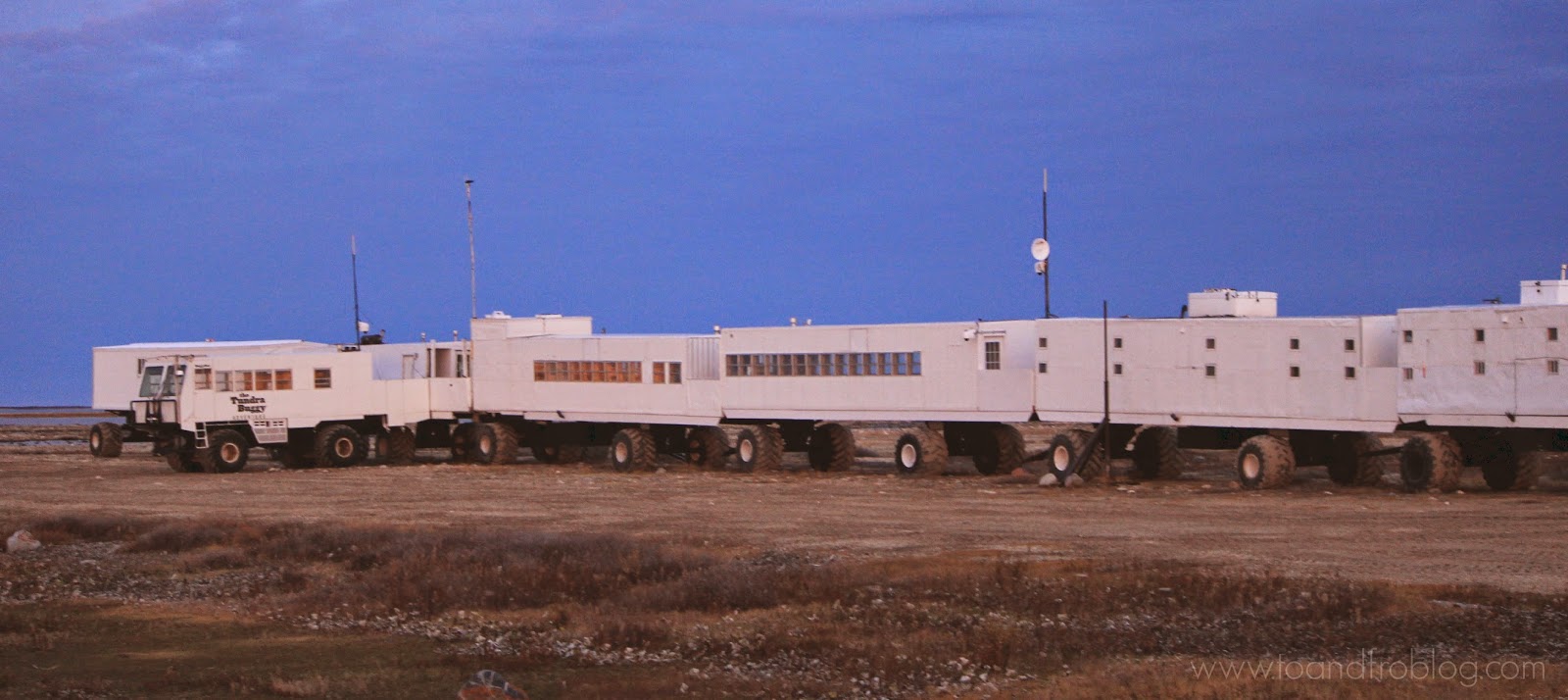
We had the privilege of staying out on the Tundra Buggy lodge, operated by Frontiers North Adventures. Our feet did not touch the ground for 5 days! 

visiting the polar bears in Churchill, Manitoba

While you can stay out on the Lodge if you are not part of a large group like PBI, the opportunities are limited. Luckily, Churchill's popularity has resulted in a number of options for you to stay in town, including hotels, bed and breakfasts and remote lodges. For more information on the town of Churchill, including hotels, restaurants and amenities, click here.

visiting the polar bears in Churchill, Manitoba

How to view the polar bears?
The best way to experience wild polar bears is on an authentic Tundra Buggy. If you are interested in taking a day trip out on the tundra, there are two companies to chose from. Frontiers North Adventures, who operates the "Tundra Buggy" is by far the leading company, and holds the larger number of permits from the Manitoba government. All of their Tundra Buggies are furnished with dual-pane frost-free windows for all of those photography opportunities and contain propane heating systems that closely resemble a cozy fireplace. 

visiting the polar bears in Churchill, Manitoba

Tips for packing?
The weather in Churchill can be unpredictable. The year my colleague was there, it was bright and sunny. The year I was there, grey and windy. The year after I was there, snowy. You definitely need to be prepared for cold and snowy conditions, but layers are also key. Musts include a warm jacket and/or windbreaker, thick gloves, warm harm insulated boots, wool socks and long underwear.

Other must sees?
Polar bears aren't the only thing to see in Churchill. Churchill is also known as a beluga-watching hotspot, birders' paradise and one of the best places to experience the Aurora Borealis. There's a chance to see arctic hare, ptarmigan, red fox and arctic fox. 

visiting the polar bears in Churchill, Manitoba

Additional tips for visitors?
Seeing polar bears in the wild is extremely popular, and space fills up fast. Be sure to book your visit far enough in advance.

If seeing polar bears in the wild is on your bucket list, the time to go is now. Even though 60% of the world's polar bears can be found in Canada (Churchill is called the polar bear capital of the world for a reason), with climate change and the melting sea ice, polar bears are loosing their habitat. If we don't reduce our greenhouse gas emissions, 2/3 of the world's polar bears could be gone in our lifetime, by 2050.

visiting the polar bears in Churchill, Manitoba

I was extremely fortunate to have been given this opportunity and it still remains high on my most memorable experience list. I highly recommend you check out Polar Bears International. As the world's leader in polar bear conservation, they are doing wonderful things for all Arctic species.

Read my other posts about Churchill:
Part 1: The Beginning of an Adventure
Part 2: Greetings from Churchill
Part 3: Looking Into the Eyes of a Big White Bear
Part 4: Tying It All Together
Part 5: Back to Reality
#thankful project: an experience


Have you ever seen polar bears in the wild? Or, is it on your bucket list? I'd love to hear!


SHARE:

October 17, 2011

PART 1: The Beginning of an Adventure

I found my time in Churchill at Polar Bear International’s Communicator Leadership Camp so inspiring that I decided to write a journal to document this emotional and amazing once-in-a-lifetime experience.  It will be in the form of a 5 part “mini series”.  Please keep in mind some of this may be sappy/corny, but  I was absolutely moved by this experience.  Some of this if also kind of scientific, and may look like it’s in another language, but I felt it is information to share exactly what I learned from this experience and more importantly, why I was there.  So, if you need a translation, just ask!

Day 1: Sunday, October 9, 2011

After an extremely long travel day, which included being awake for 36 hours, I finally made it to Winnipeg, MB to meet up with others that would be joining me on this adventure!  The group consisted of 9 educators from zoos across North America (Alaska, St Louis, Milwaukee, Buffalo, Tucson, Tacoma, Philadelphia, Toronto and Quebec), 14 extremely enthusiastic teenagers (chosen because they are stewards for the environment and have taken action against climate change in their community), group facilitators and Polar Bears International (PBI) staff members and volunteers.  Since I got in a little early, and was so tired I wasn’t tired anymore, a few of us in my group decided to check out the Assiniboine Park Zoo in Winnipeg.  After a short visit to the zoo, we met all members of our group and discussed the happenings of the week!  With a very full belly, from a very excellent meal with all ingredients from within a 100-mile radius of the hotel, I am off to bed!  4:45am comes early, especially when it still feels like 1:45am Alaska time. 

Communicator group (and me looking like a zombie after going 36 hours without sleep)

Some of you may be wondering why Churchill?  Why are the polar bears in Churchill?  It’s pretty simple, but obviously involves some science.  Churchill is located along the coast of the Hudson Bay, in an area where the freshwater of the Churchill River empties into the salt water of the Bay.   This mixing of fresh and salt water decreases the salinity of the salt water, causing ice to form at a higher temperature. Ice formation begins in the Churchill area of the Hudson Bay and moves north. The ice throughout the Hudson Bay melts completely by the end of July or early August and does not refreeze until approximately November.   This means that all of the polar bears must come ashore for 4 months.  During this period, they are unable to hunt for ringed seals and must fast and survive on fat reserves that they have built up through the winter.  Throughout the fall, and especially just before freeze-up of the Bay, bears migrate towards the coast, congregating until they can move out onto the frozen ice and begin feeding again.

So what’s the big deal?  Why are Polar Bears International and Arctic Ambassador Centers, like the Alaska Zoo, putting in so much effort to protect these bears? Bear with me (hahaha get it?!),  I’m going to get all sciency on you. Two words:  CLIMATE CHANGE!  Polar bears are known to be an indicator species and climate change is having a large effect on their population, specifically through loss of their habitat.  With an increasing global average temperature due to an increase in greenhouse gas emissions, the sea ice that polar bears depend on for hunting their main prey (ringed seals) is disappearing for longer periods of time.  In the perfect world in Churchill, the seasonal ice would melt and polar bears would come to shore in July, with sea ice freeze-up in October, when the bears would venture back out.  However, due to climate change, sea ice does not freeze up until December now.  This year alone snow is already 3 weeks late in Churchill.  Polar bears are fasting for almost 2 months longer than they used to be and should be.  This loss of habitat and not being able to eat for 5 months has obvious effects on polar bears - small size, lower reproduction rate, etc. So why can’t they just adapt to finding food on land?  Sure they can snack on things like grasses, kelp, birds and small mammals, but there is nothing on land that is of nutritional value to them like the fat of seals.  

I could never imagine a world without this beautiful species.


Find more on my journey to Churchill here:

SHARE:

August 10, 2012

Grolar Bears & Pizzlies

Wow!  I can't believe it's Friday already.  This week has just flown on by! 

It's been a while, so I figured it was time for some polar bear talk... I came across an interesting article  from my friends at Polar Bears International addressing polar bear evolution and what it means for polar bears in a warming climate.  With talk of "pizzlies" and "grolar bears" (grizzly/polar bear hybrid) in the news the past few years, I thought it would be an interesting read to share. Not to mention, more and more out of state visitors are asking about it and I just find it really intriguing. Some food for thought going into the weekend:


The article discusses how in the wild, climate change is erasing the distance between the brown bear and polar bear species. Brown bears are moving north into polar bear territory, and polar bears are being forced off melting ice to spend more time on land, where they're more likely to encounter brown bears. With sea ice melting at an unprecedented rate, and polar bears consequently being driven towards extinction, people are beginning to wonder if this hybridization and their production of viable offspring will be the saving grace for the great white bear.  "Whether this hybrid can produce viable offpsring or not, and regardless of what we learn from continuing studies on the polar bear, it is important to remember that hybridization does not offer salvation for polar bears.  The current rate of global warming is so rapid polar bears will starve and become extinct long before their genes may be swamped by those of brown bears.  And as polar bear lovers and conservationists, it is not whether some polar bear genes "live on" in a hybrid terrestrial animal, like a pizzly, it is whether the great white bear we all know and love, and its unique habits and habitat, can persist."

Just some food for thought.


SHARE:

October 7, 2015

Assiniboine Park Zoo's Journey to Churchill

My first visit to Winnipeg, Manitoba was back in October 2011, when I joined fellow zoo professionals on a journey to the polar bear capital of the world, Churchill, Manitoba, as part of Polar Bears International's Leadership Camp. Now, almost 4 years to the day, I ventured back in Winnipeg. Surrounded by a similar crowd, but for a different reason, polar bears were still a hot topic of conversation.

Today, zoos and aquariums play an important role in polar bear research and conservation, including providing a home for orphaned cubs that would not otherwise survive in the wild and educating the public to take action on climate change and help protect this iconic species for future generations. AS a leader in the Zoo community, and with its proximity to polar bear territory, the Assiniboine Park Zoo in Winnipeg plays a large role in polar bear research, conservation and education in Canada. 

Assiniboine Park Zoo's entrance

The Zoo's new Journey to Churchill exhibit is the most comprehensive northern species exhibit of its kind in the world. Home to polar bears, musk ox, grey wolves and more, the award-winning exhibit allows visitors to discover the magic of the North, while making a connection with these iconic Arctic species. And while visiting last week, I felt right at home.

journey to churchill entrance
musk ox lying down
snowy owl on log
reindeer standing

Currently home to 7 polar bears, the 10 acre section of the Zoo is an educational classroom like no other, inviting visitors to learn about biodiversity, climate change and conservation. It is also home to the International Polar Bear Conservation Centre, an education, research and transition facility that is the first home for orphaned Canadian polar bears before they are transitioned into Journey to Churchill, and even on to another zoo within Canada. 

entrance to Gateway to the Arctic building

When touring Journey to Churchill, the Gateway to the Arctic building is where you really want to be. The impressive Sea Ice Passage gives visitors the rare opportunity to view polar bears and seals swim from below the surface of the water. With the bears playing above us, it's where I stood in awe for almost an hour.  

polar bear in sea ice passage
polar bear selfie
polar bear paws

Polar bears have a special place in my heart.

What's your favourite animal? Have you been to the Assiniboine Park Zoo? 

hudson the polar bear

SHARE:

September 13, 2019

Making Memories at the Detroit Zoo


If you’ve been around here long enough you know that I’m a big (ok, maybe a HUGE) animal lover. So, when visiting a city (new or old) and the opportunity to check out the local zoo or aquarium comes up, I’m all in. 

Zoos and aquariums are a fantastic way to learn about the variety of animals that call our planet home, and to build a connection with wildlife we may not ever have the chance to experience in the wild. Not to mention, they're also a fun way to spend the day with your family.

child watching penguins swim at polk penguin conservation centre Detroit zoo Michigan

I grew up approximately an hour from Detroit, Michigan, on the Canadian side. The times I’ve visited the city to go shopping, play soccer or even to visit my (then) boyfriend while he played junior hockey, are so many that I couldn't even take a guess. BUT, the number of times I’ve visited to go the Detroit Zoo? Sadly, I can count that on only a few fingers.

On a recent extended visit to my parents’, my dad suggested we take a day trip to the Zoo. When you throw out the words “Do you want to go to the zoo?” in front of a few animal lovers (including a 3 year old and her mama), the answer is YES. Always YES.

So, we packed in the car – my dad, my sister, the two little gals and I – and drove off over the border and down I95 to the Detroit Zoo.

family at Detroit Zoo in Michigan

Situated on 125 acres, the Detroit Zoo (run by the non-profit Detroit Zoological Society) is home to more than 2,000 different animals representing 230 species of amphibians, mammals, birds and reptiles.

The Zoo features many award-winning attractions including the National Amphibian Conservation Center, Great Apes of Harambee, Arctic Ring of Life, and my personal favourite, Polk Penguin Conservation Center.

I know, I was just as surprised as you that I favourited the penguin habitat over the polar bears. (Background story: For those of you that don’t know, I’ve had a thing AGAINST penguins, dating back to 2010. Living and working at azoo in Alaska that had polar bears, it was not uncommon for people to think polar bears and penguins were friends. The media portrayal didn’t help. But in fact, they live on opposite ends of the earth – polar bears in the Arctic, penguins in the Antarctic. So, hearing that on a regular basis became a bit of a pet peeve. But, I digress…)


Opening in 2016, Polk Penguin Conservation Center is the Zoo’s newest award-winning attraction. At 33,000 square feet - housing 75 king, rockhopper, macaroni and gentoo penguins - it is the largest penguin facility in the world. Its signature feature is a 326,000 gallon (1.2 million liter) 25 foot deep aquatic area where visitors can watch the birds swim and dive from two acrylic underwater tunnels. The $32 million facility received the 2017 Exhibit Aware from the Association of Zoos & Aquariums for excellence in exhibit design. An award very much deserved. We could have spent hours watching the penguins fly through the water all around us. The facility is also filled with a variety of interactive educational exhibits to help better connect visitors to the Antarctic and the tuxedo-wearing birds.

*Please note: The Detroit Zoological Society will be temporarily closing the Polk Penguin Conservation Center between September 9, 2019 and mid-June 2020 to make repairs due to faulty waterproofing. The penguins will live in the former Penguinarium while their home is being repaired, but that facility will not be open to visitors.


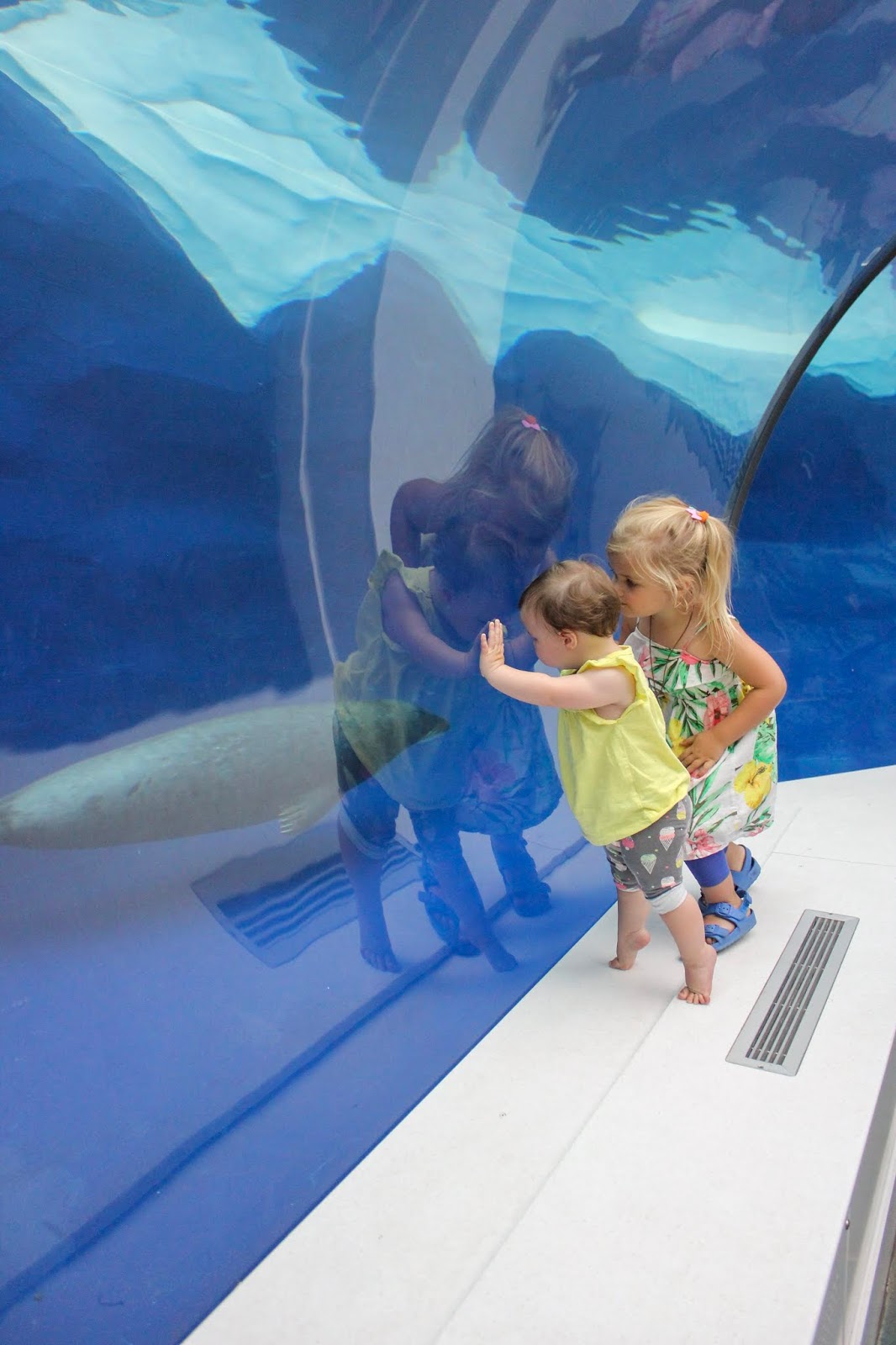
And while the penguins may have been my favourite of the day, I cannot share about the zoo without mentioning my other favourite habitat, the Arctic Ring of Life – home to polar bears, seals and Arctic fox. This state-of-the-art interactive facility is one of North America’s largest polar bear habitats and encompasses more than 4 acres of outdoor and indoor spaces. My favourite feature? The spectacular 70 foot long Polar Passage, a clear tunnel that winds through a vast underwater marine environment. It reminded me very much of the Assiniboine Park Zoo in Winnipeg, Manitoba. Sadly, the polar bears were nowhere to be seen that warm August day (can you blame them?!), but it was still fun to watch their nextdoor neighbours, the seals, swim through the water.

Arctic Ring of Life Detroit Zoo

For a Zoo that first opened their doors almost 100 years ago in 1928 (and saw 1.5 million visits in just their first 4 months of operation), I was extremely impressed with the many naturalistic habitats and modern-day zoo updates. The layout is extremely family- and stroller-friendly, and easy to navigate with the use of either a paper map or the interactive mobile map system called Detroit Zoo Treks. There are a few indoor exhibits where strollers are not permitted (including the Polk Penguin Conservation Center), however, there is ample stroller parking to accommodate.

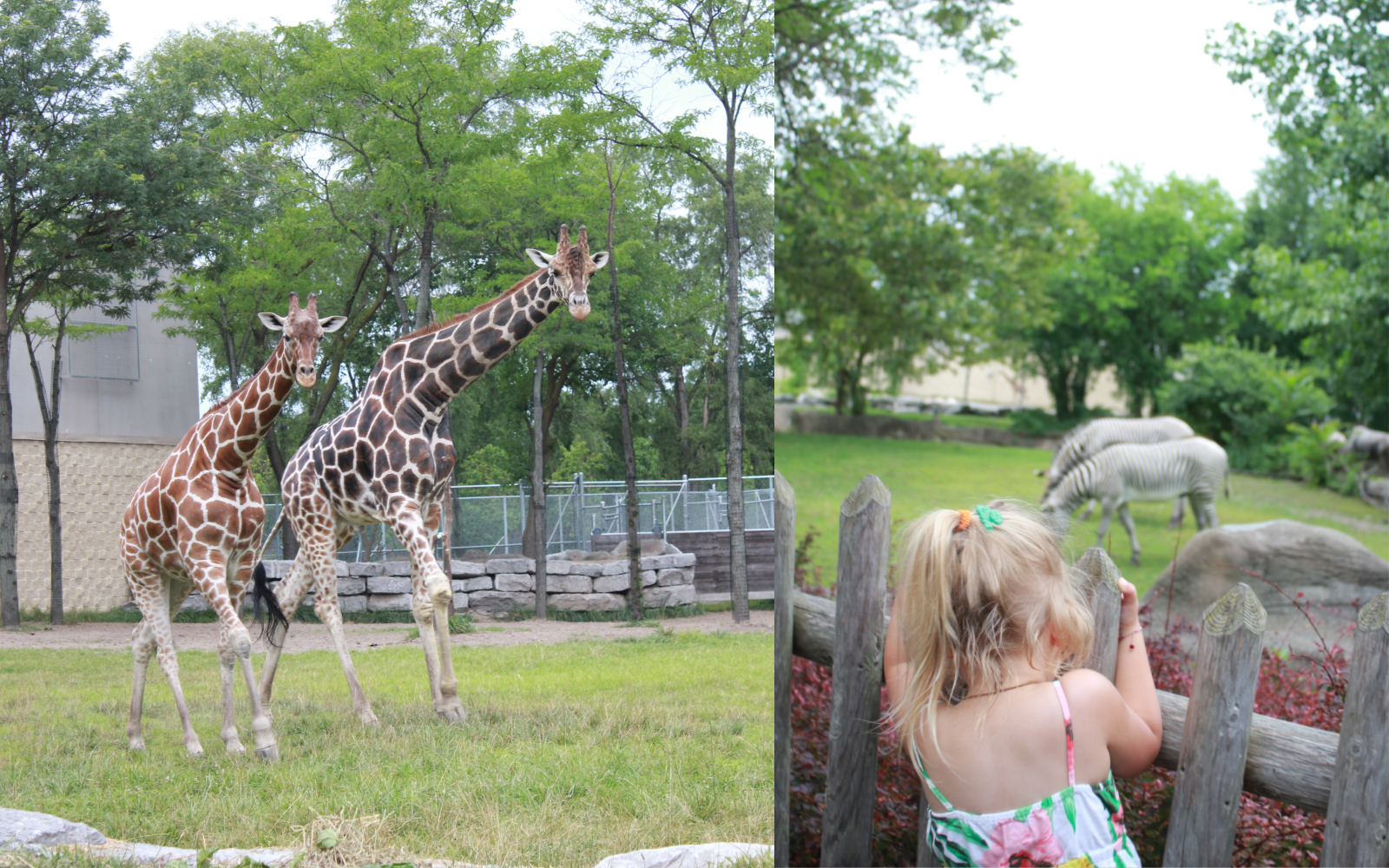
Beside the penguins and Arctic animals, we especially loved checking out the rhinos, zebras, giraffes and camels. The pop-up windows in the prairie dog exhibit were not only a great photo opportunity, but also a good way to see their cute faces up close. The new red panda habitat, located in the Asian Forest, had us cross a rope bridge, through the actual habitat! It made us feel that much closer to the red pandas sleeping in the trees above our head. The brand new Devereauf Tiger Forest opens on September 13, and will be home to three Amur tigers. 


family friendly activities at the detroit zoo

Besides viewing the animals, the littlest zoo visitors can ride the animal-themed carousel, take a trip on the Tauber Family railroad, visit the Korman Tadpole or Rissman PlayVenture playgrounds and more. And for the adults (whether kiddos in tow or not), there is also a 4D theatre and simulator ride to check out.

family friendly activities at the detroit zoo

If you find yourself in the Detroit area with your family, I definitely recommend spending a few hours visiting the animals of the Detroit Zoo. But, before you do, be sure to scroll down to read my tips for visiting the Detroit Zoo with your family.

family friendly activities at the detroit zoo

Important tips for visiting with your family:
  • There are a few indoor spaces that do not allow strollers, including the Polk Penguin Conservation Center. If you have a little one that cannot yet walk, I recommend bringing a carrier to use when the stroller is not available.
  • Guests are welcome to bring their own food and beverages into the Zoo. Several picnic areas are available throughout the Zoo. 
  • Bring your own reusable water bottle to refill at one of the 21 filtered-water stations throughout the grounds. Bottled water is not sold on site, something the Detroit Zoological Society had worked hard to achieve.
  • There are several concession stands throughout the zoo, some seasonally available. Items are reasonably priced for an attraction, and include burgers, hot dogs, fries, pizza, chips, soft drinks, frozen beverages, ice cream, coffee, etc. There is also a location with an all-vegan menu. 
  •  Zookeeper talks are held daily at various animal habitats, giving guests the opportunity to interact with animal care staff while learning about the individuals living at the Zoo. 
  • To save a bit of time during the busy months and money, pre-purchase your tickets and parking pass online in advance.
  • Hours vary depending on time of year - check the website prior to your arrival. I recommend at least 4 hours to check out everything the zoo has to offer. Our visit lasted from approximately 10:00am to 3:00pm. 

The Detroit Zoo can be found at 8450 W 10 Miles Road Royal Oak, MI 48067.

If you liked this post, you may also like:
Toronto Zoo 1, 2, 3 - Toronto, ON
Alaska Zoo - Anchorage, AK
Assiniboine Park Zoo - Winnipeg, MB
Riverbanks Zoo - Columbia SC

Did you visit a zoo or aquarium this summer? I'd love to hear which one AND your favourite animal!


PIN IT:

family-friendly fun at the Detroit Zoo, Michigan

SHARE:

October 18, 2011

PART 2: Greetings from Churchill!

Monday, October 10, 2011

Greetings from Polar Bears International’s Communicator Leadership Camp in Churchill, MB and Happy Thanksgiving! After an early 21/2 hr flight from Winnipeg, and some Timmy’s coffee, we have finally arrived at our destination, the polar bear capital of the world!  


The day started off with a tour around town.  We met so many interesting people.  First was Karyne Jolicoeur, an interpreter from Parks Canada.  She took us to the Fort of Wales at Cape Merry, where we learned about the history of Churchill, dating back to the fur trade in the 1700s. We even got to see a couple of belugas playing in the estuary where the Churchill River and Hudson Bay meet. 


Next up was Bob Windsor, a conservation officer with Manitoba Conservation, who works at Churchill’s Polar Bear Holding Facility (calling it polar bear jail is highly frowned upon).  The Polar Bear Alert program works to keep problem bears away from the town and to keep both the residents of Churchill, and the bears, safe.  We learned about the scare tactics used, such as their newest technique of paintball guns, and I even got to shoot a pistol with “screamer bullets”, another hazing technique.  Click here to see a video discussing Churchill's Polar Bear Alert System.  If these scare tactics don’t work to scare the bear a safe distance from town, then they bear is captured via live trap or by darting it.  The bear is kept in the holding facility, which unfortunately we didn’t get to go inside of, for 30 days and then taken by helicopter 40 miles north to the coast and released.  It was interesting to learn that when we were there they had 9 bears in the facility, including a mom and her cub that they had been brought in earlier in the morning.  Of the 200 calls they have gotten to their 24-hotline so far this year, they have only had to capture and hold approximately 25, scare tactics worked for all others. 


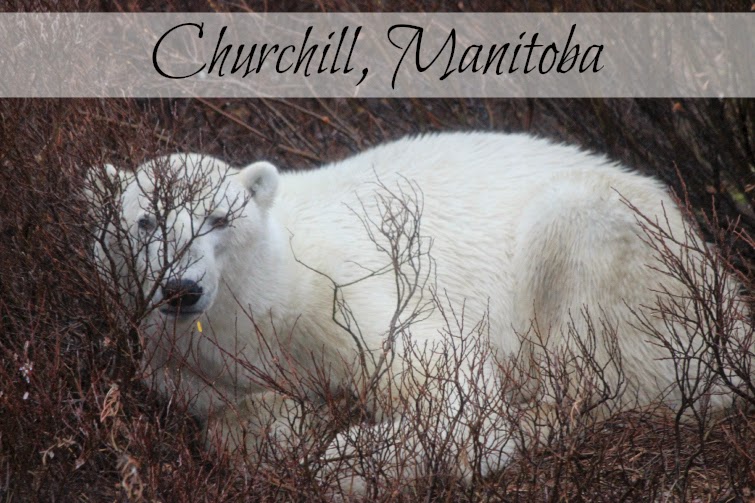
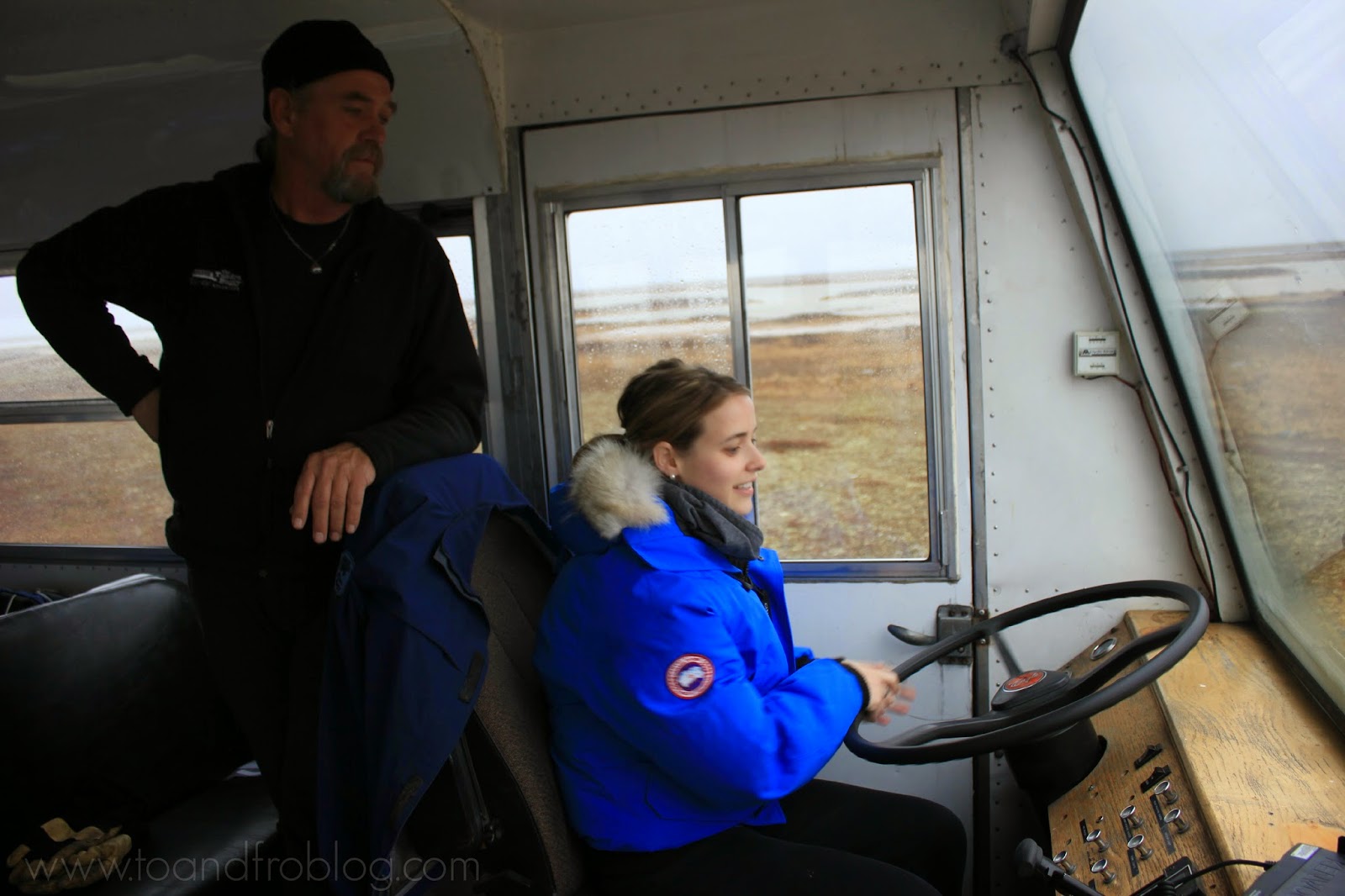
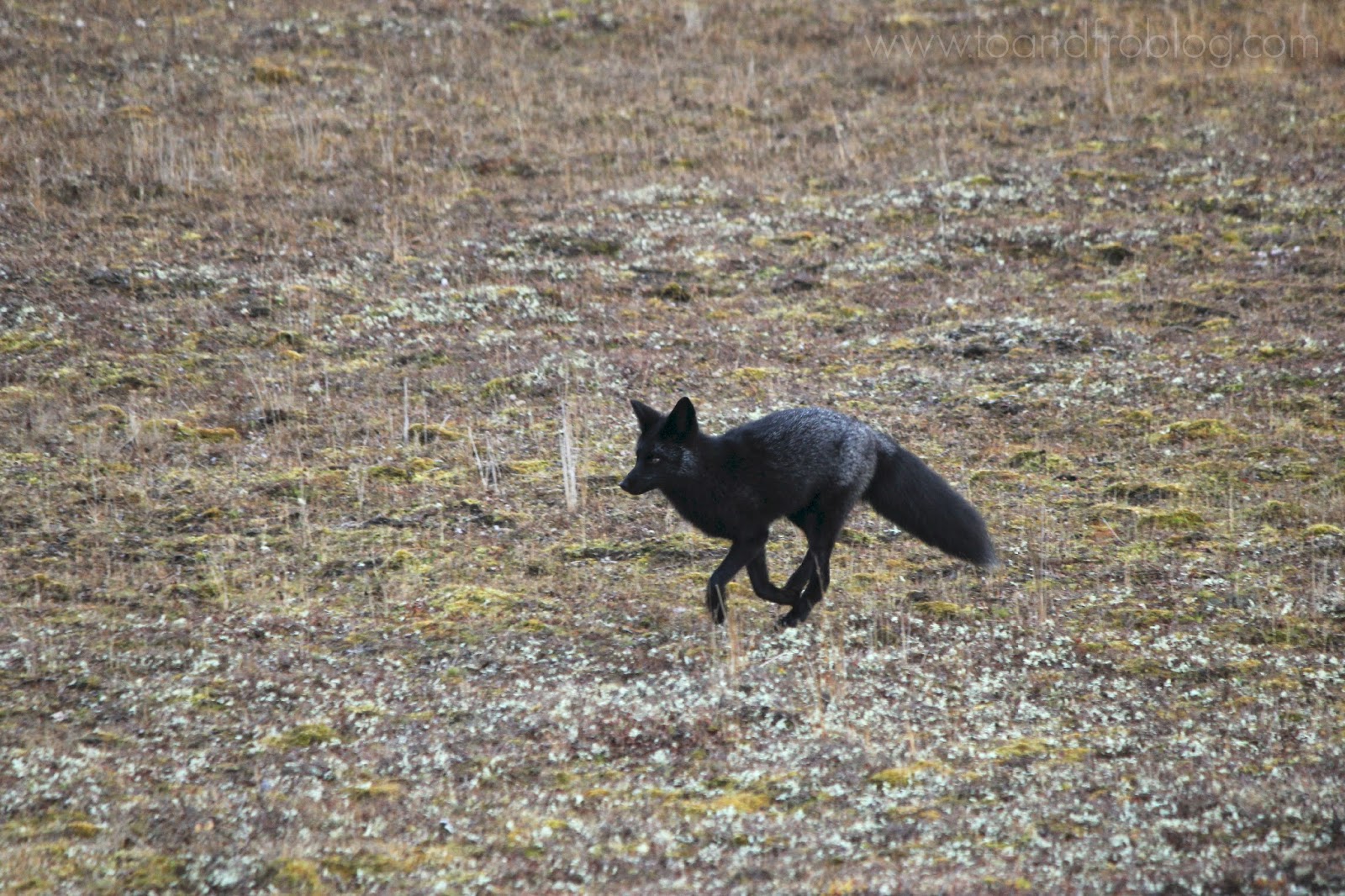
Then it was finally time to load up the Tundra Buggy, complete with a stove for warmth, and head out to Frontiers North Adventures Tundra Buggy Lodge.  What a ride!  The roads we have been driving on were built by the Canadian and American military for their cold-weather training during the Cold War.  We saw a lot of wildlife such as various small birds and waterfowl, tundra swans, ptarmigans and even a silver fox (a color phase of the red fox).  He was very busy digging up a cache and didn’t mind us sneaking up closer to get a good look at how gorgeous he was.  Our driver, Buggy Bob, made sure to stop every time we thought we saw something, including many false alarms that turned out to be only white rocks.  With the Tundra Buggy Lodge in sight, I had just about given up hope that we would see a polar bear today.  It was ok with me though, we had plenty more time and at least I had seen a silver fox!  Do you know how rare this color phase is?  They only make up 5% of the red fox population in Alaska!  If you know me well enough, you know how much I adore red fox!  But just then we saw her sleeping on a bed of kelp along the coast of the bay.  An immediate hush came over the entire group.  She was so beautiful!  Before reaching the lodge we caught a glimpse of two more bears sleeping, one in the kelp and the other in the willows.  It’s pretty cool to think we have two polar bears sleeping outside our windows as I write this.  

Silver fox

Two adult tundra swans and their cygnet flying over the Tundra Buggy Lodge

Our first polar bear sighting of the week

Our second polar bear sighting of the week

What a beautiful sunset!


Before filling our bellies with a nice Thanksgiving meal, we took the opportunity to share how thankful we all were to be a part of this remarkable experience and to be able to share this experience with others to move them enough to make a change for polar bears.

Find more on my journey to Churchill here:

SHARE:
Blog Design Created by pipdig