October 14, 2014

Polar Bear Capital of the World

visiting the polar bears in Churchill, Manitoba

Viewing the Polar Bears in Churchill, Manitoba


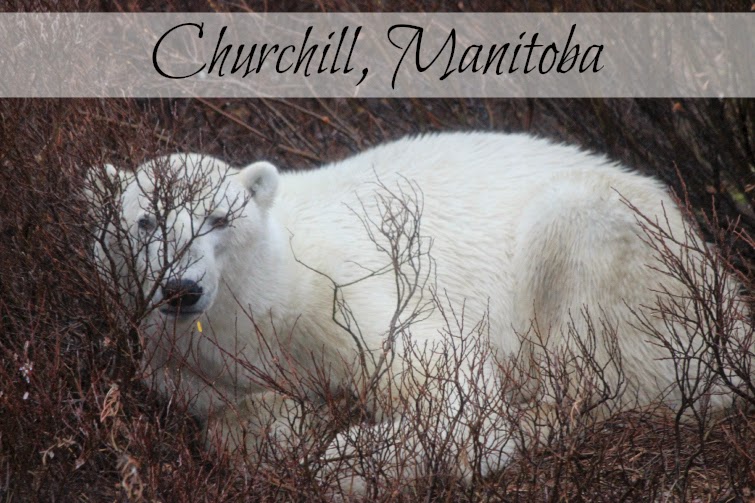
Three years ago this week I had the privilege to travel to Churchill, Manitoba, polar bear capital of the world. As part of Polar Bears International's Leadership camp, I joined forces with Educators from zoos and aquariums across North America travel to experience these iconic species in the wild, learn about the effects climate change on their habitat and discuss how we, as educators, could use what we learned to educate others and conserve the big white bear for future generations.

When to visit?
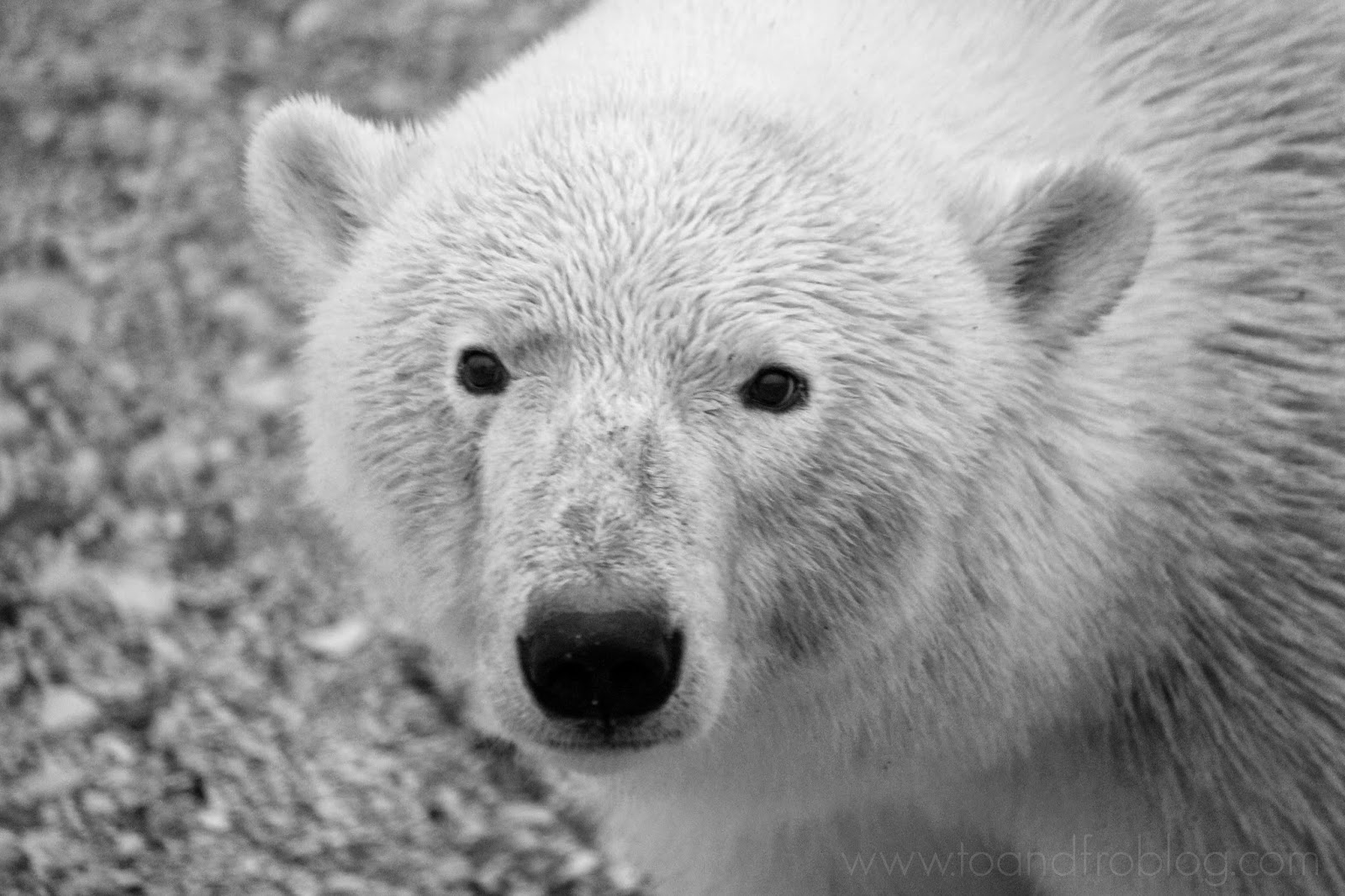
October and November are the prime months for polar bear viewing as the Hudson Bay begins to freeze and the bears start moving from their summer habitat inland on the tundra where they have been fasting all season, back to the sea ice to hunt for their favourite food, seals.

How to get there?
Since I was flying from Alaska, it was quite a hike to get to Churchill, Manitoba. In fact, I won the 'award' for the longest travel in our group. 

Regardless of where you are coming from, there aren't any roads into Churchill so you only have two travel options to get there - by air or rail. By plane: Air service is available year round, with two airlines flying into Churchill - Calm Air (who we flew with) and Kivalliq Air. The flight from Winnipeg is approximately 2 hours. By train: Via Rail trains depart Winnipeg for Churchill twice a week, and return to Winnipeg three days a week. The train ride is approximately 48 hours long.

visiting the polar bears in Churchill, Manitoba

Where to stay?

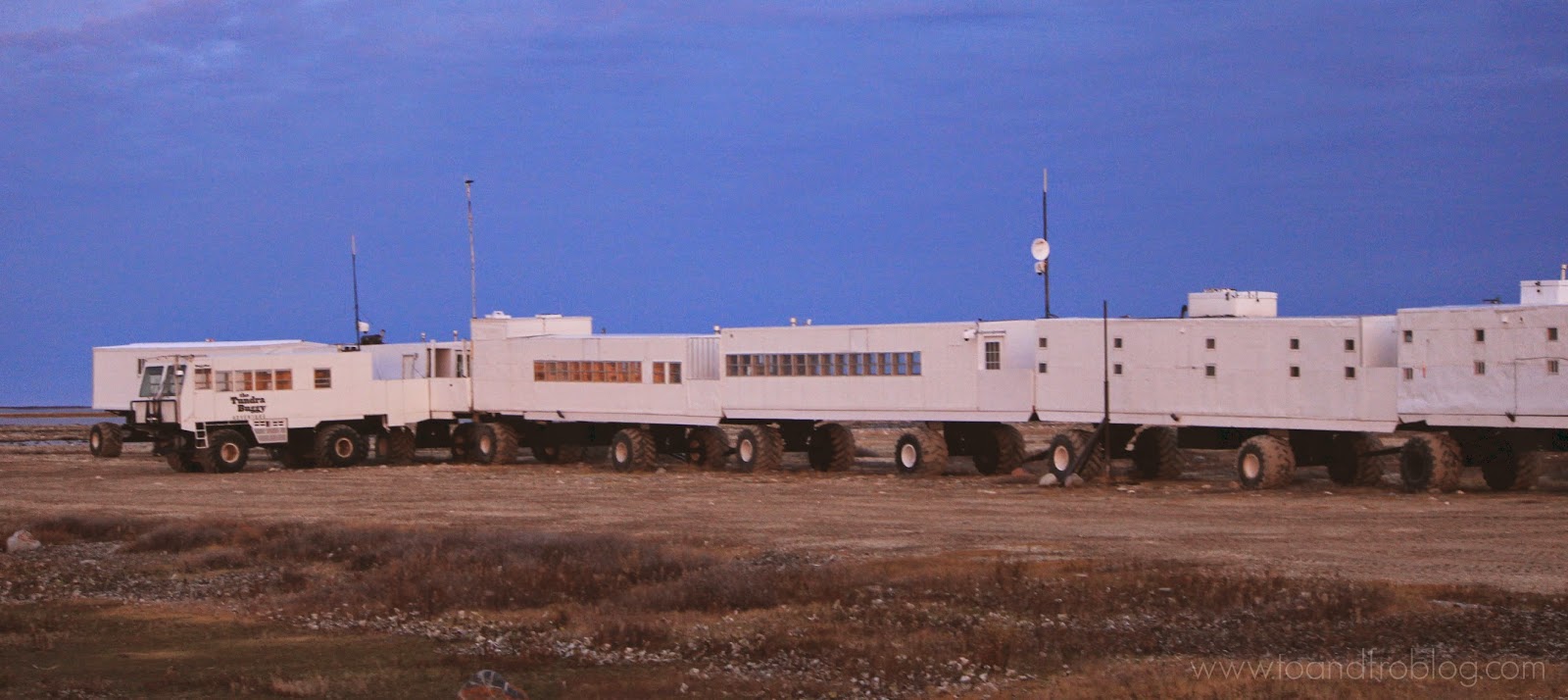
We had the privilege of staying out on the Tundra Buggy lodge, operated by Frontiers North Adventures. Our feet did not touch the ground for 5 days! 
visiting the polar bears in Churchill, Manitoba

While you can stay out on the Lodge if you are not part of a large group like PBI, the opportunities are limited. Luckily, Churchill's popularity has resulted in a number of options for you to stay in town, including hotels, bed and breakfasts and remote lodges. For more information on the town of Churchill, including hotels, restaurants and amenities, click here.
visiting the polar bears in Churchill, Manitoba

How to view the polar bears?
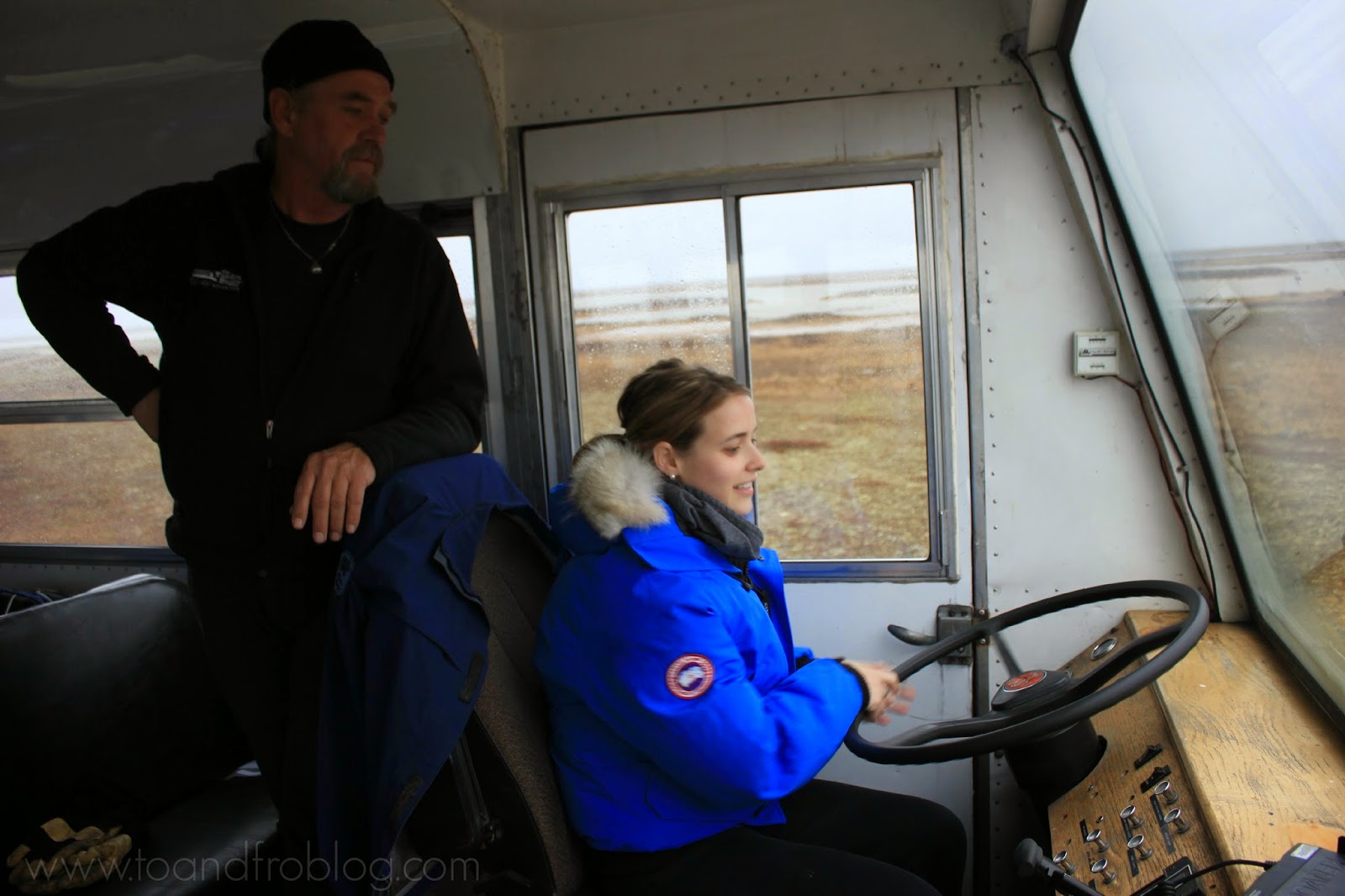
The best way to experience wild polar bears is on an authentic Tundra Buggy. If you are interested in taking a day trip out on the tundra, there are two companies to chose from. Frontiers North Adventures, who operates the "Tundra Buggy" is by far the leading company, and holds the larger number of permits from the Manitoba government. All of their Tundra Buggies are furnished with dual-pane frost-free windows for all of those photography opportunities and contain propane heating systems that closely resemble a cozy fireplace. 
visiting the polar bears in Churchill, Manitoba

Tips for packing?
The weather in Churchill can be unpredictable. The year my colleague was there, it was bright and sunny. The year I was there, grey and windy. The year after I was there, snowy. You definitely need to be prepared for cold and snowy conditions, but layers are also key. Musts include a warm jacket and/or windbreaker, thick gloves, warm harm insulated boots, wool socks and long underwear.

Other must sees?
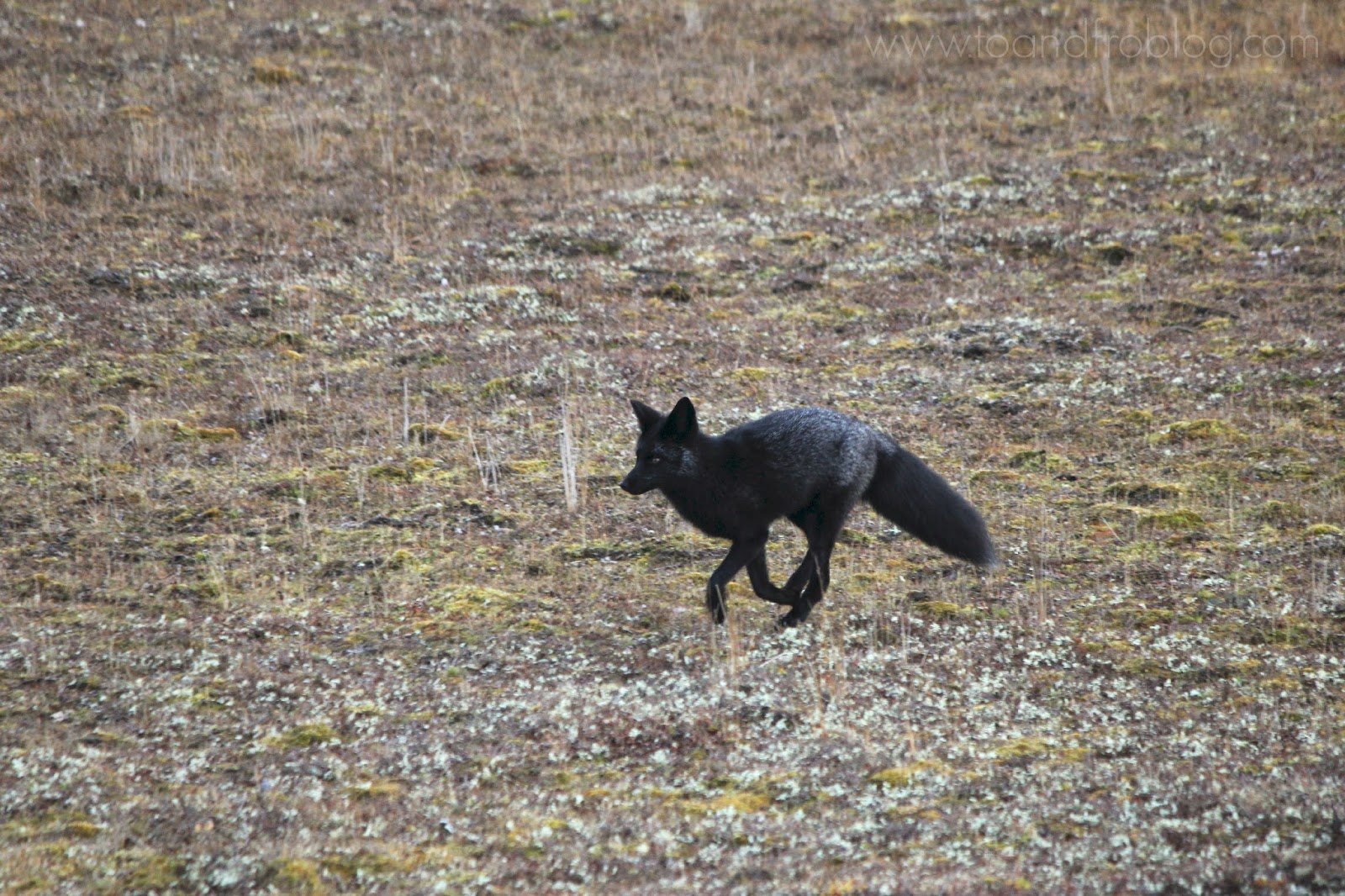
Polar bears aren't the only thing to see in Churchill. Churchill is also known as a beluga-watching hotspot, birders' paradise and one of the best places to experience the Aurora Borealis. There's a chance to see arctic hare, ptarmigan, red fox and arctic fox. 
visiting the polar bears in Churchill, Manitoba

Additional tips for visitors?
Seeing polar bears in the wild is extremely popular, and space fills up fast. Be sure to book your visit far enough in advance.

If seeing polar bears in the wild is on your bucket list, the time to go is now. Even though 60% of the world's polar bears can be found in Canada (Churchill is called the polar bear capital of the world for a reason), with climate change and the melting sea ice, polar bears are loosing their habitat. If we don't reduce our greenhouse gas emissions, 2/3 of the world's polar bears could be gone in our lifetime, by 2050.

visiting the polar bears in Churchill, Manitoba

I was extremely fortunate to have been given this opportunity and it still remains high on my most memorable experience list. I highly recommend you check out Polar Bears International. As the world's leader in polar bear conservation, they are doing wonderful things for all Arctic species.

Read my other posts about Churchill:
Part 1: The Beginning of an Adventure
Part 2: Greetings from Churchill
Part 3: Looking Into the Eyes of a Big White Bear
Part 4: Tying It All Together
Part 5: Back to Reality
#thankful project: an experience


Have you ever seen polar bears in the wild? Or, is it on your bucket list? I'd love to hear!



SHARE:

October 17, 2011

PART 1: The Beginning of an Adventure

I found my time in Churchill at Polar Bear International’s Communicator Leadership Camp so inspiring that I decided to write a journal to document this emotional and amazing once-in-a-lifetime experience.  It will be in the form of a 5 part “mini series”.  Please keep in mind some of this may be sappy/corny, but  I was absolutely moved by this experience.  Some of this if also kind of scientific, and may look like it’s in another language, but I felt it is information to share exactly what I learned from this experience and more importantly, why I was there.  So, if you need a translation, just ask!

Day 1: Sunday, October 9, 2011

After an extremely long travel day, which included being awake for 36 hours, I finally made it to Winnipeg, MB to meet up with others that would be joining me on this adventure!  The group consisted of 9 educators from zoos across North America (Alaska, St Louis, Milwaukee, Buffalo, Tucson, Tacoma, Philadelphia, Toronto and Quebec), 14 extremely enthusiastic teenagers (chosen because they are stewards for the environment and have taken action against climate change in their community), group facilitators and Polar Bears International (PBI) staff members and volunteers.  Since I got in a little early, and was so tired I wasn’t tired anymore, a few of us in my group decided to check out the Assiniboine Park Zoo in Winnipeg.  After a short visit to the zoo, we met all members of our group and discussed the happenings of the week!  With a very full belly, from a very excellent meal with all ingredients from within a 100-mile radius of the hotel, I am off to bed!  4:45am comes early, especially when it still feels like 1:45am Alaska time. 

Communicator group (and me looking like a zombie after going 36 hours without sleep)

Some of you may be wondering why Churchill?  Why are the polar bears in Churchill?  It’s pretty simple, but obviously involves some science.  Churchill is located along the coast of the Hudson Bay, in an area where the freshwater of the Churchill River empties into the salt water of the Bay.   This mixing of fresh and salt water decreases the salinity of the salt water, causing ice to form at a higher temperature. Ice formation begins in the Churchill area of the Hudson Bay and moves north. The ice throughout the Hudson Bay melts completely by the end of July or early August and does not refreeze until approximately November.   This means that all of the polar bears must come ashore for 4 months.  During this period, they are unable to hunt for ringed seals and must fast and survive on fat reserves that they have built up through the winter.  Throughout the fall, and especially just before freeze-up of the Bay, bears migrate towards the coast, congregating until they can move out onto the frozen ice and begin feeding again.

So what’s the big deal?  Why are Polar Bears International and Arctic Ambassador Centers, like the Alaska Zoo, putting in so much effort to protect these bears? Bear with me (hahaha get it?!),  I’m going to get all sciency on you. Two words:  CLIMATE CHANGE!  Polar bears are known to be an indicator species and climate change is having a large effect on their population, specifically through loss of their habitat.  With an increasing global average temperature due to an increase in greenhouse gas emissions, the sea ice that polar bears depend on for hunting their main prey (ringed seals) is disappearing for longer periods of time.  In the perfect world in Churchill, the seasonal ice would melt and polar bears would come to shore in July, with sea ice freeze-up in October, when the bears would venture back out.  However, due to climate change, sea ice does not freeze up until December now.  This year alone snow is already 3 weeks late in Churchill.  Polar bears are fasting for almost 2 months longer than they used to be and should be.  This loss of habitat and not being able to eat for 5 months has obvious effects on polar bears - small size, lower reproduction rate, etc. So why can’t they just adapt to finding food on land?  Sure they can snack on things like grasses, kelp, birds and small mammals, but there is nothing on land that is of nutritional value to them like the fat of seals.  

I could never imagine a world without this beautiful species.


Find more on my journey to Churchill here:

SHARE:

October 18, 2011

PART 2: Greetings from Churchill!

Monday, October 10, 2011

Greetings from Polar Bears International’s Communicator Leadership Camp in Churchill, MB and Happy Thanksgiving! After an early 21/2 hr flight from Winnipeg, and some Timmy’s coffee, we have finally arrived at our destination, the polar bear capital of the world!  


The day started off with a tour around town.  We met so many interesting people.  First was Karyne Jolicoeur, an interpreter from Parks Canada.  She took us to the Fort of Wales at Cape Merry, where we learned about the history of Churchill, dating back to the fur trade in the 1700s. We even got to see a couple of belugas playing in the estuary where the Churchill River and Hudson Bay meet. 


Next up was Bob Windsor, a conservation officer with Manitoba Conservation, who works at Churchill’s Polar Bear Holding Facility (calling it polar bear jail is highly frowned upon).  The Polar Bear Alert program works to keep problem bears away from the town and to keep both the residents of Churchill, and the bears, safe.  We learned about the scare tactics used, such as their newest technique of paintball guns, and I even got to shoot a pistol with “screamer bullets”, another hazing technique.  Click here to see a video discussing Churchill's Polar Bear Alert System.  If these scare tactics don’t work to scare the bear a safe distance from town, then they bear is captured via live trap or by darting it.  The bear is kept in the holding facility, which unfortunately we didn’t get to go inside of, for 30 days and then taken by helicopter 40 miles north to the coast and released.  It was interesting to learn that when we were there they had 9 bears in the facility, including a mom and her cub that they had been brought in earlier in the morning.  Of the 200 calls they have gotten to their 24-hotline so far this year, they have only had to capture and hold approximately 25, scare tactics worked for all others. 


Then it was finally time to load up the Tundra Buggy, complete with a stove for warmth, and head out to Frontiers North Adventures Tundra Buggy Lodge.  What a ride!  The roads we have been driving on were built by the Canadian and American military for their cold-weather training during the Cold War.  We saw a lot of wildlife such as various small birds and waterfowl, tundra swans, ptarmigans and even a silver fox (a color phase of the red fox).  He was very busy digging up a cache and didn’t mind us sneaking up closer to get a good look at how gorgeous he was.  Our driver, Buggy Bob, made sure to stop every time we thought we saw something, including many false alarms that turned out to be only white rocks.  With the Tundra Buggy Lodge in sight, I had just about given up hope that we would see a polar bear today.  It was ok with me though, we had plenty more time and at least I had seen a silver fox!  Do you know how rare this color phase is?  They only make up 5% of the red fox population in Alaska!  If you know me well enough, you know how much I adore red fox!  But just then we saw her sleeping on a bed of kelp along the coast of the bay.  An immediate hush came over the entire group.  She was so beautiful!  Before reaching the lodge we caught a glimpse of two more bears sleeping, one in the kelp and the other in the willows.  It’s pretty cool to think we have two polar bears sleeping outside our windows as I write this.  

Silver fox

Two adult tundra swans and their cygnet flying over the Tundra Buggy Lodge

Our first polar bear sighting of the week

Our second polar bear sighting of the week

What a beautiful sunset!


Before filling our bellies with a nice Thanksgiving meal, we took the opportunity to share how thankful we all were to be a part of this remarkable experience and to be able to share this experience with others to move them enough to make a change for polar bears.

Find more on my journey to Churchill here:

SHARE:

October 22, 2011

PART 5: Back to Reality

Friday, October 14, 2011

After waking early this morning and completing our cleanup duties, we finally left the Tundra Buggy Lodge behind and headed back into Churchill.  We were fortunate enough to see one last bear as we headed into town, one last reminder to why we all came together for this special week.  I got to meet many great people, which was not just a great networking experience, but also inspiring.  The teenagers had some truly inspiring ideas and were genuinely excited about what they were doing.  It makes me think back to when I was their age – I think I was probably more interested in boys and soccer than being a steward for our environment.  I definitely applauded them.

As I leave Churchill and the polar bears behind and head home with my action plan in hand, to an inbox full of emails, or reality, I feel inspired, motivated and excited to take on new challenges and move my community and those around me to make a change and reduce their carbon emissions.  If not for the polar bears, then do it for yourself.


Saturday, October 15, 2011

Just kidding!  We didn’t leave Churchill last night.  Fog had blanketed the town earlier in the day and unfortunately left us grounded and unable to fly.  We were put up in the rustic Northern Lights Inn, and were finally able to shower after completing the week’s No Shower Challenge!  We were woken up at 5am this morning to the sound of gunshots.  Quickly springing out of our beds we realized they were not gunshots, but the scare pistols and screamers that we got to shoot off at the Polar Bear Holding Facility, because there was a polar bear right beside the hotel!  Although it’s unfortunate to see a polar bear wander into town, it was interesting to see all that we learned at the facility put into action for the safety of the Churchill residents, and the polar bear. 

We finally got off to Winnipeg, but upon arrival was welcomed by more bad news.   Since I won’t be able to get out of here until tomorrow morning now, I think I’ll partake in a little retail therapy!

I will leave you with a poem I wrote during my inspiring time on the Tundra Buggy Lodge.  Apparently I’m a poet, and I didn’t even know it! Enjoy! 

Polar Bear, Oh Polar Bear
Polar bear, oh polar bear, will you feel harm?
Will you feel harm when the Arctic continues to warm?

Polar bear, oh polar bear, where will you go?
Where will you go in a world with no snow?

Polar bear, oh polar bear, what will you be?
What will you be when you can’t get to sea?

Polar bear, oh polar bear, will it suffice?
Will it suffice when you can’t hunt on ice?

Polar bear, oh polar bear, will you feel defeat?
Will you feel defeat when you can’t eat?

Polar bear, oh polar bear, how can we assist?
How can we assist so you continue to persist?

Marla, oh Marla, it’s no great debate,
One way you can help is to educate!

Take all that you’ve learned from this opportunity,
And be a leader in your community!

Together as one, we can change our way,
SHARE:

October 7, 2015

Assiniboine Park Zoo's Journey to Churchill

My first visit to Winnipeg, Manitoba was back in October 2011, when I joined fellow zoo professionals on a journey to the polar bear capital of the world, Churchill, Manitoba, as part of Polar Bears International's Leadership Camp. Now, almost 4 years to the day, I ventured back in Winnipeg. Surrounded by a similar crowd, but for a different reason, polar bears were still a hot topic of conversation.

Today, zoos and aquariums play an important role in polar bear research and conservation, including providing a home for orphaned cubs that would not otherwise survive in the wild and educating the public to take action on climate change and help protect this iconic species for future generations. AS a leader in the Zoo community, and with its proximity to polar bear territory, the Assiniboine Park Zoo in Winnipeg plays a large role in polar bear research, conservation and education in Canada. 

Assiniboine Park Zoo's entrance

The Zoo's new Journey to Churchill exhibit is the most comprehensive northern species exhibit of its kind in the world. Home to polar bears, musk ox, grey wolves and more, the award-winning exhibit allows visitors to discover the magic of the North, while making a connection with these iconic Arctic species. And while visiting last week, I felt right at home.

journey to churchill entrance
musk ox lying down
snowy owl on log
reindeer standing

Currently home to 7 polar bears, the 10 acre section of the Zoo is an educational classroom like no other, inviting visitors to learn about biodiversity, climate change and conservation. It is also home to the International Polar Bear Conservation Centre, an education, research and transition facility that is the first home for orphaned Canadian polar bears before they are transitioned into Journey to Churchill, and even on to another zoo within Canada. 

entrance to Gateway to the Arctic building

When touring Journey to Churchill, the Gateway to the Arctic building is where you really want to be. The impressive Sea Ice Passage gives visitors the rare opportunity to view polar bears and seals swim from below the surface of the water. With the bears playing above us, it's where I stood in awe for almost an hour.  

polar bear in sea ice passage
polar bear selfie
polar bear paws

Polar bears have a special place in my heart.

What's your favourite animal? Have you been to the Assiniboine Park Zoo? 

hudson the polar bear

SHARE:

October 26, 2011

PBI Webcast & Polar Bear Cam


Click here for the link of the webcast I was a part of while in Churchill with Polar Bear's International.  The broadcast starts at the 17:00 minute mark.  Enjoy :)

If you want to experience what I experienced while on the lodge and meet some of the polar bears I saw, click here for the link to PBI's new Polar Bear Cam.  It is a window into the fall migration of the polar bears in the Churchill area. 


Find more on my journey to Churchill here:
SHARE:

April 25, 2017

Inspiring the Future Generation


Six years ago this fall, I had the unique opportunity to visit Churchill, Manitoba. Or, as most know it, the polar bear capital of the world.

During the week, I had many incredible opportunities to experience the iconic Arctic species in their natural habitat. Sounds amazing, right? It sure was. But, despite being in this amazing place, surrounded by these amazing animals, I couldn't help but feel a sadness come over me that week. 

Inspiring the Future Generation with Greenlid Compost System

You see, the reason I was in Churchill in the first place wasn't just to check an item off my bucket list. As a zoo educator at the time, I was attending a leadership camp with other educators from zoos and aquariums across North America. 

The goal of the week-long camp was to learn about polar bears in the wild and, more specifically, the challenges they face in a changing climate. The goal was to not only learn how we could help the big white bear as individuals, but how we could teach others to help protect our planet as a whole for future generations.

It was that week spent out on the Canadian tundra that I learned the breath-taking fact that if we do not lower our carbon emissions, the implications from a warming climate will lead to the disappearance of half of the world's polar bears by 2050. 
"So what?", most people would say today, "Why should we care about something that will happen 33 years from now?” 

While in 2050 I may be leaving the working world, 33 years from now, my daughter, my future generation, will be standing where I am today. A young 30-something professional, trying to balance a career and providing for her family. And, that’s exactly why I care. 

Inspiring the Future Generation with Greenlid Compost System

If you can’t already tell, I’m pretty passionate about the environment. So much so that for the past 10 odd years, I’ve dedicated my career to teaching and inspiring others to care for our natural world. 

These values extend beyond the workplace and into the home, where my husband and I strive to live a sustainable lifestyle. 

While Morley may only be 13 months old, teaching her to care for our natural world cannot start soon enough. Whether it is as simple as spending time outdoors to completing small tasks around the home, such as helping compost, it is not too early to get her involved in our sustainable lifestyle. 

Inspiring the Future Generation with Greenlid Compost System

You know who shares similar values? Greenlid.

Greenlid is the first ever fully compostable compost bin, scientifically designed to be leak and smell resistant. Their hope is to inspire as many people as possible to make small sustainable changes in their daily lives that cumulatively add up to larger environmental impacts.

http://www.toandfroblog.com/2017/04/inspiring-future-generation-greenlid-compost-system.html
Inspiring the Future Generation with Greenlid Compost System

What I love about Greenlid is that it sets itself apart from market competitors because it has a carbon negative footprint, helping users significantly reduce their own carbon footprint each time they use it. The carbon footprint produced in the making of the container and lid is extremely low since the product is made in Canada with end-of-life recycled paper. This carbon is offset by the fact that each composted Greenlid bin diverts 4L of waste from landfills, where it would normally create methane gas (contributing 20x more to climate change than carbon dioxide), to a compost facility where it can be used in the making of nutrient­‐rich soil.

Greenlid is perfectly suited to living spaces of any size and is a simple, clean and a convenient way to live an eco-friendly lifestyle. Purchase your own Greenlid online, or at various retailers across Canada.

Inspiring the Future Generation with Greenlid Compost System

So back to the point of my polar bear story… Teaching others to care about the environment is all about making connections. If someone has a connection with something, they are more likely to love it. And if they love something, they are more likely to want to protect it. By visiting Churchill, I was able to build that connection with polar bears in the wild. And, it is my hope, that through the use of Greenlid at home, I will be able to start building a connection between my daughter, my future generation and this amazing planet we call home.


How do you practice sustainability? Why do you care about protecting our planet? I'd love to hear!


GIVEAWAY: Enter for your chance to win 1 of 5 Greenlid Compost 5 piece Starter Kits and a $50 VISA gift card!

Greenlid the Compostable Organic Waste Container


Disclaimer: I received product and/or compensation in exchange for this post. However, all opinions are 100% my own. I only support brands that I truly believe in. Thank you Greenlid!
SHARE:

October 9, 2015

There's Just Something About a Sunset

There is just something about a sunset that draws me in. It makes me forget everything I'm doing or thinking, and just look up in awe. Don't you agree?

"It is almost impossible to watch a sunset and not dream." - Bern Williams

If I had to pick just 5 sunsets that inspired a lot of dreaming, these would be it...

Orange sky at night over Toronto, Ontario

orange sunset over the city of toronto

Camping along Canisbay Lake, Algonquin Provincial Park, Ontario

sunset at canisbay lake, algonquin provincial park

Enjoying fall  somewhere along Lake Huron, Ontario

fall lake huron sunset

Out on the tundra of Churchill, Manitoba

sunset over the tundra in Churchill, Manitoba

Star gazing at Point Woronzof, Anchorage, Alaska

winter sunset at Point Woronzof Anchorge Alaska

And because I can't pick just 5...

Midnight sun over Kachemak Bay, Alaska

midnight sun over kachemak bay, alaska

Let's throw in a sunrise for good measure, because they're just as beautiful (if you can get up that early)...

Morning beach stroll in Myrtle Beach, South Carolina

summer sunrise in myrtle beach, south carolina


For more sunset photos, follow me on Instagram (@toandfro21). 

Where is your favourite place to watch the sun rise and fall?

SHARE:
Blog Design Created by pipdig